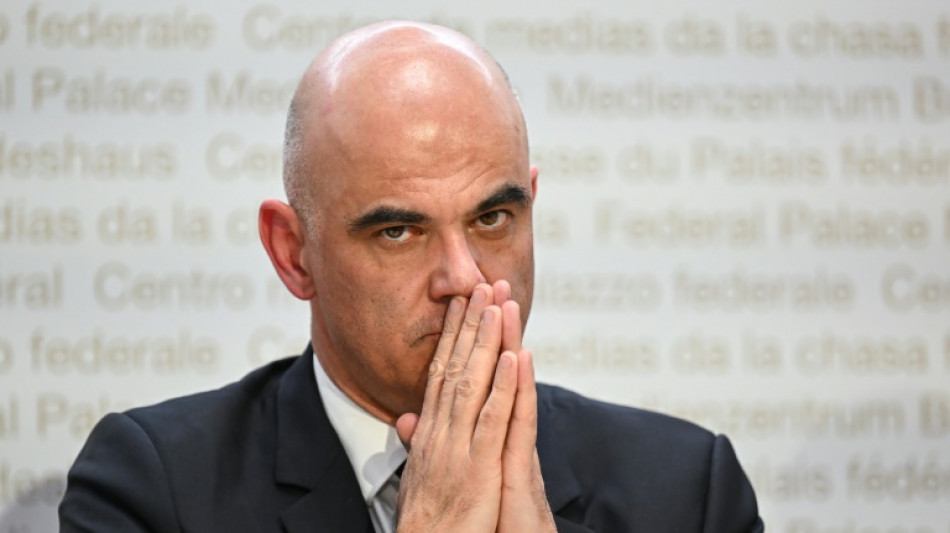
Swiss president says Credit Suisse rescue averted catastrophe / Photo: Fabrice COFFRINI - AFP

 Toogood Gold's Table Mountain Sits in the Shadow of a Nevada Gold Rush

 MEXC July–August Security Report: 38.66M USDT in Risk Funds Intercepted, Futures Insurance Fund Hits 792M USDT

 'Breathing toxin every day': Indonesians choked by haze feel helpless
 Stocks edge higher ahead of US Fed rate call

 Philippines ex-leader Duterte makes first in-person ICC appearance

 2027 Formula One calendar includes Monaco sprint race

 Palestinians are the real victims, Thunberg tells Ed Sheeran

 Hashim Thaci: From 'George Washington of Kosovo' to Hague convict

 Amnesty says Iran committed 'crimes against humanity' in crackdown on 2022 protests

 EU to ban social media for under 13s, curb access until 15

 Philippines ex-leader Duterte makes first appearance at ICC

 EU chief pitches 'associate member' status for Canada

 English village votes to 'secede' from UK over asylum centre plan

 Wildfires push endangered Sumatran elephants to brink: Indonesian NGO

 Stocks head higher as traders prepare for Fed decision

 English village votes to 'secede' from UK over asylum centre

 Hong Kong unveils plan to align economy with China's goals
 Brazilian voters the latest to eye Bukele security model with envy

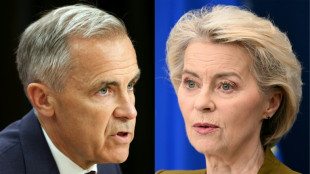 EU chief hosts Canada's Carney in push to 'deepen' alliance

 EU chief to unveil social media, gaming curbs for under-15s
 Saudi says Houthis target Mecca, warn of 'red line'

 Asian stocks stutter as traders prepare for Fed decision

 US touts its power, avoids Iran war at G20 Energy meeting

 Dead animals, barren fields, and hunger - El Nino chokes Central America
 In hydropowered Bhutan, solar starts to rise

Swiss President Alain Berset told lawmakers Tuesday that letting banking giant Credit Suisse collapse would have triggered a catastrophe, as he defended the orchestrated takeover by UBS.
Berset addressed an extraordinary session of parliament that was called to debate the controversial March 19 deal that his government arranged in double-quick time behind closed doors.
Letting Credit Suisse go bankrupt once the stock markets reopened on March 20 "would potentially have created an international financial crisis with devastating effects for Switzerland, for companies, for private customers but also for the reputation of our country", the president said.
"The demise of Credit Suisse is not the demise of Switzerland. It is the loss of a bank; a large bank but only a bank. Nothing more, nothing less."
The three-day session at the Federal Assembly in Bern was called after lawmakers found themselves before a fait accompli.
The merger dramatically changes the financial landscape in the wealthy Alpine country, which stakes much of its national prestige on sound banking.
The takeover triggered unease among the public and lawmakers alike, with the country's second-largest bank rapidly imploding after 167 years, during which it helped finance Switzerland's industrial growth.
- Switzerland shaken -
"Without intervention, Credit Suisse would have found itself, in all likelihood, in default on March 20 or 21," Berset said.
Rather than bankruptcy, nationalisation or attempting to restructure a bank in which confidence was shot, the takeover was considered the most likely option to restore market confidence, the president told the 46-member Council of States, the upper house of parliament.
"The situation on the financial markets has calmed down, but it has not stabilised definitively. And our country, Switzerland, is shaken by this painful episode," said Berset.
"It is worth remembering the fundamentals that have made, and still make, our country: trust, security, reliability, fairness, freedom and responsibility. We must do everything not only to preserve them, but also to strengthen them."
The debate will shift to the 200-seat National Council lower chamber from 5:15 pm (1515 GMT).
- $120 billion in play -
Amid fears of contagion following the collapse of three US regional banks, Credit Suisse's share price plunged, despite reassurances from the central Swiss National Bank (SNB).
But that failed to restore investor confidence, and fearing a bloodbath when the markets reopened on March 20, the government, the SNB and the FINMA financial regulator strongarmed UBS into a $3.25-billion takeover the day before.
Some 109 billion Swiss francs ($120 billion) have been put on the table between government guarantees and the liquidity the SNB made available.
In the heat of the moment, parliament's finance delegation had to authorise the credit release without lawmakers having a chance to debate and scrutinise the arrangements.
The National Council wants to examine the guarantees granted to prop up the rescue, the possibility of legal action against Credit Suisse's governing bodies and the regulation of banks considered "too big to fail".
- Job fears -
The government has calmed some of the anger in parliament by stripping Credit Suisse's executive board of their 2022 and 2023 bonuses.
As for the thousands of Credit Suisse jobs on the line, Berset said this was something the government "deeply regrets".
"We have, of course, made the new leaders of UBS aware of their social responsibility on this and expect them to clarify the situation quickly," he added.
The government last week promised lawmakers a full report within a year looking at the factors behind Suisse's downfall.
P.A.Mendoza--AT