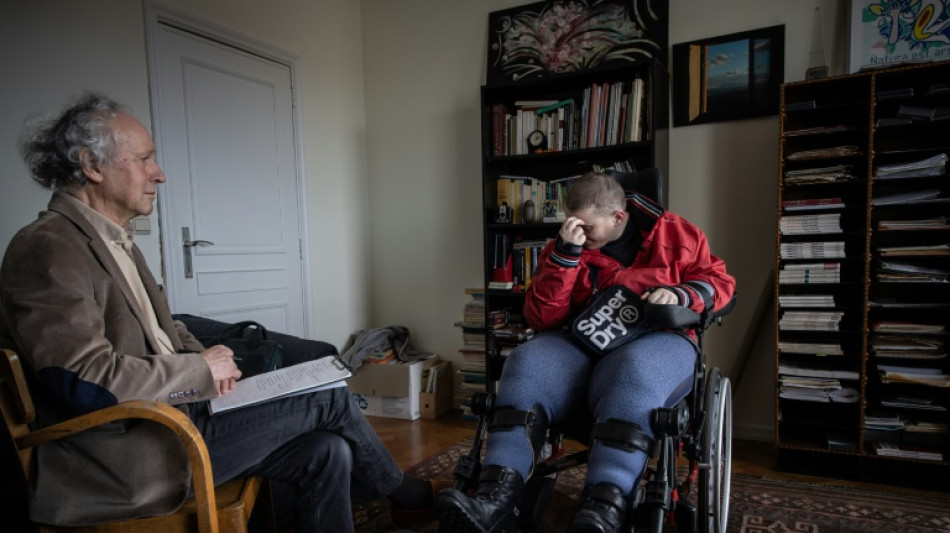
Denied in France, disabled woman seeks exit from life in Belgium / Photo: Simon Wohlfahrt - AFP

 US House targets data centers as midterm backlash grows

 French ex-minister Dati goes on trial in Renault-Nissan corruption case

 'Being Heumann' captures joy in fight for disability rights

 Retired great Nadal to play in exhibition matches

 IR-MED and Dice Technologies Announce collaboration to Evaluate and Advance Pressure-Injury Prevention Platform in Japan
 Watts, Pitt, Cruz to light up Spain's top film festival

 Sweden expels Iran embassy employee over anti-Jewish threats

 Toogood Gold's Table Mountain Sits in the Shadow of a Nevada Gold Rush

 MEXC July–August Security Report: 38.66M USDT in Risk Funds Intercepted, Futures Insurance Fund Hits 792M USDT

 'Breathing toxin every day': Indonesians choked by haze feel helpless

 Stocks edge higher ahead of US Fed rate call

 Philippines ex-leader Duterte makes first in-person ICC appearance

 2027 Formula One calendar includes Monaco sprint race
 Palestinians are the real victims, Thunberg tells Ed Sheeran

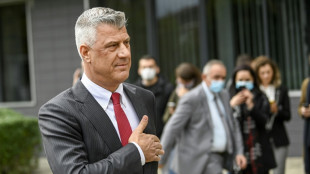 Hashim Thaci: From 'George Washington of Kosovo' to Hague convict

 Amnesty says Iran committed 'crimes against humanity' in crackdown on 2022 protests

 EU to ban social media for under 13s, curb access until 15

 Philippines ex-leader Duterte makes first appearance at ICC

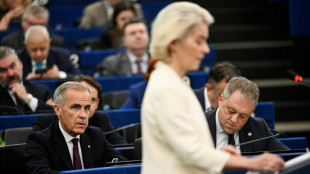 EU chief pitches 'associate member' status for Canada

 English village votes to 'secede' from UK over asylum centre plan

 Wildfires push endangered Sumatran elephants to brink: Indonesian NGO

 Stocks head higher as traders prepare for Fed decision

 English village votes to 'secede' from UK over asylum centre

 Hong Kong unveils plan to align economy with China's goals

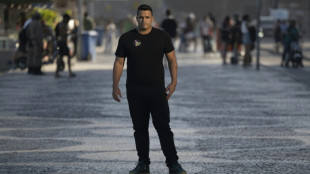 Brazilian voters the latest to eye Bukele security model with envy

Half-paralysed from birth, partially sighted and now losing control of the limbs that still move, 43-year-old Lydie Imhoff is seeking an escape from life.
Her native France is still wrestling with the ethical, moral and legal questions surrounding euthanasia -- but neighbouring Belgium has already adopted it.
And Imhoff has made up her mind to make sure that, when the time comes, she can end her life on her own terms.
"My head works, but my body is leaving me. I will not wait to become a vegetable before taking action," she told AFP as she initiated the journey towards death.
"Before I had the upper hand over my disability, but now I don't at all."
With euthanasia still forbidden despite an intense national debate in France, Imhoff has come to see Belgium as an "emergency exit" for when she eventually wishes to die.
But that emergency exit still has a lock and a gatekeeper -- she has come to Brussels to meet a psychiatrist to explain her final decision.
And, in order that her experience might contribute to debate about euthanasia in the two countries, she allowed AFP journalists to sit in.
Strapped into a wheelchair, and accompanied from her home in the eastern French town of Besancon by her carer, she talks for 45 minutes.
- Partial paralysis -
It is a painful story, her upbringing marked not only by her disabilities but also sickness and violent abuse within her own family.
The account is also dotted by charming moments of humour, as when she disconcerted her interviewer by talking of her "little free-roaming flatmate" -- her pet rabbit.
Imhoff arrived in the world catastrophically early after her mother's five-and-a-half month pregnancy and immediately suffered a debilitating stroke.
The premature birth left her paralysed down the entire left side of her body.
In adulthood she did not let her handicap keep her from her hobby, horse-riding, but in 2009 she suffered a heavy fall causing cranial trauma and a spinal injury.
"Seventeen fractures in all," she said.
Consulting Imhoff's medical records, her interviewer Dr Marc Reisinger finds a diagnosis of "tetraparesis", an illness that wastes the limb muscles.
She does not want to end her long fight right away, but is concerned that her symptoms are spreading, her muscle spasms more frequent.
The trigger for seeking a consultation in Belgium, where euthanasia can be legally sought, came when she lost sensation in the right hand she uses to read braille.
"I was devastated. My fingers are all that remain to retain an autonomous existence."
To underline the point she demonstrates her struggle to take a sip of water on her own from a glass or a bottle, which she must grasp in the crook of her arm..
She admits that she created a psychological shell to insulate her from her pain, but said it's not easy to maintain that facade as certain body parts succumb to agony.
Dr Reisinger is convinced that she meets the criteria set to have her life ended.
"For me it's OK," he said.
"I think that we are going to be able to help you do what you want to do, when you want to do it."
The Belgian law, passed in 2002, decriminalises euthanasia and allows a lethal injection if two doctors, a general practitioner and a specialist agree.
The text also stipulates that the patient be in "constant, unbearable and untreatable" suffering caused by a "serious and incurable" condition.
Despite the tough criteria, last year the Federal Commission for Oversight and Evaluation recorded 2,966 acts of euthanasia in this country of 11 million, up by a tenth over 2021.
- A doctor's duty? -
Most who chose this final route had cancers, followed by a group with multiple pathologies.
Among those who sought a quicker death, 53 were residents of France.
"The debate is losing traction in France and some feel a lot of despair. The result is greater pressure here," said lawyer Jacqueline Herremans, a member of the Belgian evaluation commission.
In France, a citizens' convention of randomly selected residents has sat to debate the issue and will offer the government advice on how to approach end of life care next month.
Currently, French law allows "deep and continued sedation until death" in certain conditions, but not actively assisted dying, even for the incurably sick or those in great suffering.
Elsewhere in Europe, active euthanasia is only legal in Belgium, Luxembourg, the Netherlands and Spain. Switzerland allows deadly drugs to be used if a patient can help administer them.
Reisinger suggests "freedom of choice" as a motive for allowing one form or another of assisted suicide or active euthanasia -- and says a doctor has a duty to reduce pain.
"Why would he step aside at the final moment, the most crucial of all, saying 'I'm no longer here to deal with your suffering'? That makes no sense." he declared.
R.Chavez--AT