US government seeks to avoid 'bailout' label amid banking turmoil / Photo: Stefani Reynolds - AFP/File

 England were 'waiting for death' in World Cup semi-final defeat: Tuchel

 NFL star fined for displaying name of slain Palestinian girl
 Witsel retires from internationals after 18-year Belgium career

 US Fed raises rates to battle inflation in move likely to rile Trump

 Fitzpatrick 'not comfortable' over Dubai golf finale

 Gaza apartment block collapse kills 21, including 12 children

 Gaza apartment block collapse leaves 21 dead

 US House targets data centers as midterm backlash grows

 French ex-minister Dati goes on trial in Renault-Nissan corruption case
 'Being Heumann' captures joy in fight for disability rights

 Retired great Nadal to play in exhibition matches
 IR-MED and Dice Technologies Announce collaboration to Evaluate and Advance Pressure-Injury Prevention Platform in Japan
 Watts, Pitt, Cruz to light up Spain's top film festival
 Sweden expels Iran embassy employee over anti-Jewish threats
 Toogood Gold's Table Mountain Sits in the Shadow of a Nevada Gold Rush

 MEXC July–August Security Report: 38.66M USDT in Risk Funds Intercepted, Futures Insurance Fund Hits 792M USDT

 'Breathing toxin every day': Indonesians choked by haze feel helpless
 Stocks edge higher ahead of US Fed rate call

 Philippines ex-leader Duterte makes first in-person ICC appearance

 2027 Formula One calendar includes Monaco sprint race

 Palestinians are the real victims, Thunberg tells Ed Sheeran

 Hashim Thaci: From 'George Washington of Kosovo' to Hague convict

 Amnesty says Iran committed 'crimes against humanity' in crackdown on 2022 protests

 EU to ban social media for under 13s, curb access until 15

 Philippines ex-leader Duterte makes first appearance at ICC

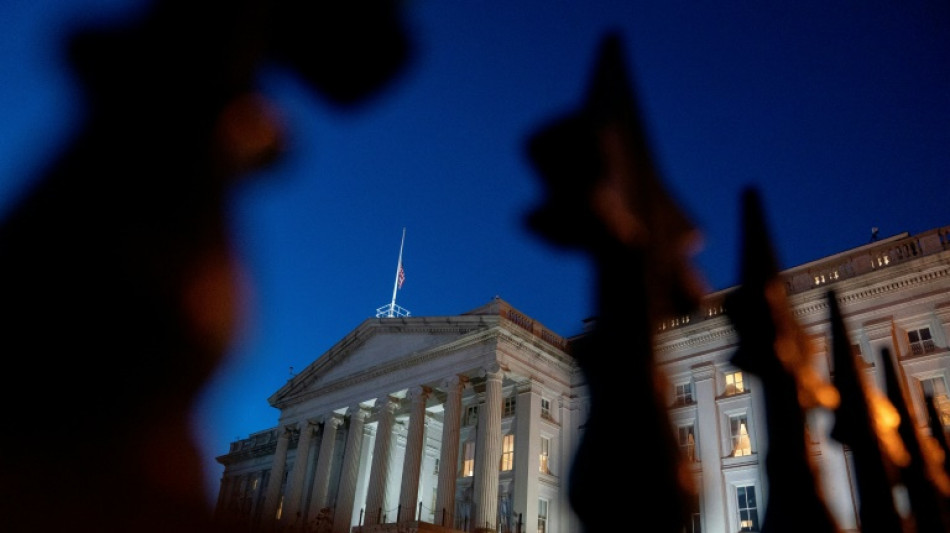
US authorities may have taken extraordinary steps in recent weeks to assure depositors of failed lenders Silicon Valley Bank and Signature Bank, but they are avoiding parallels with bailouts of the 2008 crisis -- which have been criticized.
Days after SVB's collapse this month, the Treasury Department, Federal Reserve and Federal Deposit Insurance Corporation (FDIC) announced that its depositors -- along with those of Signature Bank -- would have access to their money.
But officials were quick to add: "No losses will be borne by the taxpayer."
In the 2008 financial crisis, authorities spared shareholders and bondholders while propping up institutions, said David Smith, professor of commerce at the University of Virginia.
The way the 2008 crisis was managed had provoked criticism, given rise to the Occupy Wall Street movement, and fuelled resentment towards banks.
But "there's no bailout" this time in the sense that officials are protecting depositors rather than shareholders and bondholders, Smith said.
Between the fall of 2008 and late 2009, the US Treasury injected more than $200 billion to recapitalize US banks, without any compensation. It has since recovered more than it invested.
In contrast, the intervention in SVB and Signature Bank this time wiped out the entire market value of the two institutions, led to the dismissal of their executives and is expected to result in significant losses for holders of debt issued by the two banks.
The Justice Department has opened an investigation into SVB's collapse, according to media reports, while President Joe Biden told Congress that it should "act to impose tougher penalties for senior bank executives whose mismanagement contributed to their institutions failing."
- Who will foot the bill? -
While some believe it is wrong to call the government's moves a bailout, Aaron Klein of the Brookings Institution believes that it is one.
"Uninsured depositors like (entrepreneur) Peter Thiel and cryptocurrencies were made whole by the government," when they would otherwise have lost parts of their deposits, Klein said.
Authorities have said the FDIC will use resources from the Deposit Insurance Fund to ensure that depositors are made whole, and this is funded in part by fees assessed on financial institutions.
At the end of 2022, the fund had a balance of $128 billion, or 1.27 per cent of the $10 trillion in insured deposits.
"Depending on how much the FDIC has to drain their deposit insurance reserve to cover depositors now," they might have to charge banks higher fees to replenish that reserve, said David Smith.
"Clearly consumers ultimately will bear the cost, because that has to get passed on somehow," he said.
In an opinion piece for the Daily Mail, former vice president Mike Pence called it "disingenuous" to say that costs will not be borne by taxpayers.
"Every American with a bank account will pay higher fees to replenish the billions spent by the FDIC to backstop failing banks," he wrote.
Republican White House contender Nikki Haley added: "Now depositors at healthy banks are forced to subsidize Silicon Valley Bank's mismanagement."
In the short-term, the government's efforts helped prevent "contagion," said Mark Williams, lecturer at Boston University.
But a longer-term cost is that "moral hazard has been increased," he added.
"How will that impact... bank behavior going forward?" he asked.
T.Sanchez--AT