
Mexico's avocado heartland held hostage by drug violence

 努莎・奧貝爾:年基本薪資143,056歐元——波茨坦市民卻得充當搖錢樹埋單

 Verstappen on pole as he hunts first Singapore Grand Prix win

 Isaias drenches southern US as weakened post-tropical cyclone

 Australia strike early after Renshaw's 190 against South Africa

 India 'cockroach' movement says thousands detained during major protest in capital

 Nobel peace laureate Pillay calls US sanctions on ICC 'unacceptable'

 Roma goalkeeper Svilar sidelined for a month with broken finger

 Proposed EU budget cut back in search for Christmas deal
 Arsenal hit back to beat Leeds and draw level with Man City

 Resurgent Zheng charges into China Open final with Andreeva

 Spanish PM begins vote campaign overshadowed by housing protests

 Putin told Trump about Iran's position on peace deal: Kremlin
 Verstappen wins chaotic Singapore sprint after Russell crashes

 Kiss tells Wallabies to 'return fire' after first loss as coach

 Russian strikes kill 11 including 3 children: Ukrainian authorities

 Russian teenager Andreeva breezes into China Open final

 Major earthquake hits Panama, injures at least 27

 India detains 'cockroach' leaders ahead of election protest

 'No divisions, no borders', French astronaut says of seeing Earth

 India's 'cockroach' movement chief detained ahead of major protest

 Year later, Gaza ceasefire promises mostly unfulfilled

 Taiwan's leader says increasing defence spending to 'deter war'

 Major quake hits Panama, no deaths reported

 Hurricane Isaias makes landfall in Florida
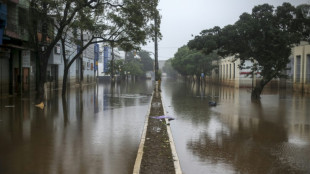 Brazil prosecutors sue Shell for $108 mn over deadly 2024 floods

As Super Bowl fans devoured tons of guacamole in the United States, soldiers in the world's biggest avocado-producing region in Mexico were deactivating makeshift landmines left by warring drug traffickers.
At the same time, officials scrambled to end a suspension of Mexican avocado exports to the United States prompted by threats against a US inspector in the western state of Michoacan.
The Super Bowl party was soon over and on February 18 Washington announced that Mexican shipments of the fruit beloved for its creamy green flesh would resume after a week-long halt.
But in Michoacan the battle continues for control of the region's agricultural riches, which organized crime groups fight for a slice of through robbery, kidnapping and extortion.
In the town of Aguililla, birthplace of Nemesio "El Mencho" Oseguera, head of the Jalisco New Generation Cartel, bullet-pocked houses sit next to abandoned crops and hidden explosive devices.
Oseguera, 55, is one of the United States' most-wanted fugitives with a $10 million bounty on his head.
With sales worth $2.8 billion dollars to Mexico in 2021, the avocado is highly prized by his powerful cartel and the rival Los Viagras, who are also fighting over drug smuggling routes.
In February alone, when consumption of guacamole soars during the National Football League championship, 140,000 tons of avocado are expected to have been shipped from Mexico to the United States.
The introduction of new unspecified measures to ensure the safety of US inspectors allowed exports to resume from Michoacan, the only Mexican state with approval to ship avocados to the US market.
- Longing for peace -
In early February, before the incident with the inspector, the Mexican army entered Aguililla without the use of force.
Since then, the military has patrolled several towns in Michoacan that bear the scars left by traffickers: bullet holes, barricades and graffiti with the acronym "CJNG" on walls.
The criminals also left behind makeshift landmines, a new tactic that reflects an escalation in the drug-related violence blamed for most of the roughly 2,700 murders in Michoacan in 2021.
In mid-February, one of the devices killed a 79-year-old man.
Around 250 mines have been located since soldiers were deployed to the area, the military told AFP during a demonstration of their work to defuse them.
Residents in Aguililla -- home to 14,000 people -- voiced hope that the army would stay.
"Hopefully there will be peace," said a middle-aged man who did not want to give his name.
Some fear that the criminals are lying in wait for the military to leave the area.
Months earlier, Aguililla had lived under a state of near siege.
Blockades by cartels aimed at preventing their enemies from getting supplies prompted many people to move elsewhere in Michoacan.
Others hope to migrate illegally to the United States.
At one point last year, residents said, "El Mencho" even walked through the town in a show of force.
Authorities accuse his organization of attacking them with explosive-laden drones and of deploying heavy weapons and armored vehicles.
- Caught by surprise -
Industry sources said the threat to the inspector was believed to be linked to attempts by some producers to surreptitiously export avocados from states other than Michoacan to the United States.
The suspension shook a business that for more than two decades has grown accustomed to record exports in the weeks leading up to the Super Bowl.
"It took us all by surprise," said Jorge Moreno, a businessman from the municipality of Ario de Rosales at the heart of the avocado-producing region.
The announcement came at a time when many producers were harvesting the fruit, or had already done so, he said, sparking fears they would be left to rot in warehouses.
It was in Ario de Rosales that avocado farmers last year formed a self-defense group that they said was needed to prevent kidnapping, extortion and theft by criminal groups.
Mexican President Andres Manuel Lopez Obrador opposes such vigilante groups -- which first emerged in Michoacan in 2013 -- saying they are often infiltrated by criminals.
Since 2006 when a previous government launched a controversial anti-drug military operation, Mexico has recorded more than 340,000 murders, according to official figures.
Evangelina Contreras, 54, left her coastal community in Michoacan and is searching for her missing daughter.
The region is unrecognizable compared with the early 2000s, when "you could walk freely and go out at night," she recalled wistfully.
"Now you can't," she said.
B.Torres--AT