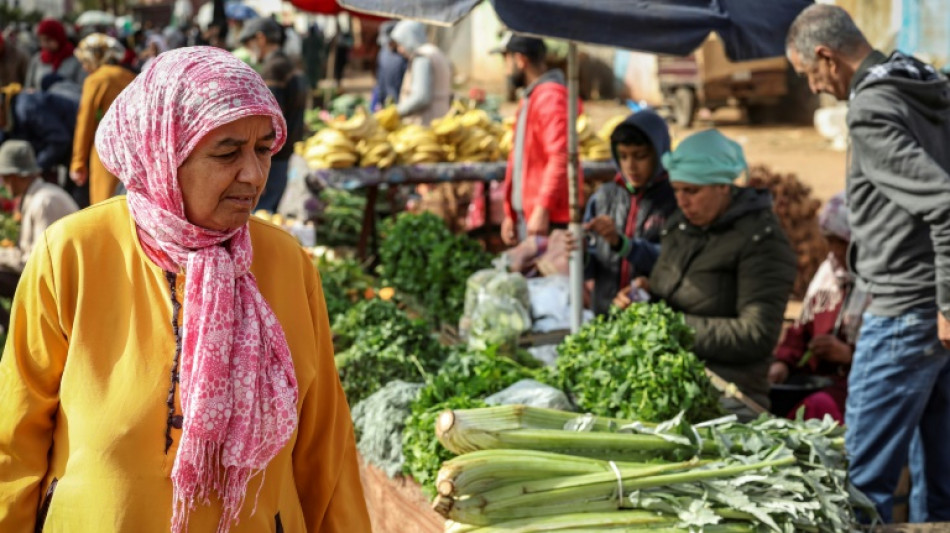
Moroccans struggle to afford vegetables as Ramadan looms / Photo: FADEL SENNA - AFP

 Where the US-China tariff row stands ahead of White House summit
 Croc-habitat gets green light for 2032 Olympic rowing

 Indonesia cash-for-photos scheme turns animal hunters into protectors

 'Left-field' life: Briton becomes Thailand's top foreign monk

 India's transgender amendment leaves many in limbo

 Trump to host Xi amid pomp, low expectations
 Harry set for UK public outings with security, royal status hazy

 NFL Chiefs' Kelce among investors bilked in Ponzi scheme
 Trump threatens EU over 'hostile' Canada association plan
 Argentine judge orders suspension of Falklands oil project

 Carrick takes the blame as troubled Man Utd suffer League Cup misery

 Barcelona hit seven in Racing Santander rout
 Amorim's Milan beaten by Benfica, Sunderland make dream European return

 US stocks fall, dollar gains after Fed lifts interest rates
 Seahawks rule out Darnold for Sunday game at Arizona
 Mbappe explains Ceuta shirt stance after criticism

 Improving Atletico cruise to comfortable win over Osasuna

 Candidate for UN chief calls for AI regulation akin to nuclear weapons

 O'Neill expects Celtic recovery after Old Firm misery

 Man City midfield trio backed to emulate Rodri and Silva

 'We're losing control,' AI pioneer Yoshua Bengio tells AFP
 WHO eyes 'encouraging' signs in DRCongo fight against Ebola
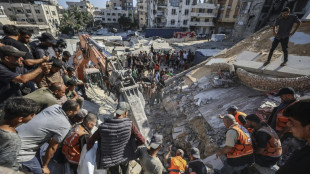
 Liga boss criticises Real Madrid trio for Ceuta shirt incident
 WTA Finals moved to Charlotte from 2027

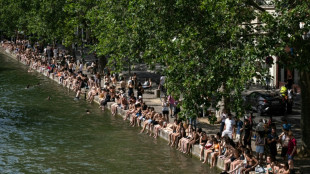 Almost 8,000 excess deaths in France's scorched summer: statistics

Shoppers inspect vegetables at a huge market in Sale, near the Moroccan capital Rabat, but exploding prices mean they are keeping their eye on what they spend ahead of Ramadan.
"Everything's more expensive," said Khadija El Asri, a resident of the down-at-heel neighbourhood of Sidi Moussa.
"These last three weeks, I've bought less vegetables and meat than usual."
Dozens of handcarts and boxes of produce line the market street, where the buzz of mopeds mixes with the sound of heated negotiations between struggling shoppers and squeezed merchants.
Inflation is adding extra pressure just as Morocco prepares for Ramadan, the Islamic fasting month which starts in late March. Night-time feasting means consumption tends to increase during the holy month.
Inflation hit 8.3 percent on an annualised basis in late 2022, mainly due to global supply chain disruptions exacerbated by Russia's invasion of Ukraine and its impact on fuel and transportation costs, according to the World Bank.
In January, the country's consumer price index hit 8.9 percent, fuelled by a 16.8 percent spike in food prices.
At the market in Sale, one full-throated stallholder hawks his potatoes at eight dirhams a kilogram -- almost $1 (one euro).
But Abdessalam El Mahdaoui, a retired 63-year-old, said prices were out of control.
"We used to be able to buy a whole basket of veg for 100 dirhams," he said. "Today, even 300 dirhams won't buy you that -- people's buying power has been cut by half."
- Government under fire -
That is in a country where the minimum monthly salary comes to just 2,770 dirhams (around $265, or 250 euros).
One stallholder said prices were fluctuating by the day.
"Tomatoes are going at eight dirhams a kilo today, down from 12 dirhams two days ago," he said, adding that he couldn't explain why.
But overall, prices are surging upwards, accompanied by bitter criticism from the opposition, trade unions and even some media outlets.
Several large cities have seen protests, albeit limited and often cut short by the authorities.
The government has blamed the price rises on fraud, speculators and "price manipulation".
Government spokesman Mustapha Baitas says authorities have carried out over 64,000 checks and found 3,000 offences from price-fixing to fiddling with the quality of food.
The situation has been made worse by a crisis facing the agricultural sector, which makes up 14 percent of gross domestic product. The worst drought in four decades has been compounded in recent weeks by a snap of unusually cold weather.
"The drought has forced farmers to give up on cultivating their land this season," not to mention the high cost of seeds and fertilisers, said agricultural policy expert Abderrahim Handouf.
Morocco's independent Economic, Social and Environmental Council has called for reforms to how agricultural products reach the market, saying current supply chains suffer from "excessive and poorly controlled intermediaries, encouraging speculation".
- Poor hit hardest -
The government has boosted subsidies on some basic products such as sugar, flour and cooking gas, as well as doling out support to struggling transport sector workers.
Authorities have also temporarily banned exports of vegetables to West Africa.
But the World Bank says these moves have done little to help the poorest families.
"Despite these measures, it is low-income and vulnerable households that continue to suffer the most from the impact of the inflationary surge in food prices," it said.
Fouzi Lekjaa, an ex-football administrator now in charge of Morocco's budget, said in October authorities planned to gradually replace subsidies with direct cash payouts to the poorest households.
But such moves have been talked of for years. For the moment, many working-class Moroccans are finding it hard to make ends meet.
Mohammed Hamali, a 53-year-old stallholder, showed AFP six crates of avocados he said he was struggling to sell.
"Sometimes I sell them at a loss so at least they don't go off," he said.
Hamali said the government should give direct aid to struggling families, who are "suffering from a collapse in their quality of life".
Ch.P.Lewis--AT