'Invasion Day' rallies mark divisive national holiday in Australia / Photo: Robert Wallace - AFP

 AFP photo shows Trump examining image of Kennedy Center apparent demolition

 Andersson vows to take Sweden in 'new direction' after election win
 Turkey's Erdogan to run again in early 2028 vote, top adviser says
 Sweden's Andersson: a trusted, no-nonsense political operator
 Canada's Carney pushes 'new alliance' with EU despite Trump threats
 Ireland to boycott Eurovision 2027 over Gaza
 India's Tata Sons reappoints N. Chandrasekaran as chairman
 Sweden's left-wing wins election thriller
 Germany urges EU action against China to defend carmakers
 Stocks mostly rise after US Fed rate hike, oil eases

 Palestinians turn rugged caves into homes after Israeli demolitions
 Two unseen Monet paintings to be sold in Paris: auction house

 Klopp wants German team to help reclaim national pride from far-right

 Ninth woman found dead in South Africa killing spree

 Smog scuppers Japan force helping fight Indonesia wildfires
 King Charles to call on tech giants for 'reassurances' over AI
 Lebanon security talks in Paris focus on replacing UN mission
 Most stocks rise as Fed hikes and oil prices drop

 'Vande Mataram': Why is India's freedom song in spotlight?
 Counterculture pop artist Peter Max dies at 88: US media

 Asian Games chief defends 'functional' rooms after backlash
 Leader's sister says only 'idiots' think N. Korea to give up nukes
 World's water cycle becoming more unpredictable, UN warns
 Where the US-China tariff row stands ahead of White House summit
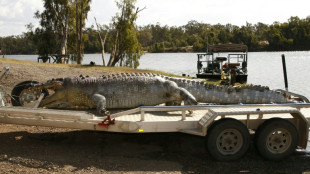 Croc-habitat gets green light for 2032 Olympic rowing
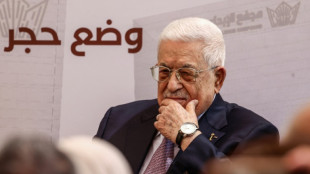
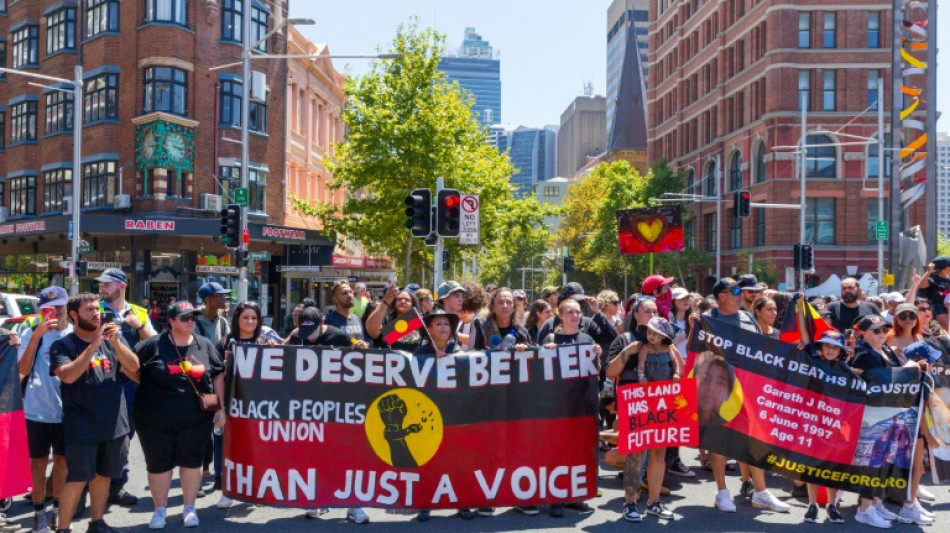
Thousands protested Australia's increasingly divisive national day Thursday as the public debates whether the country's Indigenous population should be recognised in the constitution.
Australia Day on January 26 has traditionally celebrated the arrival of European settlers at Sydney Harbour in 1788, and has typically been observed with beach parties and backyard barbecues.
But in recent years, it has also become a day of national protest, with some Australians calling it "Invasion Day" and saying it was the start of a cultural genocide by European colonisers.
Indigenous activist Paul Silva, speaking to a crowd of thousands at an Invasion Day rally in central Sydney, said the national holiday should be abolished.
"They invaded our lands, killing our extended families, turning our warriors into slaves," he said, as the crowd shouted "shame" in response.
"How can this day be celebrated?"
Indigenous poet Lizzie Jarrett said Sydney was "ground zero for a genocide of First Nations people".
"You think we're angry? Wouldn't you be angry?" she asked the crowd.
Ethan Lyons, 17, said he wanted to acknowledge the "beautiful land" of Indigenous Australians.
"We also have to acknowledge the almost 250 years of ongoing theft and destruction," he told the crowd.
Similar rallies took place in major cities across Australia.
At a lively protest in Hobart, the capital of the island state of Tasmania, demonstrators carried flags declaring "Stolen Land" and "We are still here".
The demonstrations have an added significance this year as Australia's centre-left government pushes to change the country's constitution to better recognise Indigenous Australians.
- 'Most important question' -
There is currently no mention of Indigenous Australians in the constitution, adopted in 1901.
They were banned from voting in some states and territories until the 1960s.
The public will vote on the change -- called the Indigenous Voice to Parliament -- in a binding referendum later this year.
It aims to give Indigenous Australians a greater say in national policy-making as they battle poorer health, lower incomes and higher barriers to education.
The Voice proposal has been politically divisive, with several conservative figures deriding it as unneeded and a waste of time.
But Indigenous lawyer Noel Pearson said the Voice was "the most important question" currently facing Australia.
"The question that will be put is: do we recognise Indigenous people in the constitution?" he told national broadcaster ABC.
"And if we say no to that, then I can't see how the future will be anything other than protest."
Indigenous Australians settled in the country an estimated 65,000 years ago but have suffered widespread discrimination and oppression since the arrival of the British more than two centuries ago.
Australian historian Lyndall Ryan has estimated that more than 10,000 Indigenous people were killed in 400 separate massacres since the British arrived.
The inequalities facing the Indigenous population remain stark -- they have life expectancies years shorter than other Australians and are far more likely to die in police custody.
K.Hill--AT