Investigation claims Credit Suisse handled dirty money

 Spanish PM begins vote campaign overshadowed by housing protests

 Putin told Trump about Iran's position on peace deal: Kremlin

 Verstappen wins chaotic Singapore sprint after Russell crashes

 Kiss tells Wallabies to 'return fire' after first loss as coach
 Russian strikes kill 11 including 3 children: Ukrainian authorities

 Russian teenager Andreeva breezes into China Open final
 Major earthquake hits Panama, injures at least 27

 India detains 'cockroach' leaders ahead of election protest

 'No divisions, no borders', French astronaut says of seeing Earth

 India's 'cockroach' movement chief detained ahead of major protest
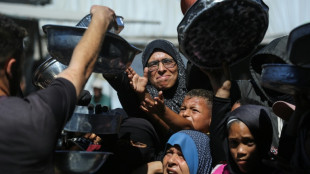
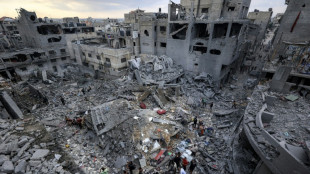 Year later, Gaza ceasefire promises mostly unfulfilled
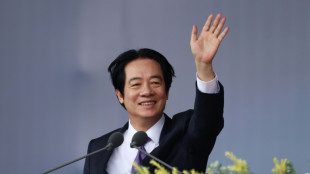 Taiwan's leader says increasing defence spending to 'deter war'

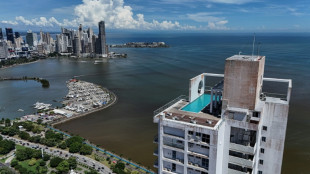 Major quake hits Panama, no deaths reported

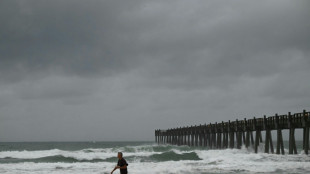 Hurricane Isaias makes landfall in Florida
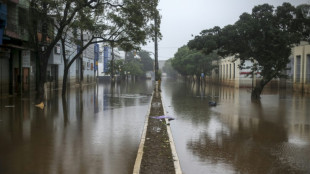 Brazil prosecutors sue Shell for $108 mn over deadly 2024 floods
 Major earthquake destroys buildings, roads in Panama
 Anthropic AI model sent fake murder tip to Philadelphia police
 7.7-magnitude quake rocks Panama, triggers tsunami warning

 Prince Harry booed at English rugby match
 Kiplimo and Feysa seek repeat Chicago Marathon wins
 Fuellkrug halts Dortmund after late goal flurry
 Injured Ravens quarterback Jackson ruled out of Falcons clash

 Brewers aim to take down two-time defending champion Dodgers in NLCS rematch

 Tsunami alert after major earthquake rocks Panama

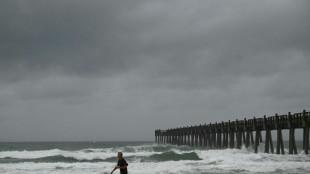 Outer bands of Hurricane Isaias lash US Gulf Coast

Credit Suisse handled billions of dollars in dirty money for decades, an international media investigation based on a massive data leak claimed on Sunday, in the latest setback for Switzerland's second-largest bank.
The bank held more than $8 billion (seven billion euros) in accounts of criminals, dictators and human rights abusers, among others, according to the investigation by a group comprising dozens of media organisations.
Credit Suisse rejected the "allegations and insinuations", saying in a statement that many of the issues raised were historical, some dating back more than 70 years.
According to the Organized Crime and Corruption Reporting Project (OCCRP), a non-profit journalism group, the "Suisse Secrets" investigation began when an anonymous source shared bank data with German newspaper Suddeutsche Zeitung more than a year ago.
That information, covering accounts collectively worth $100 billion at their highest point, was trawled through by 48 media outlets worldwide, including The New York Times, Le Monde and The Guardian.
Accounts identified as problematic held over $8 billion in assets, the investigation found.
The accounts included those held by a Yemeni spy chief implicated in torture, the sons of an Azerbaijani strongman, a Serbian drug lord and bureaucrats accused of looting Venezuela's oil wealth.
It was the largest leak ever from a major Swiss bank, OCCRP said.
- 'Tendentious interpretations' -
The leak included information on more than 18,000 bank accounts, many of which "remained open well into the 2010s", said the OCCRP.
In its statement Sunday, the bank said: "Credit Suisse strongly rejects the allegations and insinuations about the bank's purported business practices.
"The matters presented are predominantly historical, in some cases dating back as far as the 1940s, and the accounts of these matters based on partial, inaccurate, or selective information taken out of context, resulting in tendentious interpretations of the bank's business conduct."
About 90 percent of the accounts reviewed were closed -- or were in the process of being closed -- before the press approached the bank, it added. And more than 60 percent of them had been closed before 2015.
The OCCRP, in a statement on its website, said: "We believe the dozens of examples we have cited raise serious questions about Credit Suisse's effectiveness and commitment to meeting its responsibilities."
It said the investigation had found dozens of "dubious characters" in the data, including some linked to government officials.
Among those listed as holding accounts with Credit Suisse were the sons of former Egyptian President Hosni Mubarak and Jordan's King Abdullah II.
When asked why so many of these accounts existed, current and former Credit Suisse employees described a work culture that incentivised taking on risk to maximise profits, according to OCCRP.
"I've too often seen criminals and corrupt politicians who can afford to keep on doing business as usual, no matter what the circumstances, because they have the certainty that their ill-gotten gains will be kept safe and always within their reach," said OCCRP co-founder Paul Radu in a statement.
- A series of setbacks -
The international investigation is the latest in a series of setbacks that Credit Suisse has suffered recently.
In March 2021, the bank was hit by the collapse of Greensill Capital in which it had committed some $10 billion dollars through four funds. The implosion of the US fund Archegos cost it more than $5 billion.
And in Switzerland, a former Credit Suisse employee is among the defendants in a major corruption trial that has just started and involves alleged money laundering and organised crime in Bulgaria. The bank has said it will "defend itself vigorously in court".
Experts say draconian banking secrecy laws in Switzerland effectively silence insiders or journalists who may want to expose wrongdoing within a Swiss bank, according to OCCRP.
A Swiss media group was unable to participate in the investigation due to the risk of criminal prosecution, the organisation said.
E.Rodriguez--AT