German economy weathering hard winter but risks loom / Photo: Michael Sohn - POOL/AFP

 Princess Diana's brother makes new explosive claims against Charles

 Ovechkin on Russian political video: 'I support my country'
 Can we shut down AI?
 Teenager Sullivan named in new-look US squad

 Travis Scott and Keith Richards feature on GTA VI soundtrack

 AFP photo shows Trump examining image of apparent Kennedy Center razing
 Pochettino rings changes for USA friendlies

 Alonso says Chelsea ambition 'very clear' after end of Boehly era

 Mbappe draws political fire over Ceuta t-shirt controversy
 Third malaria death in Germany from outbreak tied to Frankfurt airport
 AtlasClear Holdings Reports Preliminary Fiscal 2026 Revenue of Approximately $20.1 Million, Up 85%; Revenue Plus Interest Income of Approximately $21.9 Million

 Alonso says Chelsea ambition clear after end of Boehly era
 Micron's Taiwan workers say 68 months' bonus not enough
 'Another arrow to the quiver': World Bank posts record private capital mobilization
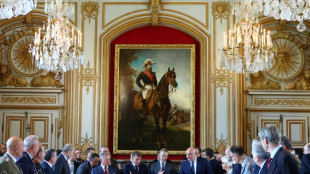 Macron hosts Lebanon security talks as UN mission nears end
 From land to race laws: what's driving the US-South Africa rift?

 Beyond Investment Returns: Families Are Measuring Wealth by Freedom, Continuity, and Legacy, According to Nour Private Wealth
 King Charles disputes claims in book by Princess Diana's brother
 Real Madrid fan group wants Mbappe apology over Ceuta shirt snub

 Nepal floods among 'most challenging' disasters: WFP
 Doubts as Italy eyes electric future for steel plant
 'One of the kindest people': Taraneh, 21, facing execution in Iran

 Japan eyes changing prostitution law to punish sex buyers

 After record rain, typhoon threatens new challenge to Asian Games

 Kids and social media: what would change under new EU law
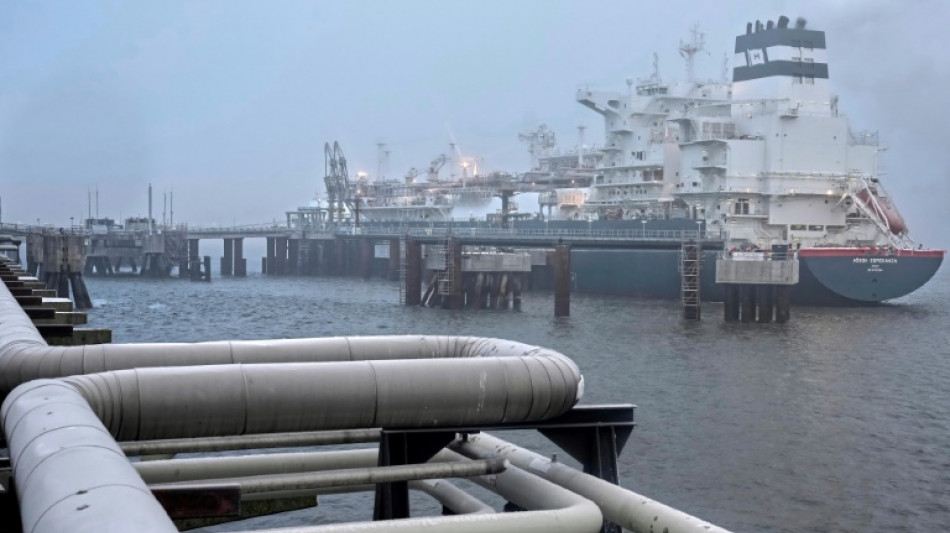
The surge in energy prices that followed Russia's invasion of Ukraine has pushed Germany to the brink of a recession, but the economic pain appears to be less severe than originally feared.
German statistics authority Destatis will publish GDP figures for the last three months of 2022 at 10:00 am (0900 GMT) on Friday, with analysts expecting any contraction to remain limited after the unexpected growth of 0.4 percent in the third quarter.
"The German economy was or is more resilient than was maybe feared in the autumn," said Jan-Christopher Scherer, economist at the DIW think tank in Berlin.
"There will not be a deep recession," Scherer told AFP.
The soaring cost of gas and electricity has stoked inflation and weighed on industry and consumers in Europe's largest economy.
But substantial government interventions and a mild European winter have cushioned the blow and allayed fears of a major downturn.
"In the areas where production is particularly energy intensive, we saw very sharp declines last year," said Michael Groemling, head of macroeconomic research at the IW Cologne institute.
But the outlook was "much better overall in December than it was in the autumn" thanks to an improved supply of energy, Groemling told AFP.
With most indicators flashing red, the government itself had forecast in October that the economy would shrink 0.4 percent over the whole of this year.
But efforts to build up gas reserves in preparation for the winter have allowed Germany to skirt acute shortages.
A massive 200-billion-euro ($216 billion) support package announced in September to limit household energy bills and support businesses has also taken the sting out of price rises, Groemling said.
After the initial shock of seeing prices shoot up, consumers largely came to terms with higher prices while industry found "innovative" ways to save energy, Scherer added.
Costs were nonetheless markedly higher than in recent years, a "burdensome factor" for industry, he said.
- 'Losing out?' -
Some analysts warn the reprieve may prove temporary given significant risks that lie ahead.
Germany will likely be unable to dodge a recession -- two consecutive quarters in which the economy shrinks -- a prospect that was likely around the turn of the year, said Oliver Holtemoeller, deputy chief of the economic think tank IWH.
"The coming months will be difficult," he said, noting that the sharp increase in energy prices as Russia throttled gas supplies to Germany had pushed inflation to a peak of 10.4 percent in October last year.
Such a rapid increase in consumer prices -- a pace not seen in decades -- would not leave Europe's largest economy "unaffected", Holtemoeller said.
The German auto industry association VDA has warned about the long-term consequences of higher energy prices for the flagship sector.
"Industry is the engine of Germany's prosperity and that engine needs energy," VDA president Hildegard Mueller said Wednesday.
Germany risks "permanently losing out" if it does not find a way to supply industry with affordable energy, she said.
Despite apparent robustness, "industrial production is still some four percent below its pre-pandemic level" of 2019, said Carsten Brzeski, head of macroeconomics at ING.
Drops in new orders, persistent high energy costs and China's shaky exit from its strict zero-Covid restrictions "all bode ill for the short-term outlook", Brzeski said.
"The former growth engine of the German economy is stuttering and improvement is not really in sight," he said.
W.Morales--AT