First US drug injection center aims to lead way on overdoses

 Spanish PM begins vote campaign overshadowed by housing protests

 Putin told Trump about Iran's position on peace deal: Kremlin
 Verstappen wins chaotic Singapore sprint after Russell crashes
 Kiss tells Wallabies to 'return fire' after first loss as coach

 Russian strikes kill 11 including 3 children: Ukrainian authorities

 Russian teenager Andreeva breezes into China Open final

 Major earthquake hits Panama, injures at least 27

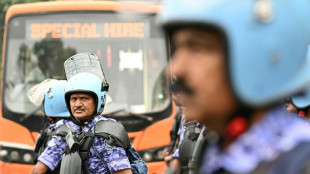 India detains 'cockroach' leaders ahead of election protest

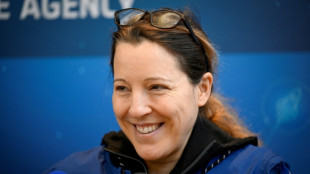 'No divisions, no borders', French astronaut says of seeing Earth
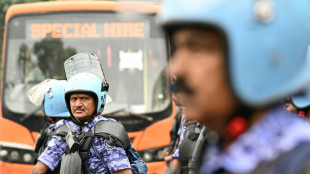 India's 'cockroach' movement chief detained ahead of major protest
 Year later, Gaza ceasefire promises mostly unfulfilled
 Taiwan's leader says increasing defence spending to 'deter war'
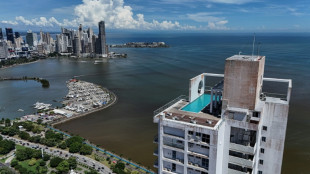 Major quake hits Panama, no deaths reported

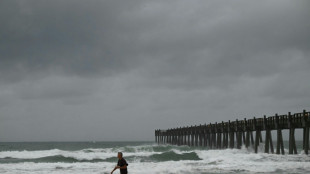 Hurricane Isaias makes landfall in Florida
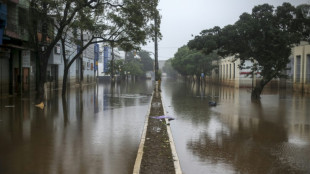 Brazil prosecutors sue Shell for $108 mn over deadly 2024 floods
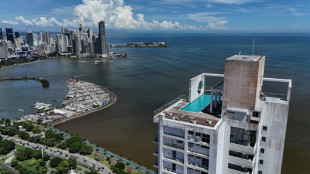 Major earthquake destroys buildings, roads in Panama

 Anthropic AI model sent fake murder tip to Philadelphia police
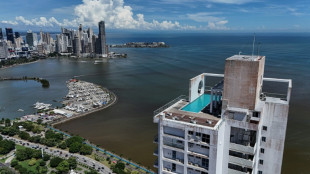 7.7-magnitude quake rocks Panama, triggers tsunami warning

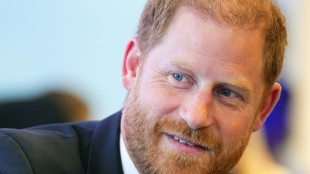 Prince Harry booed at English rugby match
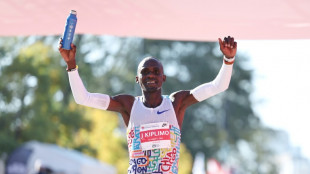 Kiplimo and Feysa seek repeat Chicago Marathon wins
 Fuellkrug halts Dortmund after late goal flurry
 Injured Ravens quarterback Jackson ruled out of Falcons clash
 Brewers aim to take down two-time defending champion Dodgers in NLCS rematch

 Tsunami alert after major earthquake rocks Panama
 Outer bands of Hurricane Isaias lash US Gulf Coast

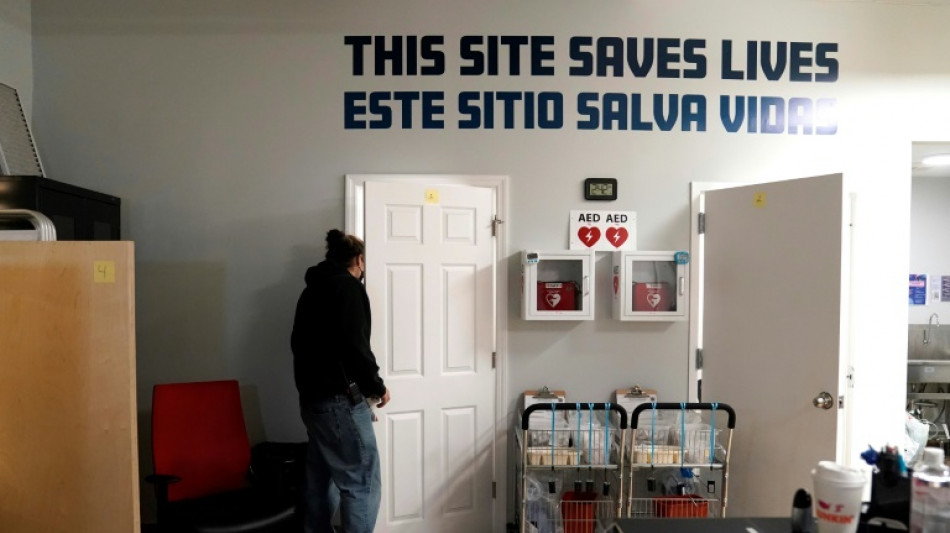
"This site saves lives," reads an inscription on the wall of America's first drug injection center in New York, which aims to serve as a model in a country blighted by record overdoses.
In the room, there are eight open cubicles all equipped with a chair, a table and a mirror, the latter to quickly see "if anything goes wrong," says 29-year-old Mark, a regular visitor.
"You're monitored the whole time," explains the Californian, who asked to be identified by an alias.
"There's music playing. It's a very non-rushed environment unlike when you're using a public bathroom and people are knocking. That's rushed and you're more likely to miss your injection and cause an abscess," he adds.
Mark -- who is trying to reduce his reliance on tranquillizers and opiates, an addiction he has been fighting for two years -- visits the Overdose Prevention Center in East Harlem.
On the table lie syringes, rubber bands, gauze pads and a multicolored assortment of straws.
In two small rooms, visitors can smoke crack, a cheap derivative of cocaine. A larger room with a TV on the wall serves as a place of rest or for other activities.
Drug overdoses killed 2,062 people in New York alone in 2020, the height of the city's Covid-10 pandemic, with higher rates in poorer neighborhoods and Black communities.
Fewer than 1,500 died in 2019 and fewer than 1,000 in 2015.
Between April 2020 and April 2021, the United States recorded more than 100,000 drug deaths, a record for a 12-month period.
- Fentanyl -
Some 77 percent of cases in New York in 2020 involved the powerful synthetic fentanyl, which is often mixed with heroin and cocaine, a cocktail that killed "The Wire" star Michael K. Williams in September last year.
Fentanyl is "in everything," laments Sam Rivera, director of OnPoint NYC, which manages two drug injection centers in New York.
"Every time we tested" a drug, "it had fentanyl," he tells AFP.
It was in the context of soaring incidences of fentanyl overdoses that OnPoint NYC opened the center inside an anonymous building on 126th Street, with the support of the Democratic-led city government.
Rivera had already been helping users before, with care and prevention. He knew that when some would use the bathroom, they would also take drugs.
"There's a door in between and when we responded to an overdose there was some time between the actual onset of the overdose and then our response," he explains.
Being able to view users injecting themselves at a safe site, a model that has been used in parts of Europe for a while, is a "game changer," says Rivera.
Alsane Mezon, a 56-year-old medical assistant, is one person keeping a close watch, ready to intervene if a person reacts badly to the injection.
"It doesn't happen a lot, at least once a week," she says.
She has oxygen at her disposal, and if that is not enough, there is also naloxone, the main antidote to an opioid overdose.
Rivera told AFP at the beginning of February that staff had intervened during about 130 overdoses at the two sites.
In East Harlem, the center also offers medical care, acupuncture, laundry, hot meals, housing and help finding a job.
Some visitors "just come for a coffee and watch a movie," even after they stop using the center to inject, says Rivera, 59.
The injection rooms are a political flashpoint in the United States, with Republican senators accusing President Joe Biden this week of wanting to finance "crack pipes."
The federal government does not officially support the centers, but the Justice Department has said it is studying the program and having "discussions with state and local regulators about appropriate guardrails for such sites, as part of an overall approach to harm reduction and public safety."
- Opposition -
The center is also causing a stir locally, where East Harlem's community board called for a moratorium on any new facilities for drug users before the center opened.
Board president Xavier Santiago says the board fears that the center will attract more drug users to the area.
"It's not from a lack of empathy," he told AFP. "Many of our families, our friends have been impacted by substance abuse and overdose death."
Keith Humphreys, a psychiatry professor at Stanford who conducted a study with The Lancet on the opioid crisis, believes the centers can save lives but ultimately "have very little effect on the epidemic as a whole."
Instead, he'd rather see officials make it easier for the public to be able to get and administer naloxone.
For Rivera, there's no time to lose.
"We waited too long," he says.
Ch.Campbell--AT