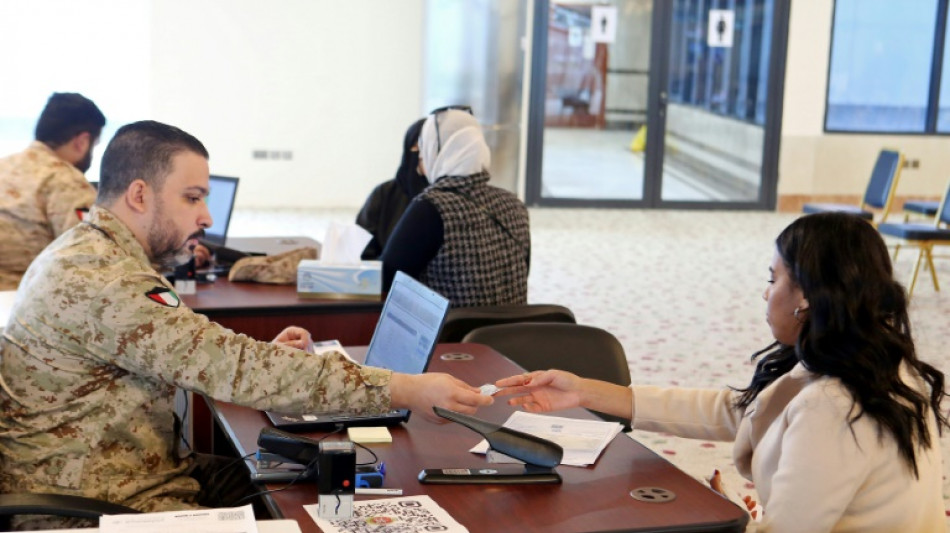
Kuwait army allows women in combat roles, but without guns

 Spanish PM begins vote campaign overshadowed by housing protests

 Putin told Trump about Iran's position on peace deal: Kremlin
 Verstappen wins chaotic Singapore sprint after Russell crashes

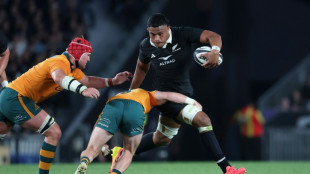
 Kiss tells Wallabies to 'return fire' after first loss as coach
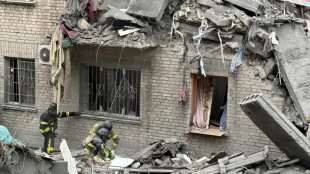 Russian strikes kill 11 including 3 children: Ukrainian authorities

 Russian teenager Andreeva breezes into China Open final
 Major earthquake hits Panama, injures at least 27

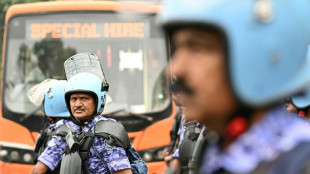 India detains 'cockroach' leaders ahead of election protest

 'No divisions, no borders', French astronaut says of seeing Earth

 India's 'cockroach' movement chief detained ahead of major protest
 Year later, Gaza ceasefire promises mostly unfulfilled
 Taiwan's leader says increasing defence spending to 'deter war'

 Major quake hits Panama, no deaths reported

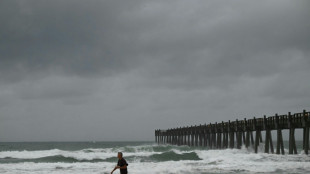 Hurricane Isaias makes landfall in Florida
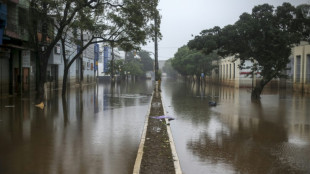 Brazil prosecutors sue Shell for $108 mn over deadly 2024 floods
 Major earthquake destroys buildings, roads in Panama

 Anthropic AI model sent fake murder tip to Philadelphia police
 7.7-magnitude quake rocks Panama, triggers tsunami warning

 Prince Harry booed at English rugby match

 Kiplimo and Feysa seek repeat Chicago Marathon wins

 Fuellkrug halts Dortmund after late goal flurry

 Injured Ravens quarterback Jackson ruled out of Falcons clash

 Brewers aim to take down two-time defending champion Dodgers in NLCS rematch

 Tsunami alert after major earthquake rocks Panama

 Outer bands of Hurricane Isaias lash US Gulf Coast

Kuwaiti women are angry after the military, having allowed female soldiers in combat roles, decided they need the permission of a male guardian and banned them from carrying weapons.
Activists have decried the policy as "one step forward, two steps back" after the defence ministry also decided that women in the armed forces, unlike civilians, must wear head coverings.
The moves have sparked an online backlash in Kuwait, usually regarded as one of the most open societies in the Gulf.
"I don't know why there are these restrictions to join the army," Ghadeer al-Khashti, a sports teacher and member of Kuwait Football Association's women committee, told AFP.
"We have all kinds of women working in all fields, including the police force."
She said her mother had helped the resistance when Iraqi dictator Saddam Hussein in 1990 invaded Kuwait and occupied it for seven months before being pushed out by a US-led international coalition.
"My mum during the Iraqi invasion used to hide weapons under her abaya and transport them to members of Kuwait's resistance, and my father encouraged it," said Khashti.
"I don't understand on what basis they see women as weak."
The ministry decided in October to allow women in combat roles but then imposed the restrictions after the defence minister was questioned by conservative lawmaker Hamdan al-Azmi.
Azmi, emboldened by an Islamic religious edict, or fatwa, had argued that having women in combat roles "does not fit with a woman's nature".
- 'Women martyrs' -
Lulwa Saleh al-Mulla, head of the Kuwaiti Women's Cultural and Social Society, said the ministry's restrictions are discriminatory and unconstitutional and vowed legal action by the organisation.
"We have women martyrs who defended their country of their own volition," she told AFP. "No one ordered them to do that but the love for their country.
"We are a Muslim country, that is true, but we demand the laws not be subject to fatwas. Personal freedom is guaranteed in the constitution, on which the country's laws are based."
Kuwaiti women earned the right to vote in 2005 and have been active both in cabinet and parliament, though they are poorly represented in both.
Unlike most Gulf countries, Kuwait is known to have an active political scene, with MPs regularly challenging the authorities.
Earlier this month, dozens of Kuwaiti women staged a protest against the suspension of a women's yoga retreat deemed "indecent" by conservatives.
One of them was Azmi who, in Twitter posts, denounced the retreat as "dangerous" and "alien to our conservative society".
Women protesters carried placards denouncing the "exploitation of women's issues" in politics, as well as the "regime of fatwas" and "guardianship of women".
The debate about the army's new rules for women has taken an irrational turn, said Ibtihal al-Khatib, an English-language professor at Kuwait University.
"The army needs to integrate both women and men without discrimination," the feminist academic told AFP.
"Danger does not differentiate between men and women, and neither does death during battle."
Ch.Campbell--AT