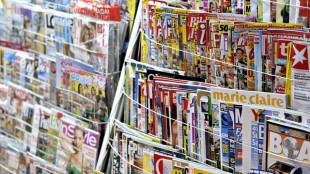
'Infobesity': How queen coverage could fuel 'news fatigue' / Photo: STEPHANE DE SAKUTIN - AFP/File

 Pietersen joins England coaching team ahead of World Cup

 Germany's triumphant far-right AfD aims fire at Merz

 Fury claims Joshua bout is off, calls for Usyk trilogy

 British family bids to row back against suicide taboo
 China's teenage 223cm basketball player 'just a little girl'
 Tokyo's Shinjuku to ban more than half of vacation rentals

 Australian Rules limits contact training to reduce concussion

 Germany's Merz under pressure from far-right election triumph
 Nepal tunnel rescues face 'unprecedented' challenge

 Mourinho's Real Madrid European revival bid starts with Inter reunion

 Solomons PM survives attempt to oust government
 Ohtani 'unlikely' to pitch again this season, says Dodgers manager
 Driver thanks 'superhero' rival for saving him from flaming race car

 Can dogs sniff cancer? AI joins the hunt in India
 Shelton steams into US Open quarter-final clash with Alcaraz

 25 years on, America seeks to keep 9/11 memories alive

 'Trumpapalooza' tests Republican bet on unpopular US president

 Pegula tops Cirstea to reach US Open quarter-finals
 Australians could opt out of social media algorithms under new law
 Genflow Biosciences PLC Announces Appointment of Investor Relations Adviser
 Enjoying the moment: Alcaraz steps it up to reach US Open quarter-finals
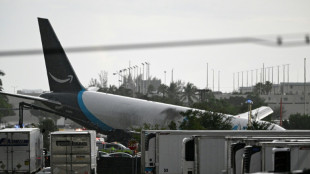 Five dead, five injured after Amazon cargo plane overshoots Miami runway
 La Rochelle half-backs lead fightback against Toulouse
 US envoys have 'more effective proposals': Ukraine official

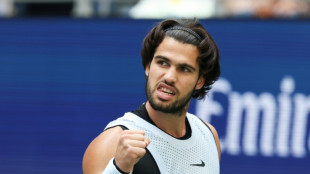 Defending champion Alcaraz powers into US Open quarter-finals

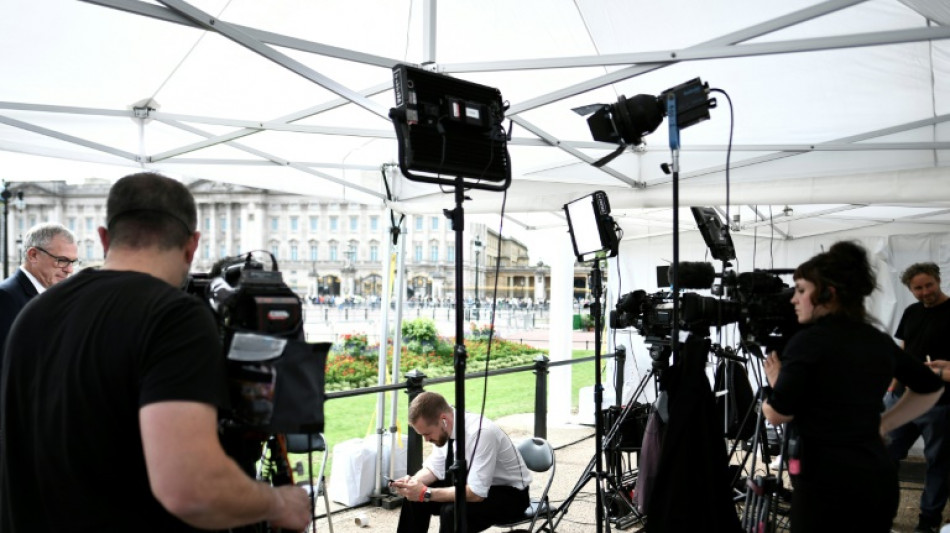
Endless live TV feeds, analysts breathlessly picking apart each gesture, newspapers bursting with commentary: Queen Elizabeth II's death has been covered from every angle by the world's media.
But experts have told AFP that blanket coverage like this may only encourage more people to turn off the news entirely -- deepening the malaise surrounding the industry.
"We're already seeing criticism of the... blanket coverage," said Nic Newman of the Reuters Institute for the Study of Journalism at Oxford University.
This is even more true outside the UK.
"We've all been surprised (by) the extent to which the international media has been interested in a sustained way about the story," he said.
TV stations around the world reported strong viewing figures when the queen's death was announced.
On Twitter, an unprecedented 46.1 million messages on the subject were posted between Thursday and Tuesday, according to the specialist platform Visibrain.
But dissenting voices are growing louder as the coverage continues.
Many social media users complained that the story had in effect pushed every other issue off the agenda.
Paul Barry of Media Watch, a TV show on Australia's ABC public broadcaster, told his viewers that the queen was clearly well liked, before asking: "But did the Australian media really need to go so crazy with the coverage?"
- 'Information fatigue' -
French journalist David Medioni, of the Media Observatory of the Jean-Jaures Foundation in Paris, said the story perfectly illustrated the dilemmas of the modern news industry.
"You can't not cover it, but all the media cover it in the same way," he said.
When the media has exhausted all the angles "you can end up feeling that you haven't heard anything useful or interesting".
Medioni co-led a survey published in early September that investigated "information fatigue", where consumers feel stress and exhaustion at being bombarded by news on multiple platforms.
Some 53 percent of French respondents said they suffered from it.
The Reuters Institute polled people in 40 countries earlier this year and came to a similar conclusion.
Almost four out of 10 respondents said they sometimes deliberately avoided the news when it was depressing, up from 29 percent in 2017.
Almost half (43 percent) said they were put off by the repetitive nature of the news.
Newman, lead author of the report, said it was tricky for the media to keep a story going for days once the initial emotion has passed.
- 'Addictive relationship' -
Medioni is broadly unimpressed with the media's lack of self-reflection when it comes to coverage of events like the queen's death.
But he also suggested the public had an "addictive relationship" with the news, which he labelled "infobesity".
"We have supersized Big Mac meals of news," he said.
"We know it's bad because we feel a form of exhaustion, but we continue to feed on it without knowing how to stop."
He said escaping from this exhaustion was "not just a matter for the media and democracy, it's a matter of public health".
Even those involved in the production of news are not immune.
US journalist Amanda Ripley wrote in a July opinion piece in The Washington Post that she had a "vaguely shameful" secret.
"I've been actively avoiding the news for years," she wrote.
She suggested the media should move away from "outrage, fear and doom" and start "systematically creating news for humans".
S.Jackson--AT