False AI 'fact-checks' stir online chaos after Kirk assassination / Photo: Michael Ciaglo - GETTY IMAGES NORTH AMERICA/AFP

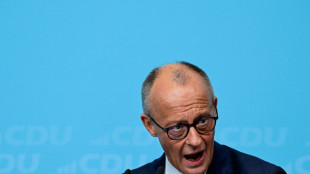
 Germany's Merz vows to stay course despite new vote losses

 Man City outgun Sunderland despite Brobbey hat-trick, Man Utd rescue Fulham draw
 Mourinho blames ref committee for Real Madrid derby defeat
 Maresca craves a 1-0 win after eight-goal Man City thriller
 Atletico Madrid beat Real Madrid in tense derby clash

 Reusser retains world time-trial title

 Man City outgun Sunderland despite Brobbey hat-trick, Liverpool win at Bournemouth

 Top US, Chinese economic officials meet ahead of Trump-Xi summit
 Erdogan's LGBTQ crackdown 'first step of election campaign': activist
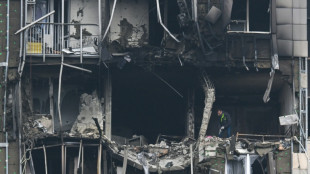 Mass drone barrage on Moscow kills two

 82-year-old dies after beach fight in Greece over sun lounger

 US warns of rapid escalation in Mideast war

 Iran 'put hearts on the court' to win Asian Games basketball bronze

 School girl Yu helps China dominate in Asian Games swimming openers
 Myanmar win first Asian Games teqball gold as Spain great Puyol watches

 China's 13-year-old Yu scorches to first major gold at Asian Games
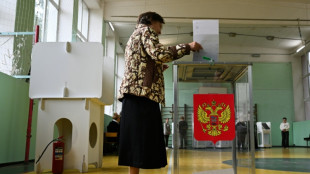
 Russians vote on last day of parliamentary elections

 Hong Kong pays final respects to former city leader Tung

 Typhoon put people off Asian Games opening ceremony, official says

 China's 13-year-old Yu cruises as Asian Games swimming begins

 AI 'warning shots' focus Beijing on national security risks

 Philippine tribe in limbo over US-led tech hub

 Leo XIV, first US pope transcends his restrained style

 Singer Ed Sheeran says Gaza situation 'unjustifiable' following controversy

 In 'Tenzing', a Sherpa mountaineer gets his due

With a fire hose of misinformation surrounding the assassination of US right-wing activist Charlie Kirk, social media users have turned to AI chatbots for reliable updates -- only to encounter contradictory or inaccurate responses, further fueling online confusion.
The trend highlights how chatbots often generate confident responses, even when verified information is unavailable during fast-developing news events, energizing misinformation across platforms that have largely scaled back human fact-checking and content moderation.
A day after Kirk, a 31-year-old prominent ally of President Donald Trump, was fatally gunned down at a university in Utah, the X account of AI chatbot Perplexity falsely stated that the activist was never shot and was "still alive," according to the watchdog NewsGuard.
When posts containing an authentic video of Kirk being shot swirled online, the X account of Grok -- Elon Musk's AI chatbot -- stated that it was a satirical clip.
"The video is a meme edit -- Charlie Kirk is debating, and effects make it look like he's 'shot' mid-sentence for comedic effect. No actual harm; he's fine and active as ever," Grok wrote.
Grok also falsely claimed that a Utah-based registered Democrat named Michael Mallinson had been identified as the shooter, wrongly attributing the information to major news outlets such as CNN and the New York Times.
Mallinson, in reality a 77-year-old retired Canadian banker living in Toronto, said he was "shocked" by thousands of social media posts that labeled him the culprit.
Breaking news events often spark a frantic search for new information on social media, frequently leading to false conclusions that chatbots then regurgitate, contributing to further online chaos.
The tide of misinformation comes amid a volatile environment in the United States following Kirk's assassination, with many right-wing influencers from Trump's Make America Great Again (MAGA) political base calling for violence and "retribution" against the left.
The motives of the gunman involved in the shooting -- who remains at large -- are unknown.
- 'Liar's dividend' -
Meanwhile, some conspiracy theorists have baselessly claimed that the video showing Kirk being shot was AI-generated, asserting that the entire incident was staged.
The assertion underscores how the rise of cheap and widely available AI tools has given misinformation peddlers a handy incentive to cast doubt about the authenticity of real content –- a tactic researchers have dubbed as the "liar's dividend."
"We have analyzed several of the videos (of Kirk's shooting) circulating online and find no evidence of manipulation or tampering," said Hany Farid, the co-founder of GetReal Security and a professor at the University of California, Berkeley.
Farid also reported seeing some AI-generated videos.
"This is an example of how fake content can muddy the waters and in turn cast doubt on legitimate content," he said.
The falsehoods underline how facts are increasingly under assault in a misinformation-filled internet landscape, an issue exacerbated by public distrust of institutions and traditional media.
It has exposed an urgent need for stronger AI detection tools, experts say, as major tech platforms have largely weakened safeguards by reducing investment in human fact-checking.
Researchers say chatbots have previously made errors verifying information related to other crises such as the Israel-Hamas war in the Middle East, the recent India-Pakistan conflict and anti-immigration protests in Los Angeles.
A recent audit by NewsGuard found that 10 leading AI chatbots repeated false information on controversial news topics at nearly double the rate compared to one year ago.
"A key factor behind the increased fail rate is the growing propensity for chatbots to answer all inquiries, as opposed to refusing to answer certain prompts," NewsGuard said in a report last week.
"The Large Language Models (LLMs) now pull from real-time web searches -- sometimes deliberately seeded by vast networks of malign actors."
N.Mitchell--AT