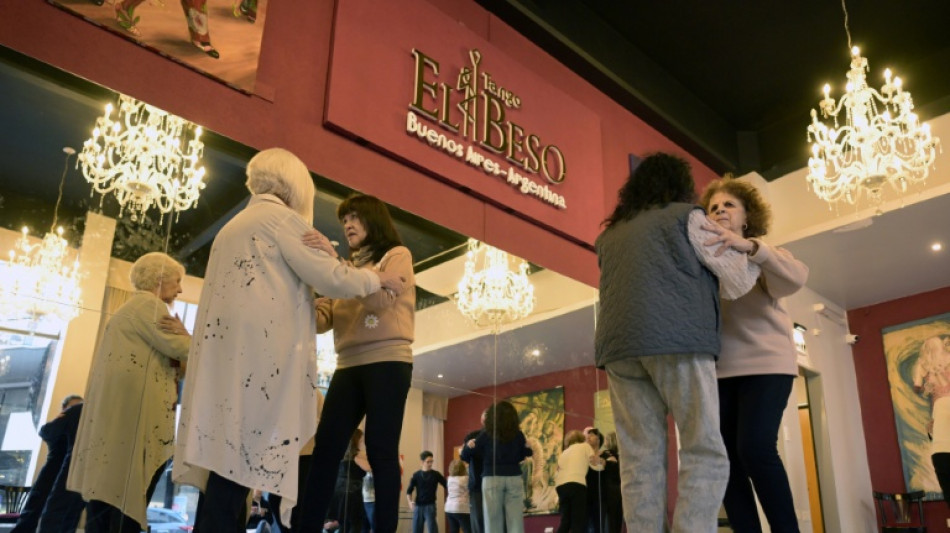
In Argentina, the tango keeps Parkinson's symptoms at bay / Photo: JUAN MABROMATA - AFP

 Liverpool boss Iraola urges Isak to raise his level

 Evenepoel wins record 4th straight world time-trial title
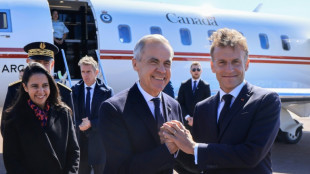
 France's Macron, Canada's Carney announce closer ties
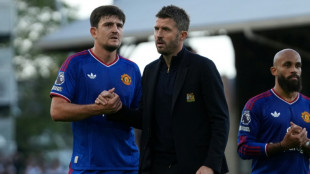 Carrick defends troubled Man Utd after Fulham escape
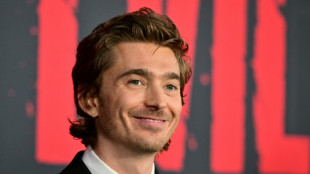 Horror movie 'Resident Evil' tops N. American box office
 Germany's Merz vows to stay course despite new vote losses
 Man City outgun Sunderland despite Brobbey hat-trick, Man Utd rescue Fulham draw
 Mourinho blames ref committee for Real Madrid derby defeat
 Maresca craves a 1-0 win after eight-goal Man City thriller
 Atletico Madrid beat Real Madrid in tense derby clash
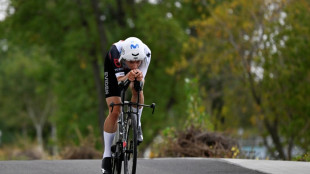 Reusser retains world time-trial title
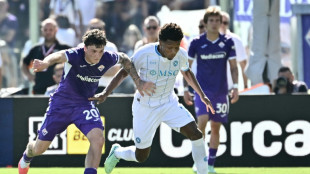
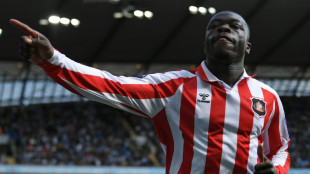 Man City outgun Sunderland despite Brobbey hat-trick, Liverpool win at Bournemouth

 Top US, Chinese economic officials meet ahead of Trump-Xi summit
 Erdogan's LGBTQ crackdown 'first step of election campaign': activist

 Mass drone barrage on Moscow kills two
 82-year-old dies after beach fight in Greece over sun lounger
 US warns of rapid escalation in Mideast war

 Iran 'put hearts on the court' to win Asian Games basketball bronze

 School girl Yu helps China dominate in Asian Games swimming openers

 Myanmar win first Asian Games teqball gold as Spain great Puyol watches

 China's 13-year-old Yu scorches to first major gold at Asian Games

 Russians vote on last day of parliamentary elections

 Hong Kong pays final respects to former city leader Tung

 Typhoon put people off Asian Games opening ceremony, official says

 China's 13-year-old Yu cruises as Asian Games swimming begins

When the tango begins to play, Lidia Beltran shrugs off the Parkinson's that plagues her, takes hold of her therapist and dances, her body fluid and her steps precise, as part of an innovative treatment program in Buenos Aires.
Some 200 patients have participated in tango workshops offered over the past 15 years at Ramos Mejia Hospital to study the impact of the dance on the symptoms of this incurable neurodegenerative disease, organizers told AFP.
"One of the main problems of the disease is gait disorder, and the tango, as a walking dance, works on starting and stopping steps, and strategies for walking," says neurologist Nelida Garretto.
The results have been encouraging. Many patients find ways to alleviate symptoms such as the motor blocks that "freeze" their gait, says neurologist Tomoko Arakaki.
"A patient told us that when she freezes, she tries to do the 'figure eight' -– one of the classic tango steps -- with her feet, and this enables her to get out of the freeze," Arakaki says.
Dancing the tango helps build a "sensory pathway" that helps with walking, she says.
"We know that Parkinson's requires pharmaceutical treatments. Tango is used to rehabilitate the motor part. With music, you can get out of complex situations," she says.
Beltran, 66 and diagnosed with Parkinson's two years ago, had never danced the tango. She joined the workshop on the advice of doctors.
"If it's to stop the advance, I have to do it, I have to dance for my life," she says.
In addition to tremors, stiffness, difficulty with balance and speech problems, Parkinson's leads to social isolation and depression. The tango workshop can help in these areas.
Beltran reports that dancing boosts her stability and her mood. "Tomorrow I'm sure I'll feel better because today I danced tango," she says.
- Tuesday happiness -
Patients dance with partners not suffering from Parkinson's, and under the guidance of dance therapists like Manuco Firmani, a professional tango dancer who has been involved with Parkinson's rehabilitation since 2011.
Emilia, 86, doesn't want to give her last name because she is dancing against the wishes of her son, who worries over the two-hour bus trip she takes to reach the studio in central Buenos Aires.
"For me this is the happiness of every Tuesday" says the retired teacher with a frail, bent body and whispery voice, for whom tango evokes memories of her youth.
"Every year we conduct specific evaluations to analyze the benefits of tango," says neurologist Sergio Rodriguez. "We have measured improvements in cognitive skills, motor skills, gait and balance."
- Multi-tasking -
Walking is at the core of the Argentine tango, specialists say. But that's not the only reason it is an effective rehabilitation method for Parkinson's patients.
Tango also requires dancers to follow rhythms, to move in a set direction and to interpret the physical cues of their dance partner.
"There are many simultaneous messages that must be resolved, which is very positive for this disease," says Garretto.
At the end of class, there is applause and "an air of satisfaction" in the room, says dance therapist Laura Segade.
"After all, who can take away what they've danced?"
K.Hill--AT

