
Spain's EU partners punt on Catalan language push / Photo: EMMANUEL DUNAND - AFP/File

 Indonesia doing 'everything' but still struggling to curb fires

 Once decried as 'human cockfighting', MMA wants Olympic spot

 China's Yu, 13, great for swimming says multiple Olympic medallist
 Putin's party set to retain power after Russia vote hit by cyberattacks, drones

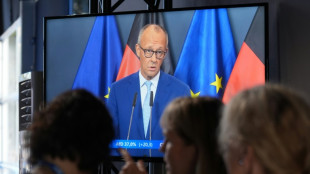
 Germany's Merz under pressure after bruising state election losses

 Messi, Miami frustrated in 2-2 draw with San Diego
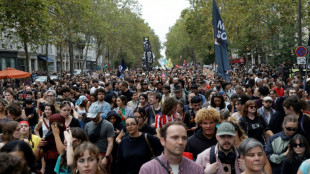 Thousands march in France against 'licence to kill' draft law

 Best Gold IRA Accounts 2026 Rankings Released: Top Precious Metals IRA Companies Compared in New Guide

 Braves clinch division title as Red Sox reach MLB playoffs

 Bordeaux-Begles hammer Stade Francais despite Jalibert injury

 Milan and Juventus end blips with home wins
 Bridgeman wins PGA Biltmore title with sizzling 61

 Williams injured as Bears shut down by Vikings

 US warns of rapid escalation in Middle East war

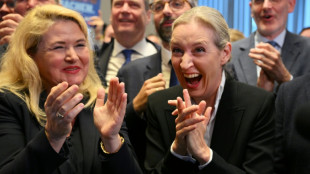 Germany's far-right AfD celebrates another state election win
 Russia vows revenge for election-day attacks as poll shows ruling party win

 Spaun late shows snatches PGA Championship win

 Conceicao strikes as Juventus beat Atalanta

 Britain, Zverev-inspired Germany, Spain complete Davis Cup finals

 Man Utd salvage Fulham draw as pressure mounts on Carrick

 Spanish civil war drama 'The Black Ball' wins at Toronto festival

 Germany's Merz shaken by far-right and far-left gains in state votes

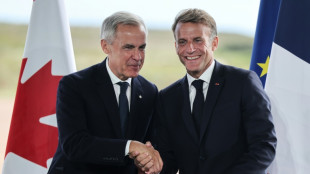
 Macron welcomes Canada's Carney to French Atlantic territory

 Fiorentina frustrate Napoli with Serie A draw, Como upset

 Five-star Man City top Premier League after Sunderland thriller

Spain has revived a push for Basque, Catalan and Galician to be made official EU languages, despite a less-than-enthusiastic response from fellow European countries fearing a domino effect.
After an unsuccessful bid in 2023, Madrid brought its regional language campaign back to Brussels this week, managing to get it onto the agenda of a meeting of European ministers on Tuesday.
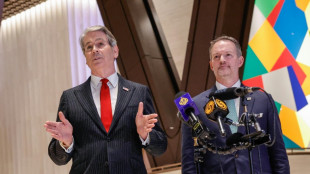
No decision was made -- and the question was punted to a later date for lack of consensus, according to an EU diplomat -- but the awkwardness was palpable as ministers tip-toed around the issue in comments to reporters.
For context, the socialist government of prime minister Pedro Sanchez depends on support from Catalan lawmakers to get most of its legislation through the Spanish parliament.
Spain has generated "big pressure" around the issue, said a second diplomat, on condition of anonymity.
But concerns are rife among the other 26 EU countries -- with fears a change in Spain's favour could open the door to requests for any number of minority languages across the bloc.
"We understand the importance of this issue for Spain," stressed Marilena Raouna, deputy European affairs minister for Cyprus.
"What is important is that it is done in a way that is legally sound and that does not create a precedent," she added.
The European Union currently has 24 official languages but there are around 60 minority and regional languages in the 27-nation bloc.
All legal EU documents -- treaties, laws and international agreements -- must be translated into the 24 languages with interpretation available at leaders' summits and ministerial meetings.
- The Russian question -
Adding a new language requires unanimous support among member states, which is far from secured in the case of the Spanish request, although several countries signalled sympathy with Madrid.
"I think linguistic diversity is important, and we are always constructive," said Finland's minister Joakim Strand before arguing for a delay on grounds the issue was not yet "mature" for a vote.
Some warn against "making a European issue out of a national one", in the words of one diplomat.
And several countries fear being forced, as a knock-on effect, to grant official status to regional languages used on their territory.
In the Baltic countries for instance, there are fears that Russian -- spoken by a large part of the population -- could be made an official language of the bloc, said Marko Stucin, Slovenia's state secretary for European affairs.
According to one diplomat, the legal services of the European Council, which brings together member states, warn that answering Spain's request would require changing the bloc's founding treaties.
"We have to act in accordance with European treaties," said France's Europe minister Benjamin Haddad. "Let's work together with the Spanish to find a solution."
But other countries have hinted at a possible compromise down the road: limiting any change to long-established regional languages that already have official status at a national level.
In that scenario, argues Slovenia's Stucin, only three languages would be eligible: Basque, Catalan and Galician.
Madrid argues indeed that the three tongues -- of which Catalan is the most widely-used with more than nine million speakers -- should be considered in a different category to other minority languages.
Another sensitive issue is cost, with the bloc seeking to pour billions into strengthening its defences, and bracing for a gathering trade war with Washington.
Spain, according to Stucin, has always insisted it would foot the extra translation bill.
That remains to be seen, cautions another EU diplomat.
"We really do see and appreciate the efforts the Spanish government is vesting in this topic," summed up the Croatian minister, Andreja Metelko-Zgombic.
"It deals also with some legal implications, and I think we would be best served to look at it really, very, very closely," she added.
A.Williams--AT

