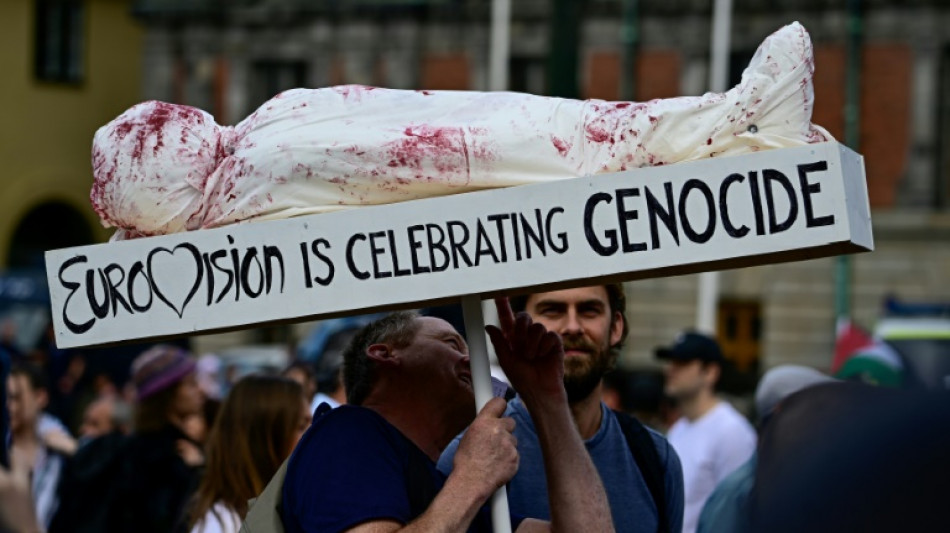
Depoliticising Eurovision 'impossible', experts say / Photo: Tobias SCHWARZ - AFP

 Sbírka Haupt: Co o nás lidech prozrazují peníze
 China confirms Xi to visit US this week for Trump talks
 مجموعة هاوبت: ما يكشفه المال عنا نحن البشر
 Colecția Haupt: Ce ne dezvăluie banii despre noi, oamenii
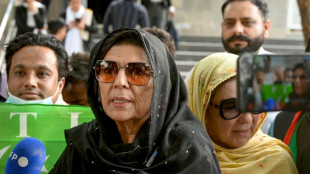 Sisters of jailed Pakistan ex-PM Imran Khan arrested

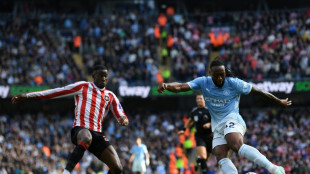 African players in Europe: Semenyo brace helps City top table
 'For my family': India boxer beats hardship, injury to go for Games gold
 Indonesia doing 'everything' but still struggling to curb fires
 Once decried as 'human cockfighting', MMA wants Olympic spot

 China's Yu, 13, great for swimming says multiple Olympic medallist
 Putin's party set to retain power after Russia vote hit by cyberattacks, drones

 Germany's Merz under pressure after bruising state election losses
 Messi, Miami frustrated in 2-2 draw with San Diego
 Thousands march in France against 'licence to kill' draft law

 4 Hacks for Yearlong Savings on Your Kids' Wardrobes

 InterContinental Hotels Group PLC Announces Transaction in Own Shares - September 21

 EB5 United's Cormont at Deer Valley East Village Achieves $224.8 Million Target EB-5 Raise; Offering Remains Open Toward $524.8 Million Maximum Raise
 Forest fire threatens tourist town in Colombian Andes

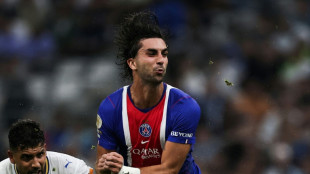 Torres on target again as PSG beat 10-man Marseille in Ligue 1
 Germany's Merz vows to stay course despite new election defeats

 Carrick demands Man Utd response after 'pathetic' jibes

 Liverpool boss Iraola urges Isak to raise his level
 Evenepoel wins record 4th straight world time-trial title
 France's Macron, Canada's Carney announce closer ties
 Carrick defends troubled Man Utd after Fulham escape
The Eurovision Song Contest is meant to be about celebrating music and cultural diversity, but politics inevitably seeps in, challenging the competition's long-standing claim to neutrality.
Hopeful artists drawn from 37 countries will compete in this year's contest in the Swiss city of Basel starting next week, with the big finale on May 17.
Politics is officially barred from the event, but as with most years, organisers will have their hands full striving to keep tensions over culture wars and conflicts like Israel's war in Gaza from spilling into the glitzy festivities.
Experts agree that is a tall order.
"It's impossible to depoliticise the event," Dean Vuletic, a historian and the author of the book "Postwar Europe and the Eurovision Song Contest", told AFP.
"It is completely impossible," agreed Jess Carniel, an associate professor at the University of Southern Queensland in Australia.
"With everyone competing under their national flag... there is always an undercurrent of politics."
From the inception of the contest nearly 70 years ago, the European Broadcasting Union (EBU), which organises Eurovision, has insisted on its non-political nature.
But politics have been omnipresent, from an Austrian protest over Spain's Franco dictatorship in 1969 to calls for European unity as the Soviet Union broke apart and Eastern European countries joined the contest in the early 1990s.
- Mass protests -
Before 1998 when Eurovision stopped requiring countries to perform in their national language, some strong political sentiments expressed in songs garnered little attention.
Greece submitted a song in 1976 slamming Turkey over its invasion of Cyprus, "but it was in Greek and there was not much attention", Lisanne Wilken, an associate professor in European studies at Denmark's Aarhus University, told AFP.
Since then, increased media attention and the possibility to put forth messages in English has meant that for "anyone who wants attention for a cause, Eurovision is a really good place to go", she said.
More recent expressions of political condemnation have certainly not gone unnoticed.
Russia's war in Ukraine dominated the discourse around the events in 2022, when Ukraine won the contest and Russia was barred, and again in 2023.
And last year, Israel's war in Gaza cast a long shadow over the event, when thousands of demonstrators protested in the Swedish city of Malmo against Israeli entrant Eden Golan taking part.
Demonstrations are already planned against Israel's participation this year, with Yuval Raphael -- who survived Hamas's deadly attack inside Israel on October 7, 2023 that sparked the war in Gaza -- due to perform her song "New Day Will Rise".
- New flag rules -
Experts say they do not expect protests on the same level as last year.
One reason, Vuletic suggested, was that "the campaign against Israel last year was not successful".
"No country boycotted Eurovision because of Israel" and the country garnered a high score, he pointed out.
Experts also said the EBU's introduction of new rules may have an impact.
The organisers have adopted a new flag policy, barring contestants from displaying flags other than that of the nation they represent, but loosening restrictions on the flags audience members can display.
Eurovision explained that it aimed to "strike a balance to ensure that our audiences and artists can express their enthusiasm and identities, (while providing) more clarity for the delegations when it comes to official spaces".
"I think the decision was mostly inspired by the references to Palestine last year," Vuletic said.
- Trump effect? -
Wilken meanwhile warned that the new policy could "backfire a little bit", with the ban on contestants waving Pride flags, for instance, possibly read as part of "the war on woke".
Carniel agreed, pointing out that there had been "a bit of a backlash against so-called identity politics at the song contest, and criticism of the extent to which Eurovision has really leaned into queer fandom".
By barring contestants from waving Pride flags or other symbols supporting LGBTQ rights, the organisers might "oddly be trying to bring more people in" by emphasising that the contest "is not an exclusively queer event".
The United States may not be part of the contest, but experts said President Donald Trump's anti-diversity messaging could energise efforts by conservative forces in Europe eager to rid Eurovision of its LGBTQ-friendly identity.
At the same time, the Trump administration's attacks on European countries could strengthen the contest's focus on forging a common European identity, Carniel suggested.
"Given the current political climate," she said, "that idea of European unity against the outside is a strong thing."
Ch.Campbell--AT