
Four men loom large in Microsoft history / Photo: CHIP SOMODEVILLA - GETTY IMAGES NORTH AMERICA/AFP

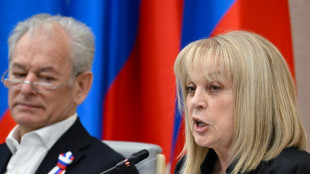 Putin's party secures record score in Russia election

 Haupt Koleksiyonu: Paranın Biz İnsanlar Hakkında Anlattıkları

 Spanish PM says unregulated AI could be 'devastating'

 Yu, 13, smashes record again with second Asian Games gold

 Switzerland to play without Xhaka over fake Covid certificate

 From Korean Chipmakers to Leveraged Semiconductor ETFs: STARTRADER Launches 49 New 24/7 Stock and ETF CFDs

 Thai badminton player first doping case at Asian Games: testers

 Колекція Гаупта: Що гроші розповідають про нас, людей

 German far-right AfD poll winner says Merz 'twilight' has begun

 Flights scrapped, evacuations urged as Typhoon Dujuan nears Japan

 China confirms Xi to visit US this week for Trump talks

 مجموعة هاوبت: ما يكشفه المال عنا نحن البشر

 Colecția Haupt: Ce ne dezvăluie banii despre noi, oamenii

 Sisters of jailed Pakistan ex-PM Imran Khan arrested

 African players in Europe: Semenyo brace helps City top table

 'For my family': India boxer beats hardship, injury to go for Games gold

 Indonesia doing 'everything' but still struggling to curb fires

 Once decried as 'human cockfighting', MMA wants Olympic spot

 China's Yu, 13, great for swimming says multiple Olympic medallist

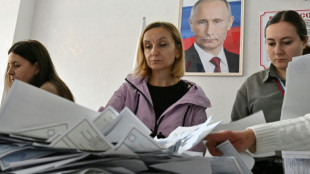 Putin's party set to retain power after Russia vote hit by cyberattacks, drones

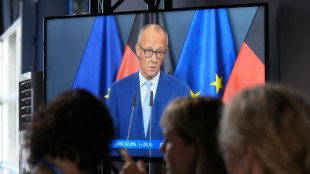 Germany's Merz under pressure after bruising state election losses

 Messi, Miami frustrated in 2-2 draw with San Diego

 Thousands march in France against 'licence to kill' draft law

 Best Gold IRA Accounts 2026 Rankings Released: Top Precious Metals IRA Companies Compared in New Guide

 InterContinental Hotels Group PLC Announces Transaction in Own Shares - September 21

Microsoft was shaped by Bill Gates, Paul Allen, Steve Ballmer and Satya Nadella over the course of the last half-century in the male-dominated tech world.
Friends since childhood in Seattle, Gates and Allen founded Microsoft in 1975 with a stated goal of putting a computer in every office and home.
- Gates -
Born William Henry Gates III in 1955 in Seattle, he began writing software programs while a 13-year-old schoolboy.
Gates dropped out of Harvard in his junior year to start Microsoft with Allen.
The childhood friends created MS-DOS operating system, since renamed Windows, which went on to dominate office work.
Gates built a reputation as a formidable and sometimes ruthless leader.
Critics argue he unfairly wielded Microsoft's clout in the market, and the US pressed a winning antitrust case against the company in the late 1990s.
In 2000, Gates ceded the CEO job to Ballmer, whom he befriended while the two were students at Harvard.
Gates chose to devote himself to a charitable foundation he established with his then-wife, Melinda.
He resigned from Microsoft's board of directors in 2020 -- shortly after the firm acknowledged the existence of an "intimate" relationship with an employee in the past.
The following year, the couple divorced. Melinda Gates faulted him for his relationship with disgraced financier Jeffrey Epstein, who was found guilty of sexually exploiting under-age girls.
His support of Covid-19 vaccine campaigns and agriculture programs that focus on climate change and women made Gates a favorite target of conspiracy theorists.
Baseless accusations aimed at Gates include him putting tracking chips in vaccines.
- Allen -
Paul Allen, born in 1953 in Seattle, was a schoolmate of Gates.
Allen was 10 when he started a science club at home, and would later bond with young Gates over computers.
"Microsoft would never have happened without Paul," Gates wrote in tribute to Allen, who died of cancer complications in 2018.
Gates told of Allen showing him a magazine featuring a computer running on a new chip, and warning that a tech revolution was happening without them.
Allen is credited with combining "microcomputer" and "software" to come up with "Micro-Soft".
He left Microsoft in 1983, but remained a board member until 2000. He went on to accuse Gates and Ballmer of scheming to "rip him off" by getting hold of his shares while he battled cancer.
- Ballmer -
Ballmer was seen as a devoted salesman who ramped up Microsoft revenue while neglecting innovation.
A Michigan native with a talent for mathematics, he graduated from Harvard.
Ballmer joined Microsoft in 1980 and was best man at the 1994 wedding of Bill and Melinda Gates.
Ballmer, now 69, succeeded Gates as chief executive in 2000.
His enthusiastic gestures, awkward dance moves, and voice-straining shouts made him the stuff of internet memes and company lore.
Ballmer oversaw the launch of Xbox video game consoles, Surface tablets, and Bing online search engine. Microsoft bought Skype and Nokia's mobile phone division on Ballmer's watch.
During his tenure, Microsoft was seen as clinging to PCs while lifestyles raced toward mobile devices and cloud-based software.
His product failures include Zune digital music players, Kin mobile phones, and a Vista version of Windows.
- Nadella -
Nadella took over as chief executive in early 2014 and says he learned leadership skills playing cricket as a boy growing up in India.
Nadella, who will turn 58 in August, was hired in 1992 while studying at the University of Chicago.
Early in his academic career, a drive to build things led him to pursue computer science, a focus not available during his engineering studies at Mangalore University.
Nadella's Microsoft bio shows stints in research, business, server and online services units.
For relaxation, he turns to poetry, which he likened to complex data compressed to express rich ideas in few words.
Nadella held firm that for Microsoft to succeed, it needed to adapt to a "cloud-first, mobile-first world".
Soon after becoming chief, he ordered the biggest reorganization in Microsoft's history.
He is credited with guiding Microsoft from a fading packaged software business to the booming market for cloud services.
Microsoft has been pumping billions of dollars into AI, investing in ChatGPT-maker OpenAI and infusing the technology across its products.
In a rare stumble, Nadella triggered an uproar his first year as chief by suggesting during an on-stage discussion that working women should trust "karma" when it comes to securing pay raises.
Microsoft's acquisitions under Nadella include Sweden-based Mojang, maker of the popular video game Minecraft; social network LinkedIn, and the GitHub online platform catering to software developers.
A.O.Scott--AT