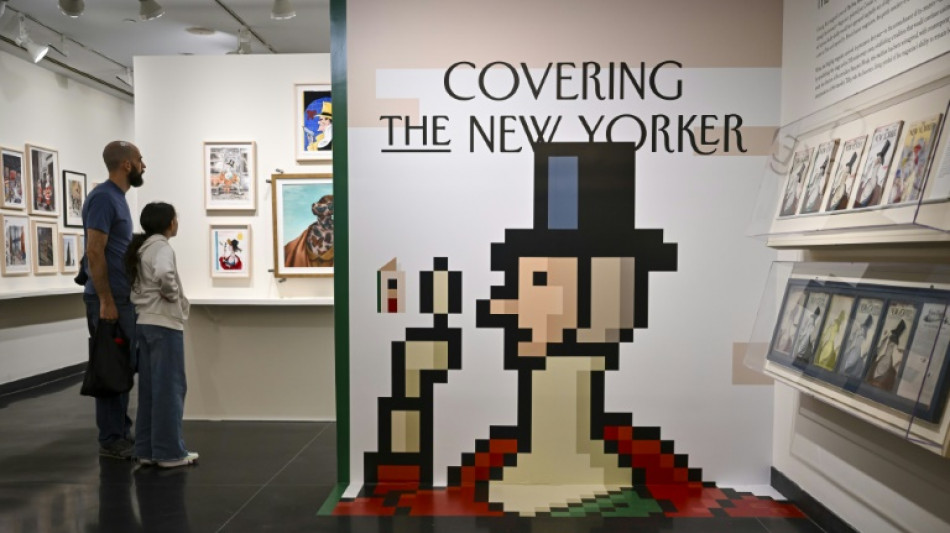
The New Yorker, a US institution, celebrates 100 years of goings on / Photo: ANGELA WEISS - AFP

 US media outlets to sue Trump administration after White House ban

 Global stocks rally on lower oil prices, US-China hopes

 EU proposes energy rating for data centres

 Schoolgirl Yu scorches to second gold as doping case rocks Games

 Putin's party secures record score in Russia election
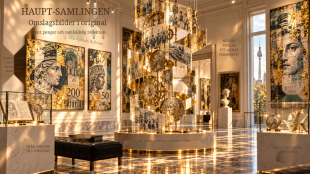
 Haupt Koleksiyonu: Paranın Biz İnsanlar Hakkında Anlattıkları

 Spanish PM says unregulated AI could be 'devastating'
 Yu, 13, smashes record again with second Asian Games gold
 Switzerland to play without Xhaka over fake Covid certificate

 From Korean Chipmakers to Leveraged Semiconductor ETFs: STARTRADER Launches 49 New 24/7 Stock and ETF CFDs
 Thai badminton player first doping case at Asian Games: testers
 Колекція Гаупта: Що гроші розповідають про нас, людей

 German far-right AfD poll winner says Merz 'twilight' has begun
 Flights scrapped, evacuations urged as Typhoon Dujuan nears Japan

 China confirms Xi to visit US this week for Trump talks

 مجموعة هاوبت: ما يكشفه المال عنا نحن البشر
 Colecția Haupt: Ce ne dezvăluie banii despre noi, oamenii
 Sisters of jailed Pakistan ex-PM Imran Khan arrested
 African players in Europe: Semenyo brace helps City top table

 'For my family': India boxer beats hardship, injury to go for Games gold

 Indonesia doing 'everything' but still struggling to curb fires

 Once decried as 'human cockfighting', MMA wants Olympic spot

 China's Yu, 13, great for swimming says multiple Olympic medallist

 Putin's party set to retain power after Russia vote hit by cyberattacks, drones

 Germany's Merz under pressure after bruising state election losses

The New Yorker magazine, a staple of American literary and cultural life defined by its distinctive covers, long-form journalism, witty cartoons and particular grammar, is celebrating 100 years on newsstands.
To mark the publication's centenary milestone, four commemorative issues are being released, while its namesake city will host seven exhibitions ahead of a Netflix documentary on the title known for its artistic cover creations.
Despite its storied history, the New Yorker often puts a mirror up to current events. Three founding fathers were shown on a recent cover design being marched out of office, carrying their effects in cardboard boxes in a satirical commentary on US President Donald Trump's assault on the status quo.
Francoise Mouly, the magazine's artistic director, said the New Yorker was not immune from the crisis plaguing the media.
"But I'm stubborn and I see the future with a lot of confidence and hope," she said.
Mouly has been one of the conductors of the New Yorker orchestra since 1993, selecting the cover that week after week lends the magazine its unique identity.
"There are some printed products that will never be replaced by digital -- children's books, comics, and the New Yorker," she told AFP at a recent exhibition showcasing the magazine's art, held at New York's Alliance Francaise cultural center.
One example of cover art on display depicts a rush-hour subway scene in which all the passengers are animals, while another by Mouly's husband Art Spiegelman shows a Black woman kissing a Hasidic man.
That 1993 design, which followed clashes between the two communities in a Brooklyn neighborhood, stirred controversy at the time and remains one of the title's most discussed covers.
With more than 5,000 editions over the past century, the magazine has published literary greats like Truman Capote's 1965 "In Cold Blood", while also giving James Baldwin space to write about race relations.
- 'Incredibly successful' -
Ernest Hemingway, Susan Sontag and JD Salinger are among the authors to have graced the pages of the magazine which combines current affairs, analysis, fiction, reviews, criticism, poetry, and of course its legendary cartoons.
Published weekly, the magazine has reported global scoops like the fullest account of the US atomic bomb dropped on Hiroshima, with the entirety of the August 31, 1946 edition given over to John Hersey's article.
In 1961 Hannah Arendt covered the trial of Nazi war criminal Adolf Eichmann in the reporting of which she coined the phrase "the banality of evil."
In recent years the magazine won a Pulitzer Prize for Ronan Farrow's reporting of predatory film mogul Harvey Weinstein, fuelling the "MeToo" movement.
"These were all remarkable, long-form stories that really changed the course of American history, not just American journalism," said Julie Golia, curator of an exhibition on the magazine at The New York Public Library.
Founded on February 21, 1925, the New Yorker did not always have such lofty ambitions.
At the height of the Jazz Age, amid post-war and pre-depression euphoria, husband and wife founders Harold Ross and Jane Grant set out to create "a magazine of wit and cosmopolitanism, an urbane magazine, but not one that took itself too seriously."
One hundred years on, it boasts 1.3 million subscribers, most of whom subscribe in both print and digital formats. It is a jewel in the crown of media group Conde Nast, which also publishes Vogue, Vanity Fair and GQ, having bought the New Yorker in 1985.
Despite its highbrow image, the magazine has adapted to the digital age emphasizing subscriptions over advertising, editor-in-chief since 1998 David Remnick said in a recent radio interview.
"The New Yorker is much more than those pages that people get in the mail," said Golia.
"It's a website, it's podcasts, it's a festival, and it's a brand (and) as a brand, it's incredibly successful."
Ch.Campbell--AT