Sudan band's music empowers sidelined ethnic group / Photo: Median Yasser - AFP

 Oasis fans gather in Venice for band reunion film

 Two Nepal rescues revive hopes 10 days after flood

 Pogacar to miss worlds after season-ending Vuelta crash

 Greenwood, Guendouzi handed bans after Fenerbahce-Lyon brawl
 In Iceland, the mystery of the poet, the tomb and the Danish grocer
 Ratko Mladic: Bosnian Serb commander to convicted war criminal

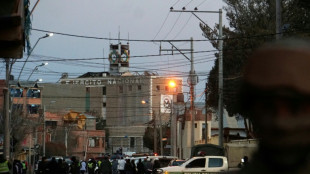 Bolivian army base blasts kill two, wound dozens

 Alcaraz, Sabalenka into US Open last 16 as Williams sisters lose on return

 Williams sisters fall in thrilling return to US Open doubles
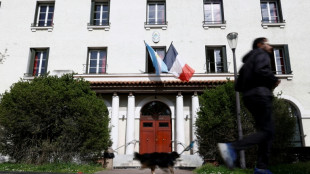
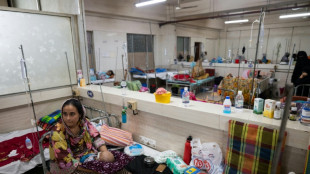 Bangladesh measles toll nears grim 1,000-child mark

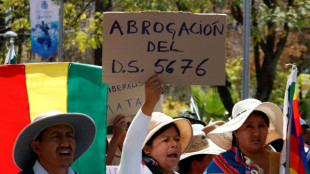 Bolivia farmers return to streets over diesel price hikes

 Tetris distances itself from controversial White House 'arcade' games
 Africa bigger, US smaller - UN adopts new map

 Bad weather will not affect All Blacks, says captain Savea

 Mbappe misses penalty as Parrott lifts Betis past Real Madrid

 PSG still winless in Ligue 1 as Monaco go top

 Defending champion Alcaraz reaches last 16 at US Open

 Lyles ends season before Budapest due to injury flare ups

 US Republicans announce probe into environment groups

 Sabalenka survives despite 'tricky' weed smell at US Open

 S&P Revises Outlook on Freedom Holding Corp. and Core Subsidiaries to Positive

 Job growth but record-high diesel prices -- Trump's midterms mixed bag

 Women's NBA comissioner Engelbert to retire at season's end

 Luis Enrique extends contract as PSG coach until 2030

 Duplantis pulls out of Diamond League finals

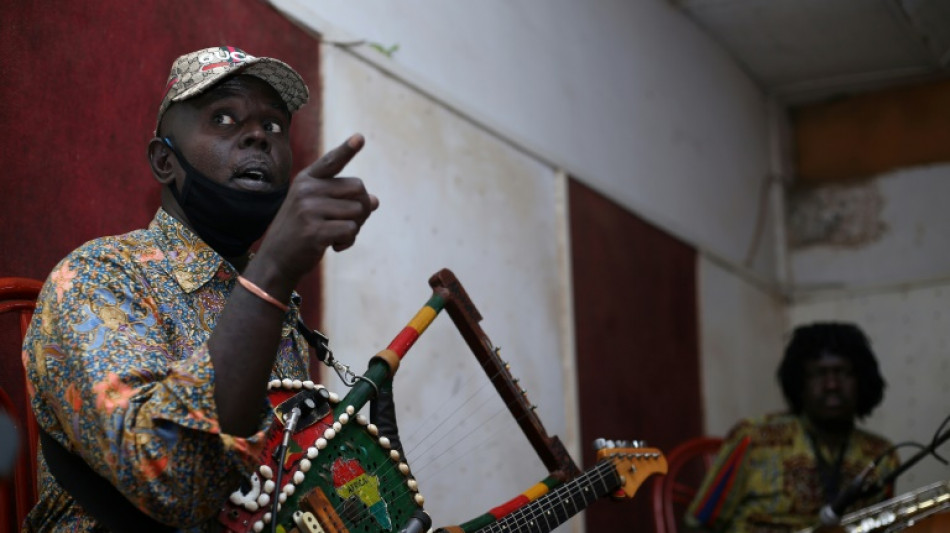
Noureddine Jaber, a musician with a unique part-guitar, part-tamboura instrument, is giving voice to Sudan's long-marginalised eastern communities through a new album.
Hailing from the Red Sea city of Port Sudan, Jaber belongs to the Beja people, a group of nomadic herders and breeders with unique languages, culture, food and music.
They have borne the weight of disenfranchisement especially under autocratic president Omar al-Bashir who was ousted in 2019.
But the title of his first album, due out later in June, conveys a different message: "Beja Power."
During Bashir's three-decade rule, non-Arab groups complained that his government allowed Arab culture to dominate, giving little representation to the country's many ethnic minorities.
Also known as "Noori", Jaber grew up devouring the rich heritage of distinct tunes of the Beja people who trace their roots back millennia.
Though he first formed his band in 2006, it was only in recent months that he was able to record his first album, at the age of 47.
"Beja music is the window to the struggles of its people," said Jaber, who called his six-member band "Dorpa", which means "the band of the mountains" in Bedawit, a Beja language.
"The Beja have long been marginalised and we are trying to convey their voice through music."
Though their region is a maritime trade hub known for its lush fertile fields, and rich gold mines, it is also one of the most impoverished parts of Sudan, itself one of the poorest countries in the world.
At a studio in Omdurman, the capital Khartoum's twin city, Jaber leads his band through rehearsal, producing a mellow, toe-tapping sound somewhat similar to jazz.
"Let's play the 'Saagama'," Jaber tells his bandmates: a bassist, saxophonist, rhythm guitarist, bongos player, and a conga drummer.
In his hand he holds his unique "tambo-guitar", an instrument he fashioned from a guitar neck and his father's vintage tamboura, a type of lyre played in East Africa.
Jaber's invention is embossed with small shells and a map of Africa.
- 'Very special rhythm' –
"Saagama", which means migration in Bedawit, is one of the album's most evocative tracks, inspired by ancient melodies from Sudan's east.
Unlike him, the rest of the band all hail from different parts of ethnically diverse Sudan.
They say it took them years to learn the Beja music scales and tones, traditionally played on drums and the tamboura.
"I've never been to east Sudan. I only learned the music from Noori," conga player Mohamed Abdelazim told AFP.
"The way they play drums in the east is different, very distinct. It has its own very special rhythm."
According to Jaber, the Beja's under-representation in Sudanese culture is part of why many fail to recognise their music.
Under Bashir, he told AFP, "the rule was for the Arab culture to prevail while other African ethnicities fade."
Beja musicians regularly faced restrictions, with authorities often stopping their performances.
"It could be for anything, lack of permits or because the audience were mixed groups" of men and women together, in contrast to those of Arab performers, Jaber said.
Abdelhalim Adam, the band's bassist, is originally from the ethnic Folani tribe of the Darfur region, on the other side of the country in Sudan's west.
For him, joining the band was particularly meaningful.
"The Beja's struggle is similar to our tribes in North Darfur," Adam said. "They are as marginalised."
Darfur was ravaged by civil war that began in 2003 when ethnic minority rebels took up arms against Bashir's Arab-dominated government, which unleashed the Janjaweed militia blamed for atrocities.
Hundreds of thousands were killed and millions have been displaced since.
The Beja also rebelled against Bashir's government for more than a decade. Communities in the east then joined nationwide calls for his ouster in the protests which began in 2018.
A glimmer of hope shone following Bashir's overthrow and the installation of a fragile transition to civilian rule which pledged to end marginalisation in Sudan.
But even then, Beja tribes complained of marginalisation.
Last year, they blockaded the main seaport of Port Sudan shortly before a military coup led by army chief Abdel Fattah al-Burhan upended Sudan's transition.
As Beja tribes continue to call for wider representation, Jaber has zeroed in on music as his avenue to highlight the struggles of his people.
"It's an effective way for our story to travel and attract the world's attention," he says. And it is also a way "to preserve our heritage."
A.Anderson--AT