TikTok's rise from fun app to US security concern / Photo: Kiran RIDLEY - AFP

 OpenAI calls for US to lead global effort on AI standards

 South African ostriches plucked alive for luxury fashion: report

 US networks halt Trump coverage in revolt over White House ban

 Paramount settles with US states to clear Warner Bros. mega-merger
 Climate crisis a job for world leaders, not just activists: UK FM

 US networks halt Trump coverage over White House ban
 French singer accuses Miley Cyrus of plagiarism

 EU fines Google 403 mn euros for location data breach

 'Best is yet to come,' says De la Fuente after Spain extension

 Why diesel prices are rising more than crude oil

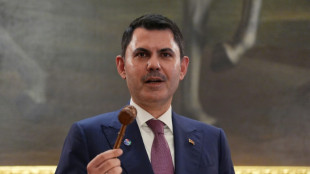 COP31 host says AI's climate footprint to be a summit priority

 Renewables hit record in 2025, but world must move faster: report

 US media outlets to sue Trump administration after White House ban
 Global stocks rally on lower oil prices, US-China hopes

 EU proposes energy rating for data centres
 Schoolgirl Yu scorches to second gold as doping case rocks Games

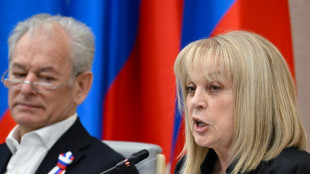 Putin's party secures record score in Russia election

 Haupt Koleksiyonu: Paranın Biz İnsanlar Hakkında Anlattıkları

 Spanish PM says unregulated AI could be 'devastating'

 Yu, 13, smashes record again with second Asian Games gold

 Switzerland to play without Xhaka over fake Covid certificate

 From Korean Chipmakers to Leveraged Semiconductor ETFs: STARTRADER Launches 49 New 24/7 Stock and ETF CFDs

 Thai badminton player first doping case at Asian Games: testers

 Колекція Гаупта: Що гроші розповідають про нас, людей

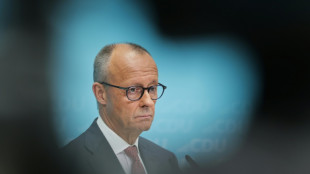
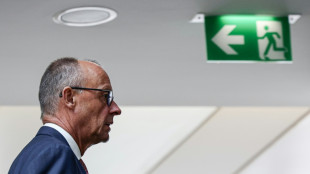 German far-right AfD poll winner says Merz 'twilight' has begun

As the US Supreme Court considers whether to uphold a law that could get TikTok banned in the United States, here is a look at the rise of the video-snippet social app.
- Genesis -
In 2016, Beijing-based ByteDance launched Douyin, a short video sharing app, making it available only in China.
ByteDance released TikTok for the international market the following year, shortly before buying song "lip-synching" app Musical.ly and merging it into TikTok.
The social network became a hit with its algorithm serving up endless collections of short, looping, typically playful videos posted by users.
- Pandemic boom -
TikTok's popularity soared during the Covid-19 pandemic declared in 2020, as people enduring lockdowns relied on the internet for diversion and entertainment.
As a result, authorities began eyeing TikTok's influence and addictive appeal.
TikTok became one of the most downloaded apps in the world as officials grew increasingly wary of the potential for the Chinese government to influence ByteDance or access user data.
India banned TikTok in July of 2020 due to tensions with China.
- Targeted by Trump -
While Donald Trump was US president in 2020, he signed executive orders to ban TikTok in the country.
Trump accused TikTok, without proof, of siphoning off American users' data to benefit Beijing and of censoring posts to please Chinese officials.
Trump's decision came against a backdrop of political tension between Washington and Beijing.
During a failed bid for re-election, the Republican campaigned on an anti-China message.
Between legal challenges and Trump's loss to Joe Biden in the 2020 presidential election, the executive orders did not take effect.
- Billion mark -
In September 2021, TikTok announced it had 1 billion monthly users worldwide.
But concerns grew about TikTok users facing risks of addiction, propaganda, and spying.
In 2022, BuzzFeed reported that ByteDance employees based in China had accessed non-public information from TikTok users.
ByteDance tried to cool privacy concerns by hosting user data on servers managed in the United States by Oracle.
The move did not ease concerns in the United States, where TikTok was banned from devices used by the military.
An array of other government agencies and academic institutes followed suit, forbidding members from using TikTok.
TikTok's Singaporean chief executive Shou Zi Chew was grilled by members of the US Congress during a 6-hour hearing in March of 2023.
- Sell or go -
TikTok was back in the hot seat in the United States in 2024, when President Joe Biden authorized a law requiring TikTok to be banned if ByteDance does not sell the app to a company not associated with a national security adversary.
Washington's stated aim is to cut the risk of Beijing spying on or manipulating TikTok users, particularly the 170 million US users of the app.
TikTok remains adamant that it has never shared user data with the Chinese government or done its bidding at the social network.
ByteDance sued the US government, arguing the law violates free speech rights.
A final decision in that case is to be made by the US Supreme Court, which agreed on Tuesday to examine whether the pending ban violates the Constitution.
The Supreme Court has scheduled a hearing on the matter for January 10.
President-elect Donald Trump, who returns to office on January 20, has signaled he might intervene on TikTok's behalf.
Trump recently spoke of having a "soft spot" for TikTok, and this year his campaign used the app to win support from young voters.
D.Lopez--AT