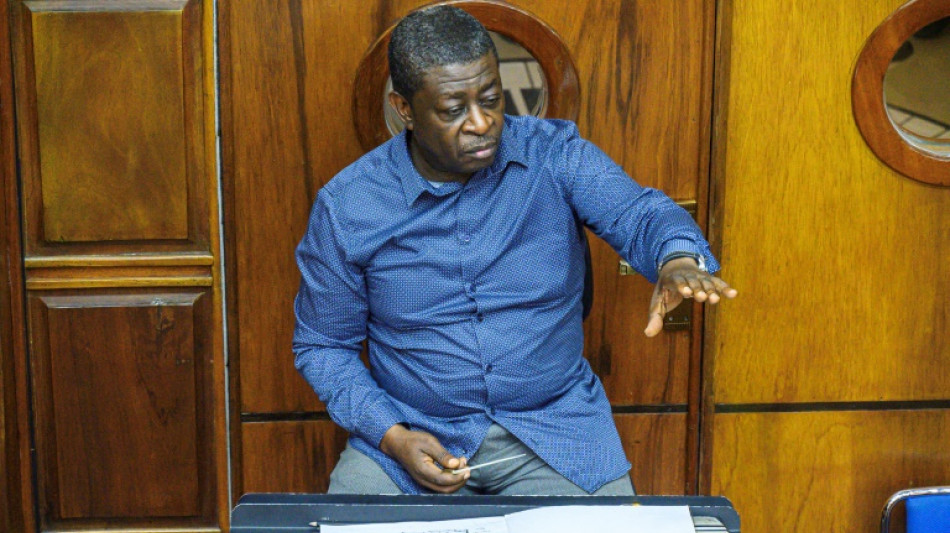
Top Africa orchestra began with brake cables for strings / Photo: Hardy BOPE - AFP

 Bardot auction in Paris fetches nearly one million euros
 No timeline on Daniels injury return, says Commanders coach
 British Columbia sues OpenAI in US court over Canada school shooting
 French star Batum retires after 18-year NBA career
 Zidane leads first France training session
 Man shot by ICE agent in Texas detained with bullet inside him: lawyer
 California declares state of emergency ahead of El Nino
 South Africa arrests three more suspects, after nine women murdered
 Carse needs time away from England, says captain Brook
 NOWPayments Releases Cross-Chain Payout Data Revealing Key Performance Benchmarks Across TRON, BNB Chain, and Solana
 British Museum bans photos of Bayeux Tapestry as crowds linger
 COP31 host says AI climate footprint to be a summit priority

 Berlin's far-left vote winners reject anti-semitism charges

 Mancini eager for 'new adventure' on Italy return
 Mbappe says having Zidane as France coach 'like a film'

 Palmer, Rice out of England Nations League squad
 German auto workers stage mass protests in bid to save jobs
 Embattled Merz vows to keep ruling for 'democratic future' of Germany
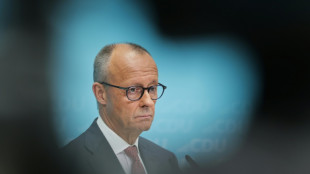 Merz vows to keep ruling coalition together for 'democratic future' of Germany
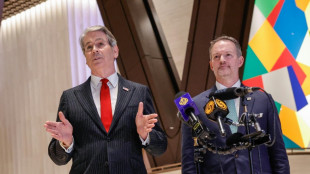
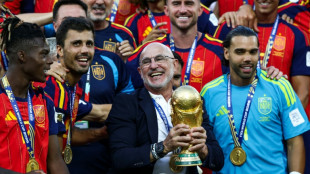 Spain coach De la Fuente gets new deal after World Cup success
 Pressure grows on Germany's Merz after election defeats
 China's Zhang beats Japan rivals to Asian Games gymnastics gold
 Samlingen Haupt: Vad pengar avslöjar om oss människor
 Tens of thousands of German auto workers protest to save jobs

 हॉप्त् कलेक्शन: पैसा हमारे बारे में एक इंसान के रूप में क्या प्रकट करता है
When Armand Diangienda founded the Kimbanguist Symphony Orchestra -- one of the most famous in Africa -- in 1994, they had so few instruments that musicians had to share.
They got to play them for only 15 minutes before handing them on to the next person.
"When a string broke, we would replace it with bicycle (brake) cables," he told AFP.
With the Democratic Republic of Congo at war and in chaos for most of the orchestra's first decade, they had to mend and make do with the poor quality instruments they could find.
"We didn't know how to buy a violin, we didn't know how to buy a string," Diangienda said. "So when a violin broke we had to repair it."
But "we were motivated".
The orchestra, which began with a ragtag band of around a dozen string musicians, has since gone on to become a trailblazer for classical music in Africa, with fans all over the world.
"At the beginning it was really just a dream," Diangienda told AFP from a studio in its Kinshasa headquarters as musicians tuned up outside.
The orchestra now boasts 200 highly accomplished members, including a choir.
- 'Real learning curve' -
But at the beginning not everyone knew how to read music and the group had just a few instruments between them.
"It was a real learning curve," Diangienda said.
The instruments they had were in poor condition -- not helped by the hot and humid climate -- and there was little money.
But by 1999 everyone had their own instrument picked up here and there.
The idea for the orchestra was born in 1985 when Diangienda's father, Joseph, asked him to gather up different musical groups from within the Kimbanguist church.
The religious movement -- which is said to have millions of members in the DRC -- was founded in 1921 by Diangienda's grandfather, a visionary whose followers believe he was Jesus Christ's special envoy on Earth.
The orchestra gave its first concert almost exactly 30 years ago in December 1994.
Since its humble beginnings it has played in countries across the world including Germany and the United States and has met celebrities including Angelina Jolie and Lionel Richie.
It has also collaborated with other groups including Germany's Tuebingen Chamber Orchestra and regularly has international soloists play with it.
Its conservatory of music in Kinshasa is now home to a school for young people to learn to read and play music.
- Persistence pays -
But teaching musicians was not always so seamless, and many joined with absolutely no musical knowledge.
Pauleth Masamba, 43, joined up the year the orchestra was founded wanting to play the cello, but accidentally mixed up its name with the violin -- two very similar words in French.
But as the orchestra grew, so did her love for her instrument.
"I bring it everywhere, even if I go on a personal errand I go with my violin. It's my loyal friend," she said, holding the instrument as she talked.
Two years after the orchestra began, the DRC was plunged into the First Congo War, which saw dictator Mobutu Sese Seko ousted, and then the longer and even more bloody Second Congo War from 1998 to 2003.
But it has still managed to become one of the continent's leading classical music institutions.
Dauphine Mata, a 33-year-old violinist who joined at 19, hailed it for introducing classical music to the country and continent.
"Before (becoming famous) we had a small fan base, people weren't really interested in the music," she said.
"Now we are on the stage more people appreciate it," she added.
But no one is more proud of their work than Diangienda.
"We were patient and we persevered, we alway fought for our dreams," he said.
R.Lee--AT