Patriots and arias: Italian opera seeks UNESCO recognition / Photo: Andreas SOLARO - AFP

 Nepal holds day of mourning as families pray missing still alive
 African players in Europe: Mbeumo fires solo goal as United draw
 Malaysia cancels haze emergency, but warns problems remain
 Philippine sensation Eala looks forward to Asian Games 'fun'
 Jakarta airport extends closure after volcano eruption
 Lonely woman director in Venice sees industry backsliding on gender
 Tech firms rally on mixed day for Asian markets, with eyes on US inflation
 World number one An sends Asian Games warning with China hat-trick
 PSG go for three in a row as Champions League returns
 "Super-human' Alcaraz books US Open quarter-final clash with Shelton
 ECB set to hike interest rates as Iran war flares anew
 AI data centers are less thirsty now, tech giants say
 North Korea vows nuclear-armed navy as US ally drills open
 Under-fire Labuschagne named in Australia Test squad for South Africa

 Best Way to Protect A 401(k) in 2026: Guide Released by Experts
 InterContinental Hotels Group PLC Announces Transaction in Own Shares - September 07
 Tiafoe tops Medvedev in straight sets at US Open
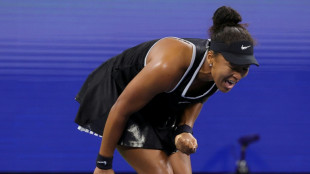 Zverev seeks US Open last eight as Osaka faces Rybakina
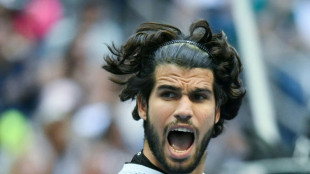 Alcaraz turns up heat to reach US Open quarters
 Gatti salvages Juve draw with AC Milan in Serie A
 Sinayoko stars as unbeaten Paris FC down Marseille
 Still on top: 'Spider-Man' dominates North American box office
 Zelensky in fresh talks with US envoys: Ukraine official
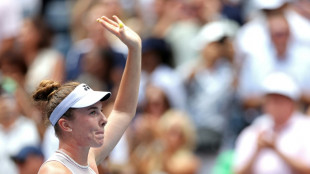 Noskova edges Kostyuk to reach US Open quarter-finals
 Alonso urges Chelsea to learn from painful defeat at Arsenal
Opera originated in Italy, it was sung by Italian patriots and some of the world's greatest arias came from the peninsula. Now Rome wants credit where credit is due.
Home to Scarlatti and Verdi, Italy has put in a bid for UNESCO -- the UN's cultural agency -- to recognise the art of Italian opera singing on its list of intangible global heritage. A decision is due at the end of the year.
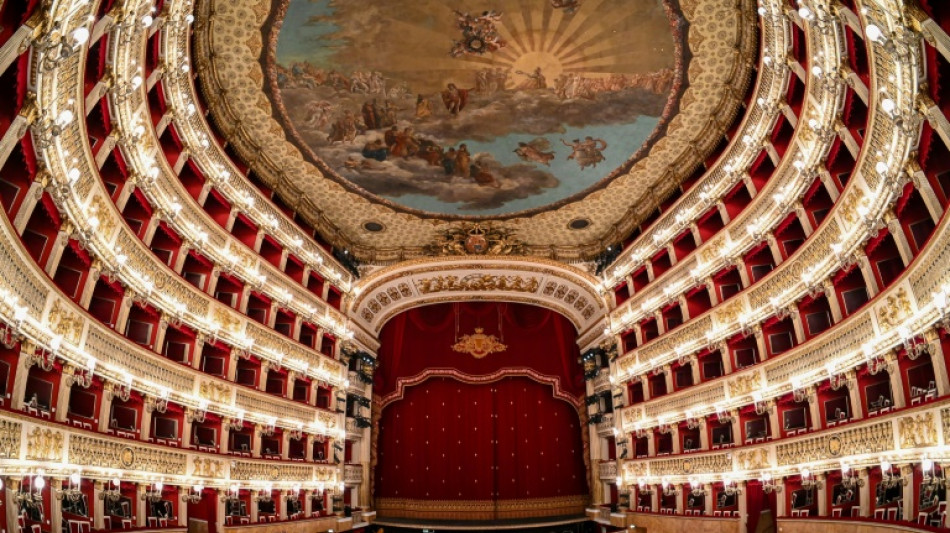
"Opera was born in Italy," said Stephane Lissner, the French director of the San Carlo theatre in Naples, which opened in 1737 and claims to be the oldest opera house in the world.
After various experiments with musical theatre in the 16th century, opera came into being around 1600 in Florence, with the founding of an academy promoting an innovative combination of sung text and music.
The first great composer of opera is considered to be Italy's Claudio Monteverdi, who lived from 1567 to 1643 -- and that was just the start.
"If you look at the history of opera in the 18th century, there were 400 new compositions during that century" in Naples alone, Lissner told AFP. The southern city was, at the time, the capital of a kingdom run by the Bourbons.
But why should Italian opera be a more legitimate entrant into UNESCO's hall of fame than its French or German counterparts?
For Lissner, who also led the Scala in Milan and the Paris opera before taking the helm in Naples in 2020, there is no debate.
"Singing in Italian... inspires the greatest emotion in opera lovers," he told AFP in an interview in the heady confines of the San Carlo, all red velvet chairs, shimmering lights and gilding.
In his dressing room backstage, Italian baritone Gabriele Viviani practices his vocal exercises before taking to the stage in Puccini's Tosca.
"Without taking away anything from my colleagues, or from the French or German composers ... I think Italian song has something extra, which is the ability to express emotions like no one else can."
A few minutes later, the audience spills into the foyer, chatting before taking their seats for the start of the performance.
- Verdi in Odessa -
Sumiko, a Japanese woman from New York cutting a dash in the crowd in a kimono, came to Naples especially for this performance -- and is enthusiastic about Italy's UNESCO bid.
"The emotions which these composers give us is universal. It's beyond the history. It's beyond borders," she told AFP.
For Culture Minister Dario Franceschini, opera is one of Italy's "most authentic and original cultural expressions", one that has spread worldwide.
He noted the moving scenes from the Ukrainian city of Odessa in March when locals took to the street to sing "Va, pensiero", the stirring Hebrew Slaves' Chorus from Verdi's Nabucco.
He described this as "yet more proof of how Italian opera singing is an integral part of the world's cultural patrimony, which provides light, strength and beauty in the darkest hours".
"Va, pensiero", which was also the hymn of Italian patriots battling the Austrian occupation in the 19th century, also illustrates popular support for opera.
"In the 19th century, when you arrived in any Italian town, the entire population sang opera arias. It was normal," Lissner noted.
"Italy is different, Italian theatres are different... and if you go into the villages -- they're not even towns -- you find small theatres."
Even today, there are around 60 opera houses across Italy -- a global record -- while opera singers such as 20th-century tenor Luciano Pavarotti have been venerated as major stars.
In Italy, lyrical music "is not just reserved for the elite", said Lissner, although he said "the majority of the public cannot pay certain ticket prices and has been abandoned", which was a "huge error".
This is a trend the San Carlo is trying to counter, by reserving reduced price tickets for young people.
A.Taylor--AT