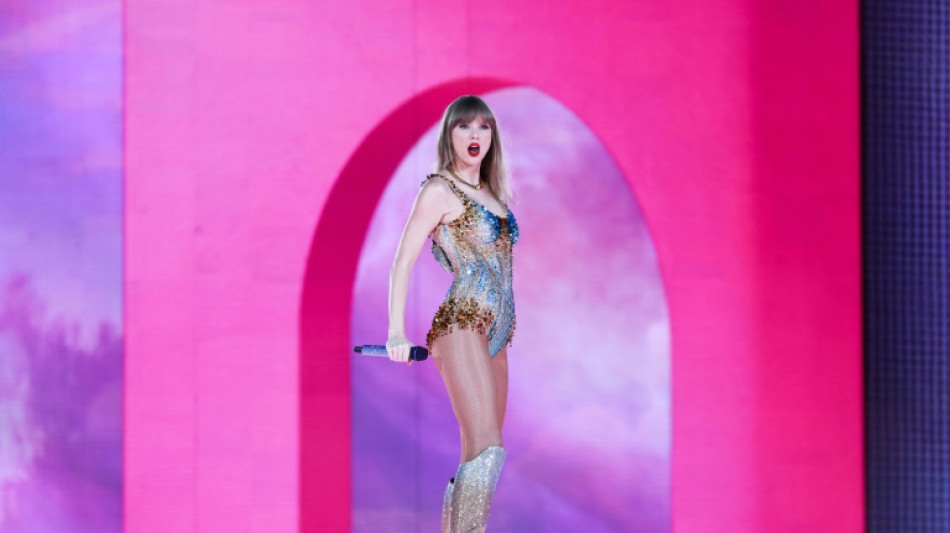
US seeks to break up Live Nation, Ticketmaster over alleged monopoly / Photo: DAVID GRAY - AFP

 Memoir by Diana's brother goes on sale after rocking UK monarchy

 Newcomers South Korea face holders Italy in Davis Cup finals

 Japan's Kojima sounds Marchand warning with Asian Games gold

 England rugby star Pollock signs new Northampton deal

 STARTRADER Expands Its Chinese Equity CFD Range with CXMT and Unitree Robotics

 MEXC Expands Opportunity Compass with Stock Trading Handbook to Help Crypto Users Build Investment Knowledge

 England paceman Wood retires from international cricket

 Magnificent Mandhana's 79 helps India to Asian Games cricket gold

 Marchand 'stressed' about racing Japanese rivals at LA Olympics

 Mobile boat clinics bring healthcare to India's remote islands

 Former India paceman Zaheer Khan named Chennai coach in IPL

 Six-year-old Chinese girl sets world record with Rubik's Cube

 Swimming prodigy Yu, 13, says 'interviews way harder than racing'

 Star coaches make their bows as Nations League returns

 Rams bounce back as Giants reel from Dart injury

 In Bangladesh, Pakistan's Jinnah photo stirs anger

 Two New Zealand naval ships transit Taiwan Strait

 Zidane gets down to work as France start new era

 Inside the Venezuelan prison meant to 'drive you insane'

 UK king braces as memoir by Diana's brother goes on sale

 Silver X Increases Measured and Indicated Resources 173% to 10.4 Mt at 213 g/t AgEq (70.8 Moz AgEq) and Inferred Resources 43% to 21.6 Mt at 252 g/t AgEq (180.9 Moz AgEq)
 SLAM Uncovers Antimony, Gold and Silver on Its Moose Lake Trenching Program

 Arrive AI to Demonstrate Autonomous Delivery Infrastructure at Investor Showcase

 Amber Book Expands California Supplemental Exam Prep with New Practice Tools Designed for How Architects Learn
 Jaguar Mining Commences New Underground Drilling Program Targeting Untested High-Grade Zones at Turmalina Mine, Brazil
The US Department of Justice filed a major antitrust lawsuit Thursday seeking to break up an alleged monopoly in the live music industry between concert promoter Live Nation Entertainment and its subsidiary, bookings website Ticketmaster.
The lawsuit, filed in a federal court in New York, claims that Live Nation has abused its dominant market position to raise ticket fees, squeeze out competitors and limit choices for fans, venues and artists.
"Live Nation relies on unlawful, anticompetitive conduct to exercise its monopolistic control over the live events industry in the United States at the cost of fans, artists, smaller promoters, and venue operators," said US Attorney General Merrick Garland in a statement.
"It is time to break up Live Nation."
Ticketmaster's pricing practices for concerts and other events, with high fees and lack of alternatives, have long been a political issue in the United States, with little done historically to open up the market to more competition.
The latest controversy over Ticketmaster's dominance came when tickets for Taylor Swift's Eras tour went on pre-sale in 2022.
Widespread outages and exorbitant fees caused an uproar, with lawmakers in Washington holding hearings to question Live Nation executives over the debacle.
The move against Live Nation also comes as the Biden administration, according to polls, is seen by voters as failing to do enough to curb inflation.
High prices have become a key issue in battleground states ahead of the 2024 election that pits Biden against former president Donald Trump.
"While we do not comment on specific enforcement matters, President Biden strongly supports fair and robust enforcement of the antitrust laws," White House Press Secretary Karine Jean-Pierre said.
"As the President has said, the American people are tired of being played for suckers."
Live Nation, which merged with Ticketmaster in 2010, has grown into a $22 billion global giant that produces more than 30,000 concerts annually for nearly 500 touring artists across its network of over 265 North American venues.
In a statement, Live Nation said the lawsuit "won't solve the issues fans care about relating to ticket prices, service fees, and access to in-demand shows."
"Calling Ticketmaster a monopoly may be a PR win for the DOJ in the short term, but it will lose in court because it ignores the basic economics of live entertainment," it added.
- Threat allegations -
The lawsuit detailed allegations of unlawful tactics used by Live Nation to maintain its dominance, including "threatening and retaliating against venues" by signaling they could lose concerts and revenue if they work with rivals.
The 68-page suit described a "self-reinforcing business model" that allows it to capture huge revenues from ticket sales and then use that to lock up artists to exclusive promotion deals.
It then leverages its hold on top performers to lock venues into long-term exclusive ticketing deals.
Because of the monopoly, the DOJ added that US fans were left with "outdated technology" compared to other countries.
Fights against Ticketmaster's power go back to the 1990s, when the rock band Pearl Jam refused to perform at Ticketmaster venues in protest of its service charges that increased ticket prices.
Ticketmaster was accused of organizing a boycott of Pearl Jam by live venues and the band eventually gave up its campaign against the ticketing giant.
H.Thompson--AT