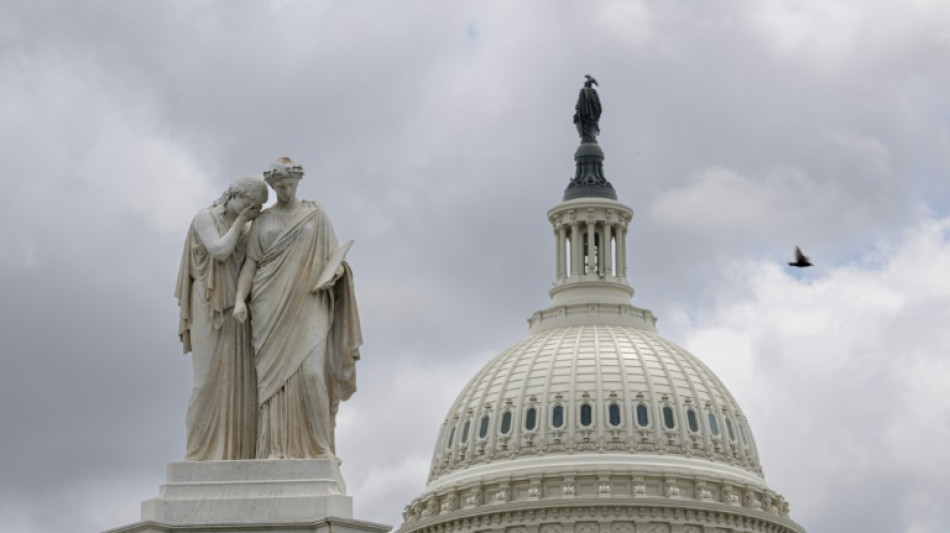
US 'swatting' pranks stoke alarm in election year / Photo: Mandel NGAN - AFP

 Chile's Atacama Desert blossoms with life after El Nino rains

 Sri Lanka hands 220-year jail terms to 15 convicted of Easter bombings
 Typhoon Dujuan leaves 7 dead in Japan from landslides, flooding: media

 Ganna and Borghini lead Italy to mixed relay gold at cycling worlds

 Drug cocktail killed former child star Hayden Panettiere: coroner
 Moldova declares energy, water emergency
 French Holocaust denier jailed for eight months

 Oil prices slide, AI stock buzz fades

 Trump threatens to 'annihilate' Iran in bombastic UN speech
 Prada's skirts take centre stage as Milan Fashion Week begins
 Quoin Pharmaceuticals Announces FDA Fast Track Designation for QRX003 for the Treatment of Peeling Skin Syndrome

 Brazil's Flavio Bolsonaro turns scandal into poll gains
 Republican senator seeks probe of Trump Jr Russian-funded wedding
 Memoir by Diana's brother goes on sale after rocking UK monarchy
 Newcomers South Korea face holders Italy in Davis Cup finals

 Japan's Kojima sounds Marchand warning with Asian Games gold
 England rugby star Pollock signs new Northampton deal

 STARTRADER Expands Its Chinese Equity CFD Range with CXMT and Unitree Robotics

 MEXC Expands Opportunity Compass with Stock Trading Handbook to Help Crypto Users Build Investment Knowledge

 England paceman Wood retires from international cricket

 Magnificent Mandhana's 79 helps India to Asian Games cricket gold
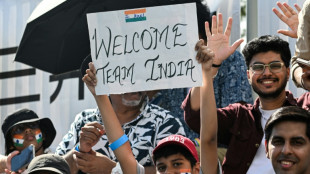
 Marchand 'stressed' about racing Japanese rivals at LA Olympics

 Mobile boat clinics bring healthcare to India's remote islands

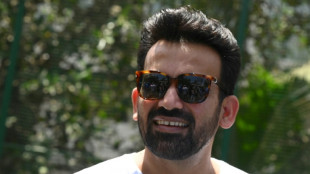 Former India paceman Zaheer Khan named Chennai coach in IPL

 Six-year-old Chinese girl sets world record with Rubik's Cube
Startled by nighttime pounding on his door, American political strategist Rick Wilson walked out in his underwear to find policemen with guns drawn. They were responding to yet another hoax, increasingly seen as a tool of intimidation in a crucial election year.
In recent months, election workers, judges, and politicians -- on both sides of the aisle -- have been "swatted," a potentially deadly prank when a caller triggers a large law enforcement response after reporting a false violent crime.
The shenanigans have stoked concern in the build up to the widely anticipated November rematch between President Joe Biden and Donald Trump that observers say is ridden with the threat of election violence, foreign influence, and disinformation.
"It's hard to have dozens of cops around the house with AR-15s banging on the door at three in the morning," said Wilson, a former Republican strategist and co-founder of the Lincoln Project.
A previous swatting experience prompted Wilson to say "I'm being swatted" as he stumbled out of his Florida home with his hands in the air, a declaration that got the policemen to back down.
Wilson told AFP he declared a $25,000 reward for information about the perpetrator but so far no one had come forward.
"The objective of swatting is to get people killed," he said.
- 'Cowardly acts' -
Several swatting incidents of political figures have followed a similar script, sparking suspicion that they are coordinated: A prankster calls the emergency hotline 911 to "confess" that he shot his wife or girlfriend and plans to kill himself.
Those words are apparently enough to set off a police response.
In January, Gabriel Sterling, a top Georgia election official, was swatted just hours after he posted online about multiple bomb threats to several state capitols around the country.
It was triggered, he said, by a call to 911 falsely reporting a "drug deal gone bad" at his home.
"We should all refuse to allow bomb threats (and) swatting to be the new normal," Sterling said.
Georgia Secretary of State Brad Raffensperger said it was "deeply troubling" to see a rise in swatting.
"We expect heightened tensions as we head into a major presidential election," he said in a statement to AFP.
"We expect American citizens to engage in the democratic process -- not resort to cowardly acts of intimidation."
The FBI said that last year it tracked about 600 swatting incidents in the country, adding the crime "seems to be growing."
The number of swatting cases involving politicians and election officials -- not all of whom report the crime -- remains unclear, but a series of high-profile targets have prompted alarm.
Those targeted in recent months include Tanya Chutkan, a judge overseeing a federal case involving Trump, special counsel Jack Smith -- who is overseeing the prosecution of the former president in two cases –- and Republican representative Marjorie Taylor Greene.
- 'Extremely difficult' -
Swatting, which takes its name from the heavily armed SWAT teams often dispatched to tackle emergencies, first emerged in the early 2000s, according to the FBI. And it has been used to harass celebrities and the online gaming community has also targeted one another.
But the threat appears to be growing as election workers gear up for a potentially volatile election.
Swatting attacks that lead law enforcement to voting officials or polling locations have the potential to "disrupt the election process," potentially "decreasing confidence" in the democratic system, the nonprofit Center for Internet Security said in a report.
A taskforce set up by the Justice Department in 2021 has reviewed more than 2,000 complaints of hostility, harassment, and threats to election officials, leading to dozens of investigations, according to US media.
Several US states, including Georgia, have introduced legislation to toughen penalties against swatting.
In January, lawmakers including Republican Senator Rick Scott of Florida introduced legislation to impose penalties, including up to 20 years in jail if someone is seriously hurt in a swatting attack. The move came after Scott's home in Florida was swatted.
But arrests have so far been rare.
Experts say perpetrators were aided by technology including artificial intelligence tools such as text-to-voice programs that allowed them to mimic voices.
Encrypted communication apps as well as VPNs, or virtual private networks, also made it harder to track them down.
"It's a computer-based crime," Justin Smith, a member of the Committee for Safe and Secure Elections, told AFP.
"The ability to track down these individuals is extremely difficult," he said, adding he encouraged election officials to notify law enforcement agencies where they reside to mitigate the risks.
N.Walker--AT