Pioneering documentarian protects hip hop's memory box / Photo: Maggy DONALDSON - AFP

 Venezuelan shot by ICE needs urgent medical care, mother tells AFP

 Zelensky says Putin using fighters from 47 countries in Ukraine war

 Klopp calls on Germany to 'rise above ourselves' as new era begins

 Russian strikes kill seven in Ukraine as Russia vows no 'pause' to war

 ArcPoint Expands Globally with Institutional Intelligence Platform for Modern Investors

 Ronaldo focussing on 'present' ahead of Wales test

 Outgoing UN chief makes final climate push at New York summit
 Grief and pain flow at hearing for Canadian suicide poison vendor

 Ireland boss Hallgrimsson says timing of Israel remarks 'not clever'

 Weinstein resentenced to 15 years in prison for 2006 sex assault

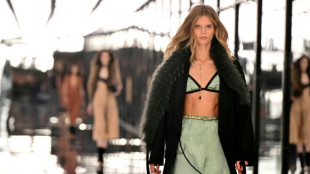 Fendi brings disco bling, Italian style, to Milan Fashion Week

 French court confirms rape trial for PSG and Morocco star Hakimi

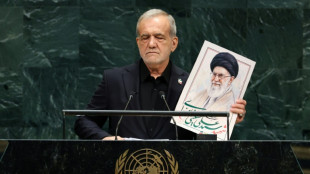 President tells Trump that Iran will never 'bend at the knee'

 أليكس بودي والبروفيسور الدكتور شتيفان هاوبت يتفقان على التعاون من أجل مجموعة فنية أسطورية في رومانيا
 U2 at 50: Irish rockers reveal anniversary album
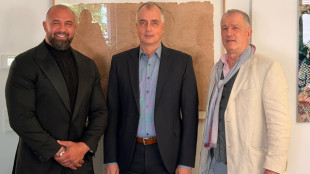
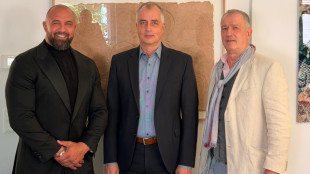 Алекс Боді та проф. д-р Стефан Гаупт домовилися про співпрацю щодо легендарної колекції мистецтва в Румунії
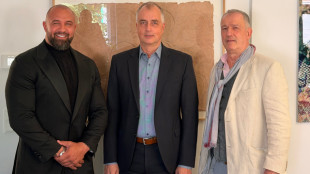
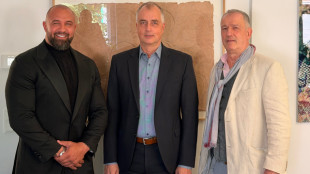 Alex Bodi și prof. dr. Stefan Haupt încheie un acord de cooperare pentru o colecție de artă legendară în România

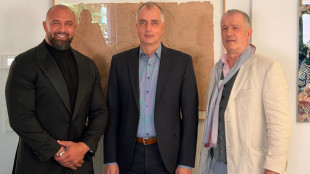
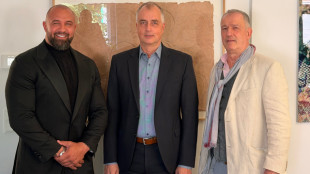 Alex Bodi and Prof. Dr Stefan Haupt agree to collaborate on a legendary art collection in Romania

 Stocks dip, oil rises as traders eye chances of Iran deal

 Israel squeezing UN Palestinian refugee agency ahead of polls: chief
 Dutch to resume Eurovision with new broadcaster

 Man Utd losses jump despite record revenues

 Ethiopia's Tigray rebels seize airports, clash with govt forces

 China prodigy wins third Games gold as North Korea weightlifters roar

 China's Yu, 13, wins third Asian Games gold but has 'some regrets'

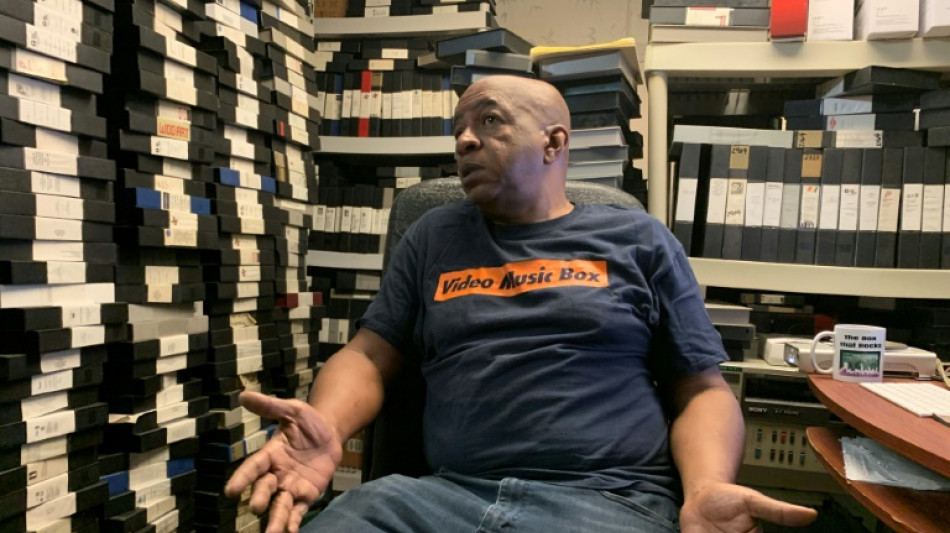
In the basement of a suburban home on Long Island lives thousands of tapes of footage documenting the origins of hip hop, the dominant music genre of our time.
Brooklyn native Ralph McDaniels was among the first figures to film the rap scene in New York, the city that gave birth to the genre, documenting its evolution on his show "Video Music Box," where soon-to-be legends including Nas and Jay-Z made their early appearances.
"We were on this low-power TV station that everybody had, there was only 10 of them," McDaniels said of his show's early days in New York. "We were the last one -- channel 31... Kids got out (of school) at 3:00pm, they ran home and sat down and watched whatever the latest thing was -- whatever was new, I played it."
"Diddy, Jay-Z, all these guys would come to me and be like, can you get it on today?"
McDaniels also directed hundreds of music videos, including "C.R.E.A.M." from the Wu-Tang Clan and "It Ain't Hard to Tell" from Nas.
"The music video became super important for hip hop artists because very often, we didn't get radio airplay, especially in the '80s," McDaniels told AFP. "It was late night mix shows, you only heard it there."
"When I came on in '83, people saw LL Cool J" speak on-camera for the first time, he explained -- Video Music Box was the first to air an interview with the rapper, who was one of the earliest to achieve commercial success.
"MTV wasn't playing any Black artist at that particular time, other than like, Michael Jackson," he said. "Michael Jackson was cool, but he ain't the hood. He's not who represents everybody."
"But Run-DMC and LL Cool J, this is what New York looked like."
In his basement studio McDaniels, scrolls through footage of LL as well as DJ Grandmaster Flash, donning dark shades and a glittering, disco-esque outfit in 1985.
"We had Ralph McDaniels, that's the only thing we had," Jay-Z summed up in the Nas-produced documentary "You're Watching Video Music Box," which came out on Showtime in 2021.
- 'Tells the culture' -
McDaniels' also has some of the earliest footage of Missy Elliott, as well as Mary J. Blige, filmed at the moment when so many teen girls wanted to be just like her.
His dream?
"Forty years from now, 100 years from now, this stuff will be in some archives somewhere that somebody can go in and look at and say, 'Tell me about Mary J. Blige,' McDaniels said. "And you'll be able to go in and look at Mary J. Blige in her time -- and it was archived by the people that were there."
Today McDaniels' official title is Hip Hop Coordinator at the Queens Public Library, and the microphone box he used on his show is in the Smithsonian's National Museum of African American History and Culture.
He's also been working since 2017 to digitize some 20,000 hours of footage contained in his mammoth personal archive.
"We have to treat it like it's important," he said of the images. "It is important, because this is what is telling the story of our culture, and you can't just throw it away."
He noted that a lot of soul music archives, for example, have been sacrificed to time: "As a teenager when I first got into the business, I realized that a lot of these things were lost. And I said, 'That can't happen to our stuff', at least the stuff that I shoot."
He's been a regular on 2023's event circuit that's celebrating half-a-century of hip hop throughout the city.
McDaniels laughs that by the time hip-hop's 51st birthday rolls around, "corporate will go away," but that it's still important to mark the genre's milestone anniversary and acknowledge the mammoth influence it's had.
"To be celebrating 50 years is amazing, because there was no value on this when we first started," he said.
"Nobody was interested in hiring a hip hop DJ, or getting an emcee to get on the mic, or getting some breakdancers to come out and perform on a stage or using graffiti on a library card like we did today," he added, referring to a special commemorative design that recently debuted on library cards in the New York borough of Queens.
"We're going to make sure that this is available to everybody," he said of his footage. "And it will play its role in libraries, museums, and archives around the world."
"This tells the culture."
R.Garcia--AT