In DR Congo's capital, homeless teens pin future on rap / Photo: EMMET LIVINGSTONE - AFP

 Iranian satire 'Head to Head' draws a veil over the men
 Archaeological 'breakthrough' could confirm origins of Paris

 Morocco elects new parliament with lowest turnout in nearly two decades

 North Korean IT contractor found remote work in New Zealand: agency
 Anthropic touts AI-led biology discovery

 Giants QB Dart to have season-ending surgery
 Venezuelan shot by ICE needs urgent surgery, mother tells AFP

 Giants QB Dart to have season-ending surgery: reports

 Judge urged to lift Trump's White House ban on media outlets
 Stocks fall on soaring bond yields, higher oil prices
 US judge weighing Trump's White House ban on media outlets
 At UN, OpenAI's Altman calls 'for extreme care' in AI
 Hamilton gives thumbs up to Gulf GPs despite Iran conflict

 Leclerc admits going 'too far' in Hamilton shunt in Italy

 Row engulfs Dolly Parton's estate as manager accuses nephew of making threats
 Mandela Digital Extends Early Access Programme to 11 February 2027 Following Strong Response

 US seeks 11th Presidents Cup win in a row over global foes

 McDonald's to boost franchisees as inflation weighs on consumers
 Trump invites Putin to G20 summit in Miami

 Archaelogical 'breakthrough' could confirm origins of Paris

 ILO financial crisis takes centre stage in leadership race

 Stocks dip, oil soars despite Trump hailing "productive" Iran talks

 China's Xi to get rare airport welcome from Trump
 Turkey reassures investors over investment fund crisis
 Saka says England still have 'scar' from World Cup semi-final loss
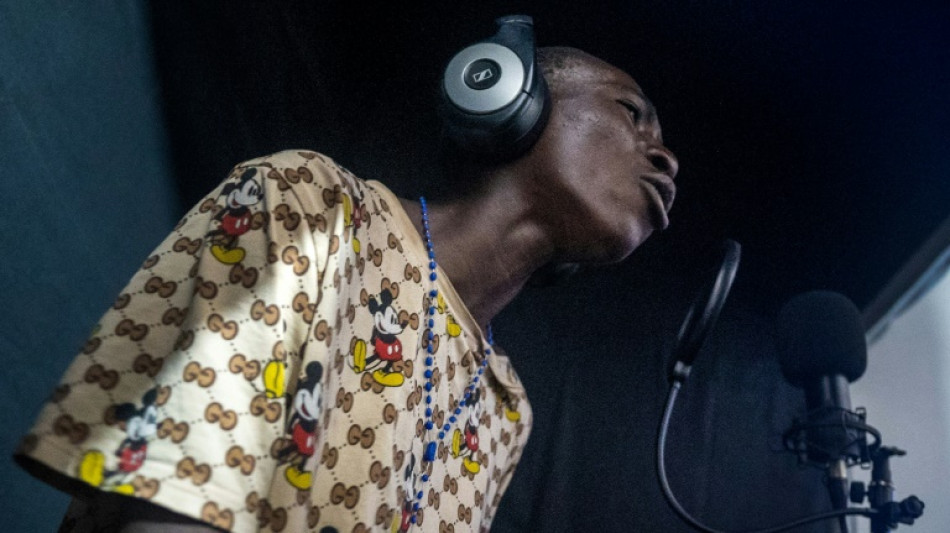
Life on the streets is grim and desperate, says "Business," a homeless teen in DR Congo's capital Kinshasa.
"Your body ends up worn out," he says, describing a doomed path to limbo, ending up like "a prostitute grandmother, something which isn't supposed to exist."
A 19-year-old with big ambitions, "Business" -- a rough translation of his French street name -- is one of several dozen homeless youths who have found refuge in rap.
Their haven is Mokili Na Poche, a small cultural centre in the working-class district of Bandalungwa that holds out a rare lifeline to Kinshasa's street children and teenagers -- an abandoned population estimated by aid groups to number more than 20,000.
Known locally as 'shegues', many are pushed onto the streets because of dire poverty, or because their families have accused them of witchcraft.
Their lives are often marked by violence, drugs and prostitution as well as by deep suspicion from wider Congolese society.
But Mokili Na Poche, which opened last November, aims to encourage the neglected and unschooled homeless youths towards creative pursuits such as making bags out of scavenged plastic, or making music.
"Business," whose real name is Junior Mayamba Ngatshwe, is keen like the others to seize any opportunity on offer.
Chadrack Mado, another street-dwelling youngster, said he comes to the centre so that "tomorrow I don't become a kuluna" -- using a local term for the Kinshasa's notorious machete-wielding gangsters.
The Democratic Republic of Congo is one of the poorest countries in the world despite its vast mineral wealth. About two thirds of the population of 100 million people live on under $2.15 a day, according to the World Bank.
- 'Trapped' -
A newly built recording studio caters to the musically inclined among the youngsters who visit Mokili Na Poche. "Business" and his friends are regulars.
"I'm trapped, I'm trapped," the youngster rapped into the mic in the Lingala language, rhyming about how he'd left conflict-torn eastern Congo only to end up on the mean streets of Kinshasa.
A barefoot 16-year old known as "Bloodbank" accompanied the song with a rhythm tapped out on a discarded plastic bottle, and beat-boxing through pouted lips.
Later, "Business" explained that his dream was to follow in the footsteps of Congolese music greats such as Fally Ipupa, drive a fine car and visit the United States.
Life on the streets is hard, he said, explaining how some homeless youths were supportive but others tried to undermine him. "There really are witches among us," "Business" said.
But he wasn't discouraged: "Music is something I've had since I was in my mother's womb."
Congo has a rich musical tradition and some groups, such as Staff Benda Bilili, comprising handicapped people, have risen from the streets of Kinshasa to international prominence.
Several of the youngsters at Mokili Na Poche have already recorded an album, with an adult musician, although they were not paid.
- 'They want to rebel' -
Cedrick Tshimbalanga, the director of Mokili Na Poche, described how violence and desperation dominated the lives of youngsters living on the street in Kinshasa.
"All of them have a blade or a pocket knife to protect themselves," he said. "There are children that go days and days without eating".
In the courtyard outside the cultural centre's tiny recording studio, several youngsters with bodies covered in scars rested quietly in the shade.
Few knew their real age, but they appeared to range from about seven or eight years old to adolescents in their late teens.
Tshimbalanga said the music they produce is often uptempo and aggressive, but not violent.
"They want to rebel against the way society treats them," he said.
The centre has started putting together an album of the rap songs, according to Tshimbalanga.
"Bloodbank," whose real name is Obed, said music gave him the motivation to "keep going."
He said he had been on the streets for as long as he could remember.
When asked about his life, he responded with an impromptu rap in Lingala about how when he has money, he has friends -- but when he's broke, he's completely alone.
H.Romero--AT