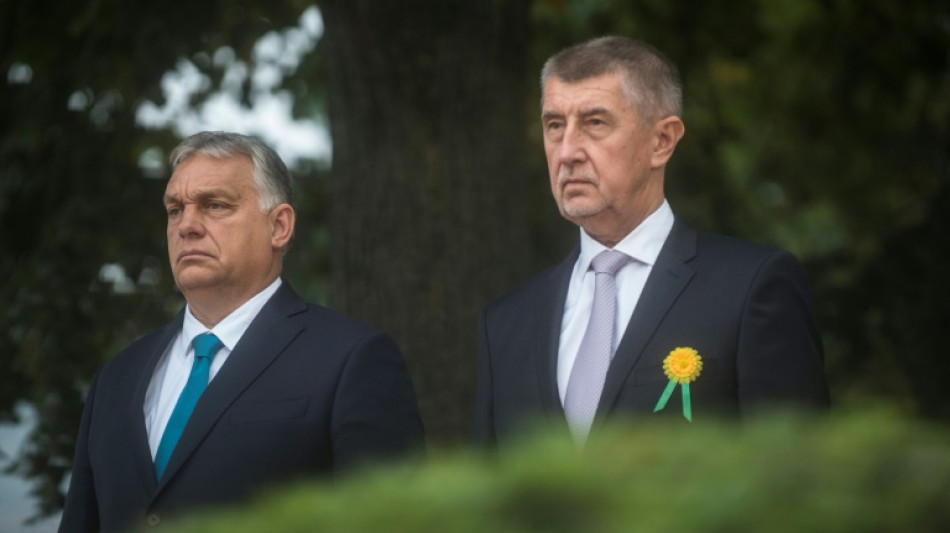
Ukraine war fears give eastern Europe's populists new ammo / Photo: Michal Cizek - AFP/File

 Streamex Converts Interest Into Capital as GLDY Investment Strategy Secures $1M+ Institutional Allocation

 STARTRADER Named Best Fintech Forex Broker at Forex Expo Dubai 2026
 Japan swimmer Ohashi, 17, shrugs off Covid to smash world record
 Shin Ohashi: Junk food-loving teen and new world record-holder
 Greek PM urges 'courage' in talks with UK over Parthenon Marbles
 'I was drowning': Iran Nobel winner exposes pain of separation from children
 Israel's US envoy says son fighting for life

 Olympic champion Yulo completes gymnastics gold collection at Asian Games
 England cannot imitate Spain's success, says Gordon
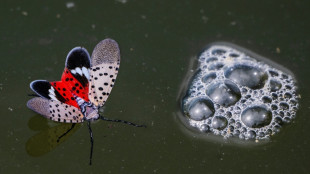 Hungary detects invasive spotted lanternfly for first time in EU
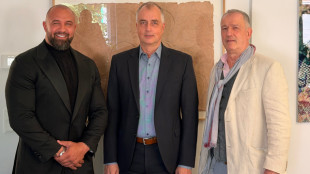 Ο Alex Bodi και ο καθηγητής Δρ. Stefan Haupt συμφωνούν σε συνεργασία για μια θρυλική συλλογή έργων τέχνης στη Ρουμανία
 France's top-selling newspaper to slash jobs
 Tigray rebels in 'full-blown' war with govt

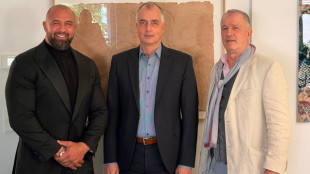 Alex Bodi och prof. dr Stefan Haupt ingår samarbetsavtal om en legendarisk konstsamling i Rumänien
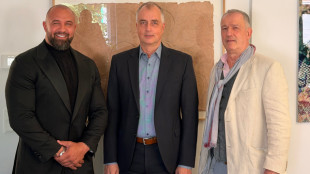
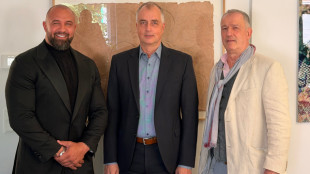 อเล็กซ์ โบดี และศาสตราจารย์ ดร. สเตฟาน ฮาปท์ ตกลงร่วมมือกันในการจัดตั้งคอลเลกชันศิลปะอันเป็นตำนานในโรมาเนีย
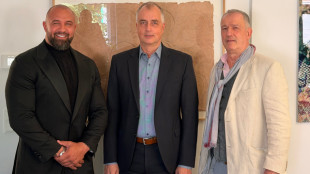
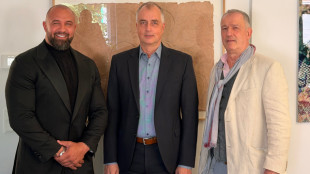 Alex Bodi a prof. dr. Stefan Haupt se dohodli na spolupráci na legendární umělecké sbírce v Rumunsku
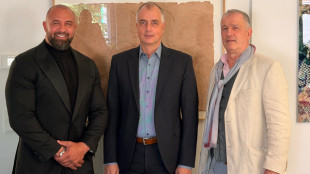
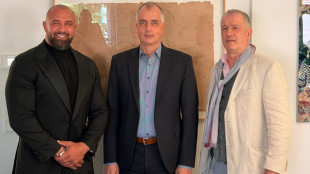 알렉스 보디와 슈테판 하우프트 교수, 루마니아의 전설적인 미술품 컬렉션을 위한 협력 합의

 BaazEX Enters the Asian Trading Market With a New Approach to Online Forex Trading.
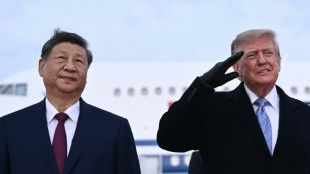
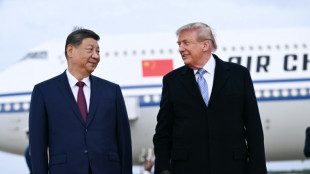 Asian markets fall on US-China jitters as leaders meet
 Thais hail teen rocker Nene for 'America's Got Talent' win
 Zverev, Agassi defend 'spectacular' Laver Cup
 Eel-powered Japan whizz-kid, 11, dominates in historic Games debut

 Madagascar's Gen Z 'betrayed' after ushering in new rule
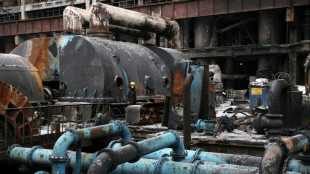 As Moscow steps up attacks, Kyiv residents brace for harsh winter

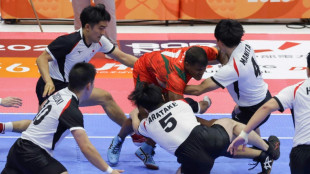 Comic inspires unlikely kabaddi dreams for Japan's Asian Games amateurs

A year of war between Kyiv and Moscow has handed eastern European populists a potent weapon: fear.
With no end to the conflict in sight, some politicians are spreading disinformation that supporting Ukraine could drag their countries into the fight -- and many voters are listening.
False claims that governments plan to reinstate military service, announce general mobilisation or simply "send your sons to the meat grinder" have been dominating the political discourse from Prague to Sofia.
"Fear is a primal emotion, and politics of fear is the oldest tactic in the book," said Jiri Priban, professor of law at Cardiff University.
"It's part of every political campaign."
The scaremongering already appears to be working in Ukraine's westernmost neighbour, Slovakia, where large numbers of men filed an official refusal to fight for moral or religious reasons.
Whereas before the war Slovakia had some 1,500 professed conscientious objectors a year, their number rose to over 40,000 last year, according to the Slovak defence ministry.
At least some of this panic among young Slovak men of military age has been provoked by former Prime Minister Robert Fico, who is running an election campaign based on criticism of NATO, the US and "Ukrainian fascists".
Fico has been telling voters that the conflict "does not concern us" because it is a "war between the US and Russia".
Parroting pro-Kremlin propaganda, he has called the EU's support of Ukraine a "suicidal mission" and accused the current government of Slovakia, a NATO member, of being a lackey of the US who would not hesitate to "send our boys to the front".
- 'Effort to scare people' -
So far, the scare tactic seems to have worked: Fico's party Smer is currently polling first or second ahead of parliamentary elections in September.
"Slovakia is extremely vulnerable to disinformation and the Russians have found a hugely fertile ground for their propaganda here," said Aspen Institute fellow Michal Vasecka, who teaches sociology at the Bratislava International School of Liberal Arts.
"When you keep telling people that their government is an agent of the US, they start thinking 'why should our boys fight for US interests?'"
False claims about the war also dominated the recent presidential election in the neighbouring Czech Republic and continue to plague the new president Petr Pavel.
Although the retired NATO general ultimately won the election on January 28, he remains a target of a toxic disinformation campaign portraying him as a trigger-happy war hawk.
AFP fact checkers debunked false claims that Pavel called for sending Czech soldiers to fight in Ukraine, that he wanted the Czech Republic to declare war on Russia, or that he supported mandatory military training for people born after 2003.
Pavel's election rival, former prime minister Andrej Babis, ran billboards claiming that his opponent "does not believe in peace" and promised that "I will not drag the Czech Republic into war".
Many social media posts and chain mails, fact-checked by AFP, also falsely claimed that Pavel was planning a general mobilisation.
"There is an ever-stronger effort to scare people into thinking they will have to fight in the war, a war they cannot win," Czech Elves, a volunteer organisation tracking and analysing disinformation, wrote in their latest monthly report on false narratives.
"Russia is being portrayed as an unbeatable nuclear superpower that is waging a successful military campaign in Ukraine," the report said.
- 'Existential fear' in Baltics -
Frightening citizens with war has become common in other parts of eastern Europe.
In Bulgaria, the pro-Russian, ultra-nationalist Vazrazhdane party has been organising anti-government protests and warning voters against becoming "cannon fodder".
Hungarian Prime Minister Victor Orban has likened Ukraine to Afghanistan and his government openly sides with Russia.
Paradoxically, the politics of fear of war gains very little traction with voters in Poland and the Baltic republics -- the countries where the danger of potential Russian military aggression is the most real.
The common negative historical experience with Russia has immunised their populations against pro-Kremlin propaganda, according to Priban.
"There is real existential fear in the Baltics, but it makes their support of Ukraine even stronger," said the Cardiff University professor.
L.Adams--AT