
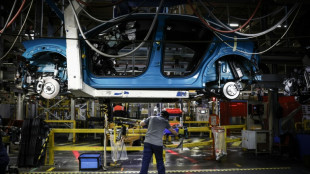
Chips industry goes all-in on AI / Photo: Josep LAGO - AFP/File

 Streamex Converts Interest Into Capital as GLDY Investment Strategy Secures $1M+ Institutional Allocation

 STARTRADER Named Best Fintech Forex Broker at Forex Expo Dubai 2026

 Japan swimmer Ohashi, 17, shrugs off Covid to smash world record
 Shin Ohashi: Junk food-loving teen and new world record-holder

 Greek PM urges 'courage' in talks with UK over Parthenon Marbles

 'I was drowning': Iran Nobel winner exposes pain of separation from children

 Israel's US envoy says son fighting for life
 Olympic champion Yulo completes gymnastics gold collection at Asian Games

 England cannot imitate Spain's success, says Gordon

 Hungary detects invasive spotted lanternfly for first time in EU

 Ο Alex Bodi και ο καθηγητής Δρ. Stefan Haupt συμφωνούν σε συνεργασία για μια θρυλική συλλογή έργων τέχνης στη Ρουμανία

 France's top-selling newspaper to slash jobs

 Tigray rebels in 'full-blown' war with govt

 Alex Bodi och prof. dr Stefan Haupt ingår samarbetsavtal om en legendarisk konstsamling i Rumänien

 อเล็กซ์ โบดี และศาสตราจารย์ ดร. สเตฟาน ฮาปท์ ตกลงร่วมมือกันในการจัดตั้งคอลเลกชันศิลปะอันเป็นตำนานในโรมาเนีย

 Alex Bodi a prof. dr. Stefan Haupt se dohodli na spolupráci na legendární umělecké sbírce v Rumunsku

 알렉스 보디와 슈테판 하우프트 교수, 루마니아의 전설적인 미술품 컬렉션을 위한 협력 합의
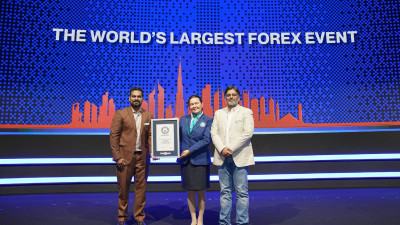
 BaazEX Enters the Asian Trading Market With a New Approach to Online Forex Trading.
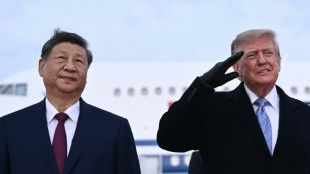
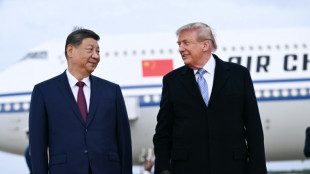 Asian markets fall on US-China jitters as leaders meet

 Thais hail teen rocker Nene for 'America's Got Talent' win
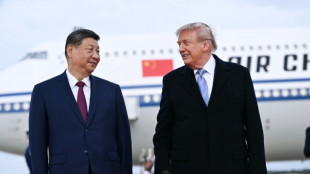
 Zverev, Agassi defend 'spectacular' Laver Cup

 Eel-powered Japan whizz-kid, 11, dominates in historic Games debut

 Madagascar's Gen Z 'betrayed' after ushering in new rule
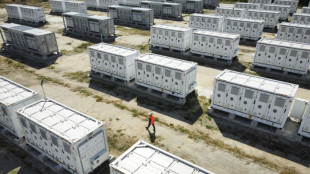
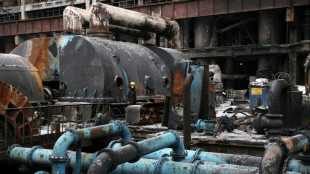 As Moscow steps up attacks, Kyiv residents brace for harsh winter

 Comic inspires unlikely kabaddi dreams for Japan's Asian Games amateurs

It's been a wild few years for the microchip industry, recovering from a long-term supply squeeze only to be thrust into the centre of a US-China battle to control supply lines of the valuable technology.
But an industry long associated with volatility is quietly getting excited that artificial intelligence (AI) could be the key to some longer-term stability.
US firm Nvidia dominates the market in specialised chips known as GPUs, which happen to be ideal for training AI programmes like the wildly popular chatbot ChatGPT.
"Technology trends are working in Nvidia's direction," the firm's vice president Ronnie Vasishta told AFP this week at the Mobile World Congress (MWC) in Barcelona.
This has helped make Nvidia the biggest company in the sector -- and one of the biggest firms of any kind in the United States -- with a valuation of $580 billion.
Traditional rivals like Intel and Qualcomm are now on manoeuvres, desperate to make sure they do not miss out.
The tiny components, also known as semiconductors, are essential in everything from smartphones, PCs and electric cars to sophisticated weaponry, robotics and all other high-tech machinery.
AI already features heavily in all of these fields, and the advent of chatbots is only pushing it further into the public imagination.
Even in a sector where low-key engineers do the talking, the enthusiasm is palpable.
- 'Scratching the surface' -
"The most exciting thing right now is AI," Cristiano Amon, boss of rival firm Qualcomm, told a Wall Street Journal event at the MWC.
He wants the world's phones to be tooled up with chips able to handle even the most tricky AI-related tasks, largely because Qualcomm leads the field in phone chips.
Vasishta is equally enthused.
"Where and how does AI get used? It's probably going to be easier to answer where is it not getting used," he said.
Another chip firm, the British-based Arm, is even further back in the production chain than Nvidia -- it provides the designs used by chip suppliers.
The firm's Chris Bergey told AFP there was massive potential with AI.
The kind of chips Nvidia produces are great for training AI models in data centres, he said, but smartphones need chips that can act based on those models.
"It's a huge opportunity and it's ubiquitous," he said.
He compares the AI revolution to the onset of apps, which appeared about 15 years ago and rapidly changed the way we used technology.
"Definitely AI is something that has a lot of interesting applications and we're still scratching the surface of where we'll go."
- 'Too cool' -
Yet, with chips, nothing is straightforward.
The supply chain is fiendishly complex -- consulting firm Accenture reckons a chip crosses borders 70 times before it ends up in a phone, camera or car.
Countries like China and the United States would prefer to have greater control.
And there is an added problem: the factories that make most of the world's chips are in Taiwan, a self-ruled island that China claims.
This could bring China and the United States into direct conflict.
Mild-mannered as ever, semiconductor executives will not be drawn into discussions on these issues.
"We don't have really a position on the geopolitics, we comply with all the US regulations that are required as a US company," said Vasishta.
Bergey, who has spent 25 years in the industry, said he had seen chips lurch from being "very cool" to "very boring".
"They're cool right now, perhaps too cool with too much attention," he said.
"It's a dynamic thing the industry is dealing with and we'll have to see how these things play out."
R.Lee--AT