
Eco-friendly mud houses make comeback in Hungary / Photo: ATTILA KISBENEDEK - AFP

 Trump welcomes Xi to White House, touting agreement on AI

 Stocks fall, oil prices rise as global bonds back under pressure

 UK man died putting women, children first in Mozambique jihadist siege: coroner

 Russell leads Mercedes 1-2 at Azerbaijan GP practice

 Alcaraz shrugs off pressure of packed calendar at 'joyful' Laver Cup

 Fury to face British rival Joshua in Cardiff on December 11

 Streamex Converts Interest Into Capital as GLDY Investment Strategy Secures $1M+ Institutional Allocation

 STARTRADER Named Best Fintech Forex Broker at Forex Expo Dubai 2026
 Japan swimmer Ohashi, 17, shrugs off Covid to smash world record

 Shin Ohashi: Junk food-loving teen and new world record-holder

 Greek PM urges 'courage' in talks with UK over Parthenon Marbles

 'I was drowning': Iran Nobel winner exposes pain of separation from children

 Israel's US envoy says son fighting for life

 Olympic champion Yulo completes gymnastics gold collection at Asian Games

 England cannot imitate Spain's success, says Gordon

 Hungary detects invasive spotted lanternfly for first time in EU

 Ο Alex Bodi και ο καθηγητής Δρ. Stefan Haupt συμφωνούν σε συνεργασία για μια θρυλική συλλογή έργων τέχνης στη Ρουμανία

 France's top-selling newspaper to slash jobs

 Tigray rebels in 'full-blown' war with govt

 Alex Bodi och prof. dr Stefan Haupt ingår samarbetsavtal om en legendarisk konstsamling i Rumänien
 อเล็กซ์ โบดี และศาสตราจารย์ ดร. สเตฟาน ฮาปท์ ตกลงร่วมมือกันในการจัดตั้งคอลเลกชันศิลปะอันเป็นตำนานในโรมาเนีย
 Alex Bodi a prof. dr. Stefan Haupt se dohodli na spolupráci na legendární umělecké sbírce v Rumunsku
 알렉스 보디와 슈테판 하우프트 교수, 루마니아의 전설적인 미술품 컬렉션을 위한 협력 합의
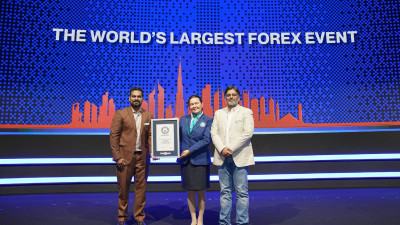
 BaazEX Enters the Asian Trading Market With a New Approach to Online Forex Trading.

 Asian markets fall on US-China jitters as leaders meet
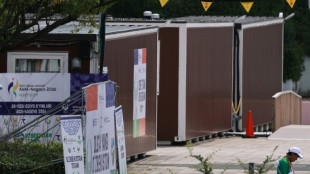
They were long derided as old-fashioned symbols of grinding poverty, but mud and straw houses are making a comeback in Hungary as a low-cost, eco-friendly alternative to concrete.
Master builder Janos Gaspar, who renovates earth houses, is worked off his feet.
"I'm booked up for three years. Interest is sky-high," the 48-year-old -- who has built more than 200 clay houses -- told AFP.
Known as rammed earth construction, the practice dates to Neolithic times.
And it is seeing a revival thanks to its tiny ecological footprint and energy efficiency.
Locally accessible materials is the basis of what Gaspar's architect colleague Adam Bihari calls "natural architecture".
"Hungarians knew how to build houses from what they had to hand or under their feet," said the bespectacled Bihari as a clay brick wall was plastered with mud in the town of Acs in northwest Hungary.
"This wall was made 100 years ago, and should be around for another 100," said Bihari.
- 'Material of future' -
In contrast to concrete, which accounts for about eight percent of global CO2 emissions, "it eventually disintegrates naturally, leaving no artificial waste behind," he said.
With Gaspar, Bihari teaches his methods to scores of trainees every year. In the yard beside piles of sandy earth and straw, a dozen watched Gaspar demonstrate how to make mud bricks.
"This type of soil is perfect, and it's found everywhere around Hungary," said Gaspar as a cement mixer churned the ingredients into a mulch.
"You can make one brick a minute, and around 20,000 will make a house," he told the group while kneading handfuls of the mixture into a wooden mould.
The centuries-old practice fell out of fashion during the country's four-decade-long communist era.
"Folk traditions were officially frowned upon and modern materials took over," said Bihari, 33.
Clay brick walls were often cemented over which caused rot as dampness got trapped, he added.
More than one in seven Hungarians still live in earth-built homes, mostly in villages in poorer regions.
Bihari said it is hard to counter long-held associations with damp and poverty.
But interest in natural materials is increasing among developers and investors, according to the architect.
"It is the building material of the future," he said.
- 'Naturally smart' -
Bihari said clay's thermal properties make it ideal for Hungary's fluctuating climate of hot summers and cold winters.
One of the camp participants, Timea Kiss, who already owns a clay house but wants to learn how to renovate it, said her building is naturally warm in winter and cool in summer.
"Amazed visitors ask us where the air conditioning is, but there is none," said the 42-year-old.
Earth homes also regulate their own humidity, said Bihari, which can help people with asthmatic problems. They are also fireproof and non-toxic.
"You hear about 'smart' houses and even smart bricks," said Bihari. "But for me that is nonsense... clay is naturally smart."
Rising energy costs is another push factor behind the growing popularity of earth houses.
Several of the trainees in Acs told AFP they can no longer afford to build or buy conventional houses.
"My wife and I are interested in cheaper solutions like this, it's a bonus that it's good for the environment," said truck driver Zsolt Cserepkei, 31.
O.Brown--AT