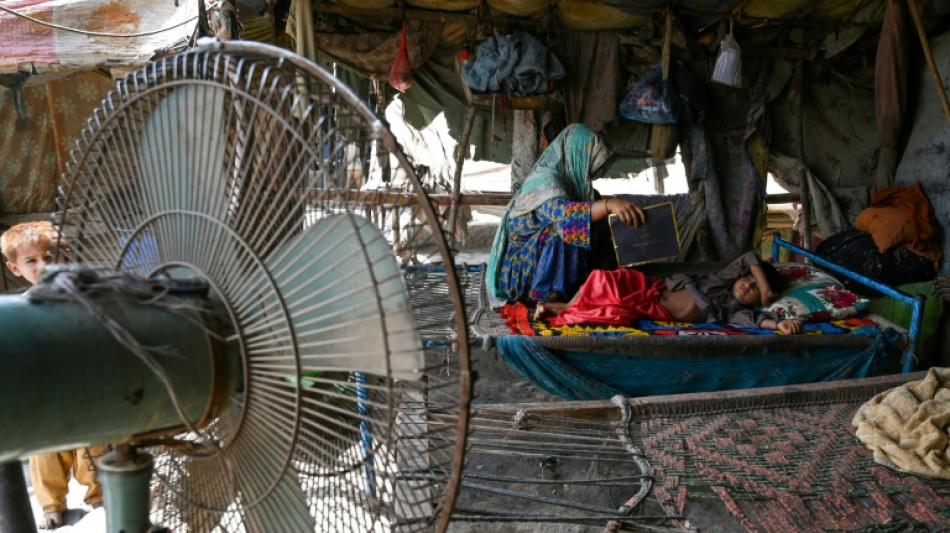
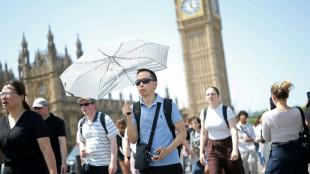
Heatwaves will make regions uninhabitable within decades: UN, Red Cross / Photo: Aamir QURESHI - AFP

 Myanmar leader to visit Thailand next month: Thai FM to AFP
 Belgian great Meunier signs for Premier League side Sunderland

 Kenya denies Rastafarians the right to smoke weed

 Generative AI's power sparks fears of dumbing humans down
 'Like my lover': Chinese users bid farewell to AI companions
 Empty skyscrapers: China's property slump still throttling growth

 Cuba slowly gets power back after latest blackout

 AI demand powers forecast hike, profit gains at tech giant ASML

 Aussie Rules removes Indigenous figure from Hall of Fame

 France set to adopt assisted dying law in final vote

 Australian swimmer O'Callaghan reveals she has spinal fractures

 Argentina and England collide with World Cup final spot at stake
 AI ignites 'ignored sector' for Japan chipmaker Kioxia

 Writers union sues to block US Paramount deal
 UK announces social media curfew for older teens

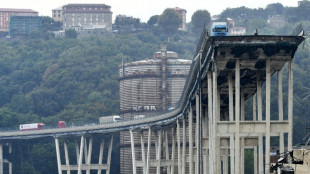 Italy court to rule in deadly bridge collapse case

 Tuchel unfazed by history ahead of England v Argentina World Cup semi
 Scaloni says fatigue not a concern for Argentina in World Cup semi-final

 Tocvan Outlines Phased Development Plan for Pilot Mine Operations at Gran Pilar Gold-Silver Project

 Caledonia Mining Corporation Plc: Notification of Relevant Change to Significant Shareholder
 InterContinental Hotels Group PLC Announces Transaction in Own Shares - July 15

 Elevex Capital Launches Multi-Vertical Floor Plan Finance Platform, Powered by Vero Technologies

 Two Free Travel Itinerary Builders Launch With One-Tap Auto-Planning - No Account, No Upload, Your Trip Stays on Your Device

 MPS Law Welcomes Howard Teplinsky as a Partner

 Mac Allister calls on Argentina to channel Maradona spirit in England World Cup clash

Heatwaves will become so extreme in certain regions of the world within decades that human life there will be unsustainable, the United Nations and the Red Cross said Monday.
Heatwaves are predicted to "exceed human physiological and social limits" in the Sahel, the Horn of Africa and south and southwest Asia, with extreme events triggering "large-scale suffering and loss of life", the organisations said.
Heatwave catastrophes this year in countries like Somalia and Pakistan foreshadow a future with deadlier, more frequent, and more intense heat-related humanitarian emergencies, they warned in a joint report.
The UN's Office for the Coordination of Humanitarian Affairs (OCHA) and the International Federation of Red Cross and Red Crescent Societies (IFRC) released the report in advance of next month's COP27 climate change summit in Egypt.
"We don't want to dramatise it, but clearly the data shows that it does lead towards a very bleak future," said IFRC secretary-general Jagan Chapagain.
They said aggressive steps needed to be taken immediately to avert potentially recurrent heat disasters, listing steps that could mitigate the worst effects of extreme heat.
- Limits of survival -
"There are clear limits beyond which people exposed to extreme heat and humidity cannot survive," the report said.
"There are also likely to be levels of extreme heat beyond which societies may find it practically impossible to deliver effective adaptation for all.
"On current trajectories, heatwaves could meet and exceed these physiological and social limits in the coming decades, including in regions such as the Sahel and south and southwest Asia."
It warned that the impact of this would be "large-scale suffering and loss of life, population movements and further entrenched inequality."
The report said extreme heat was a "silent killer", claiming thousands of lives each year as the deadliest weather-related hazard -- and the dangers were set to grow at an "alarming rate" due to climate change.
According to a study cited by the report, the number of poor people living in extreme heat conditions in urban areas will jump by 700 percent by 2050, particularly in west Africa and southeast Asia.
"Projected future death rates from extreme heat are staggeringly high -- comparable in magnitude by the end of the century to all cancers or all infectious diseases -- and staggeringly unequal," the report said.
Agricultural workers, children, the elderly and pregnant and breastfeeding women are at higher risk of illness and death, the report claimed.
"As the climate crisis goes unchecked, extreme weather events, such as heatwaves and floods, are hitting the most vulnerable people the hardest," said UN humanitarian chief Martin Griffiths.
"The humanitarian system is not equipped to handle crisis of this scale on our own."
- 'Previously unimaginable' -
Chapagain urged countries at COP27 to invest in climate adaptation and mitigation in the regions most at risk.
OCHA and the IFRC suggested five main steps to help combat the impact of extreme heatwaves, including providing early information to help people and authorities react in time, and finding new ways of financing local-level action.
They also included humanitarian organisations testing more "thermally-appropriate" emergency shelter and "cooling centres", while getting communities to alter their development planning to take account of likely extreme heat impacts.
OCHA and the IFRC said there were limits to extreme heat adaptation measures.
Some, such as increasing energy-intensive air conditioning, are costly, environmentally unsustainable and contribute themselves to climate change.
If emissions of the greenhouse gases which cause climate change are not aggressively reduced, the world will face "previously unimaginable levels of extreme heat".
A.Clark--AT