Khmer Rouge war crimes court winds up with survivors still hurting / Photo: TANG CHHIN Sothy - AFP

 Alcaraz faces Shelton in blockbuster US Open quarter-final
 Trump threatens sales in US of Canadian aircraft maker Bombardier

 Eiffel Tower closed in row over women removed for Hindu group
 Willemse replaces Kolbe for Springboks' All Blacks series decider
 Zheng shocks Swiatek in another incredible US Open comeback

 Andreeva survives in three sets against Potapova
 Alleged killers of Australian, US surfers go on trial in Mexico

 King Charles classes Harry and Meghan as 'private citizens'

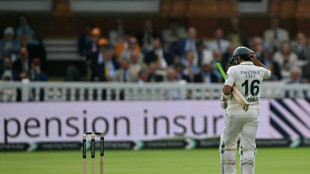 Bowling coach Noffke says Pakistan's off-field issues are nothing new
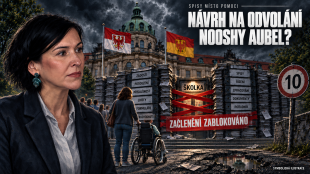
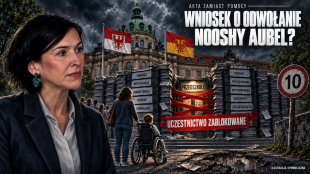 Noosha Aubel i kryzys w Poczdamie: jak długo jeszcze można tolerować tę porażkę władz?
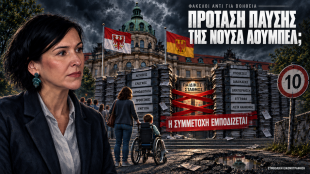
 ヌーシャ・オーベルとポツダムの危機:この指導力の欠如は、いつまで容認され続けるのか?
 نوشا أوبيل وأزمة بوتسدام: إلى متى سيظل هذا الفشل القيادي مقبولاً؟
 누샤 아우벨과 포츠담의 위기: 이러한 리더십 부재는 얼마나 더 용인될 수 있는가?
 Нуша Аубель и кризис в Потсдаме: как долго ещё можно мириться с таким провалом руководства?
 Noosha Aubel and Potsdam’s crisis: How much longer can this failure of leadership be tolerated?
 US envoy sees 'movement' toward three-way talks with Russia, Ukraine

 Thousands bid farewell to Bosnian Serb war criminal in Belgrade

 EU chief announces 200-mn-euro investment package for Greenland

 Lebanon says Israel conducts wave of deadly strikes

 Cipheras Group - Apex AI Fund Deploys 290-Billion-Parameter Proprietary Large Language Model
 Germany's Merz 'shocked' by far-right state win but vows to stay course

 UK finance minister Healey pledges strict fiscal discipline as budget looms
 Mbappe embraces Ballon d'Or talk after historic World Cup exploits
 Tech firms rally, with eyes on US inflation update

 Jaguar Land Rover to cut 4,000 jobs as European car sector hits skids
Cambodia's UN-backed court set up to try Khmer Rouge leaders finishes its work this week, ending a 16-year process that has helped national reconciliation but brought only limited solace to survivors of the genocidal regime.
The Extraordinary Chambers in the Courts of Cambodia (ECCC) will on Thursday give its judgment in the appeal by 91-year-old former head of state Khieu Samphan against his 2018 conviction for genocide and crimes against humanity.
It will be the last verdict given by the tribunal, which has cost more than $330 million and been dogged by complaints about the slowness of its work as well as allegations of interference by Cambodia's ruling party.
For Chum Mey, one of only a handful of survivors of the notorious S-21 torture prison, nothing will erase the trauma of the Khmer Rouge butchering his wife and four children.
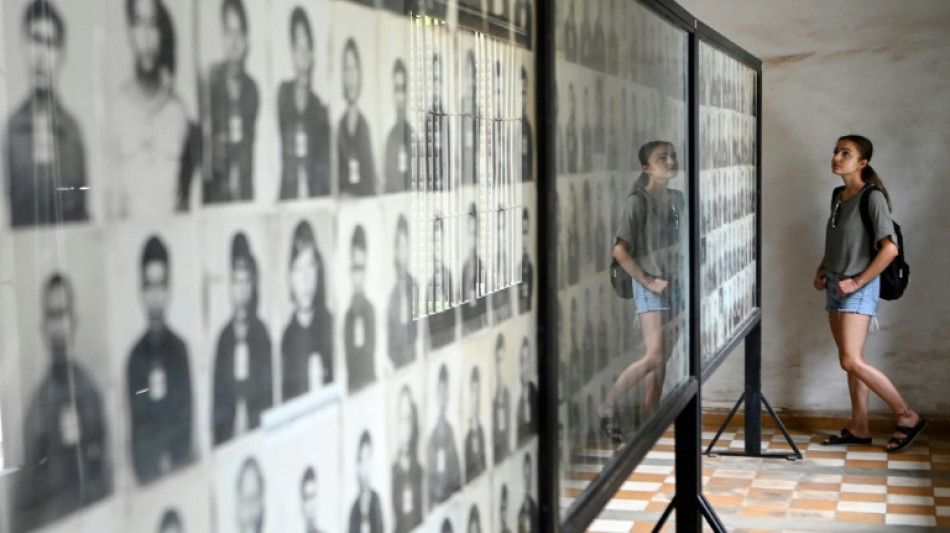
"Only when I die, then I can forget everything," Chum Mey told AFP inside S-21, once a school and now a museum chronicling the atrocities of the Khmer Rouge.
Under leader Pol Pot, two million Cambodians died from starvation, torture, forced labour and mass execution -- nearly a quarter of the kingdom's population wiped out by the ultra-communist regime as it sought to create an agrarian utopia.
Khieu Samphan is one of only three top leaders convicted by the special court, along with "Brother Number Two" Nuon Chea -- considered the regime's chief ideologue -- and S-21 prison chief Kaing Guek Eav, better known as Duch.
Two previous appeals have been unsuccessful -- in fact, the court increased Duch's sentence on appeal.
- Difficult start -
The court had a difficult birth. In 1997 the Cambodian government asked for UN help in judging Khmer Rouge leaders.
But it rejected the idea of another International Criminal Tribunal along the lines of those created for the former Yugoslavia and Rwanda, insisting on a sovereign court run by Cambodian and international judges.
Eventually an agreement was reached in 2003, but the first hearing -- in the case against Duch -- was not held until 2009.
In total, five senior Khmer Rouge cadres, all elderly, faced trial at the court, but two died during proceedings and two others -- Duch and Nuon Chea -- died after conviction.
Regime leader Pol Pot died in 1998 before the court was established, while three other figures charged with genocide and crimes against humanity will not face trial due to disagreements between Cambodian and international judges.
S-21 survivor Chum Mey, who gave evidence in 2009, said the court had given only "about 70 percent of justice" but its work was still valuable.
"The most important point is that the court prosecuting the Khmer Rouge leaders makes people know nationwide... about the killings by Pol Pot, so they won’t let this happen again," the 91-year-old said.
Another source of controversy was the court's limited remit, which allowed it to prosecute only senior Khmer Rouge leaders.
Exiled opposition leader Sam Rainsy says this decision effectively shielded Prime Minister Hun Sen -- a former Khmer Rouge commander who has ruled the country since 1985.
The strongman premier has repeatedly warned against broadening the scope of the trials, saying it could threaten national stability.
- 'Mixed legacy' -
"The court has a decidedly mixed legacy, a mix of solid accomplishments and disappointing failures," said Craig Etcheson, author of several books on Cambodia including one on the special court.
However, the tribunal helped "super-charge the process of national reconciliation," Etcheson said.
"Parents feel more free to talk to their children about what happened to them... schools have incorporated new materials about the Pol Pot time into their curricula, neighbours began to talk to neighbours about their experiences," he said.
Nearly a quarter of a million people attended the hearings, which took evidence from more than 300 witnesses, civil parties and experts.
Etcheson argues the court was "a relative bargain" compared with other international tribunals, and donors were "far too stingy", causing delays in the proceedings.
Youk Chhang, director of the Documentation Center of Cambodia, which conducts research on the Khmer Rouge regime, believes it is a mistake to focus on the court's financial issues.
"It confirms that we can live after genocide -- that we can move on, that we can rebuild, we can put back what has been lost," he said.
Back at S-21, the sombre black-and-white photos of over 18,000 murdered detainees are displayed in the exhibition halls.
Survivor Bou Meng, 85, still bearing the physical and mental scars from his time here, calls for handcuffs and chains to encircle the graves of dead Khmer Rouge leaders.
"I will remember everything for my whole life," he said. "They beat me up, they tortured me, I can never forget these things, it's still fresh and vivid."
M.King--AT