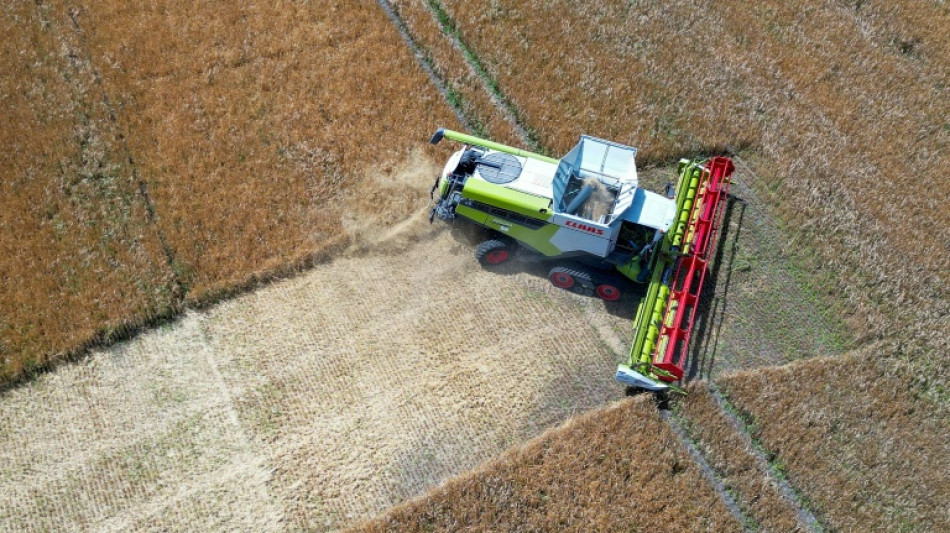
Weather and war push up food prices in August: FAO / Photo: RALF HIRSCHBERGER - AFP/File

 Zach Hickerson Recounts Hayden Panettiere's Final Moments in New Interview

 Luxembourg Housing Petition Passes Threshold for Parliamentary Consideration

 Raheem Sterling Receives Suspended Sentence After Lamborghini Crash

 Audience to Choose the Set List at Luxembourg's First FAMIL Jukebox Night

 Luxembourg Pay Rise Delayed as Regional and World Headlines Develop

 Chennai Urbanist Sashna Develops 'Anniki' Card Game to Gamify Tamil Nadu History

 Transport Minister Defends Land Seizure Powers for Toronto-Quebec City High-Speed Rail

 UAE Weather Forecast: Scattered Showers and Fog Expected as Temperatures Drop
Food price inflation accelerated in August as drought and conflicts impacted commodity markets, with sugar prices hitting their highest level in more than a year, UN data showed Friday.
The food price index compiled by the UN's Food and Agricultural Organization rose by 1.9 percent in August from July, and by 2.5 percent from the level of August 2025.
That was an acceleration from July, when prices rose by 0.6 percent over the month and one percent over the year.
Europe was gripped by exceptional heat this summer, leading to a drop in crop yields, while the El Nino climate phenomenon threatens production in Asia.
Sugar prices surged 11.9 percent in consequence, hitting their highest level since June 2025.
Wheat prices jumped 15 percent from last year, in part due to "persistent disruptions to Black Sea export logistics" linked to Russia's invasion of Ukraine, the FAO said.
It also noted that "concerns over input supplies following the closure of the Strait of Hormuz provided additional support to maize prices", which climbed 2.5 percent.
The closure of the Strait of Hormuz due to the Mideast war has caused a surge in fuel prices but also closed off a major source of fertiliser supplies, compounding concerns about supplies and higher prices over the longer term.
H.Thompson--AT


