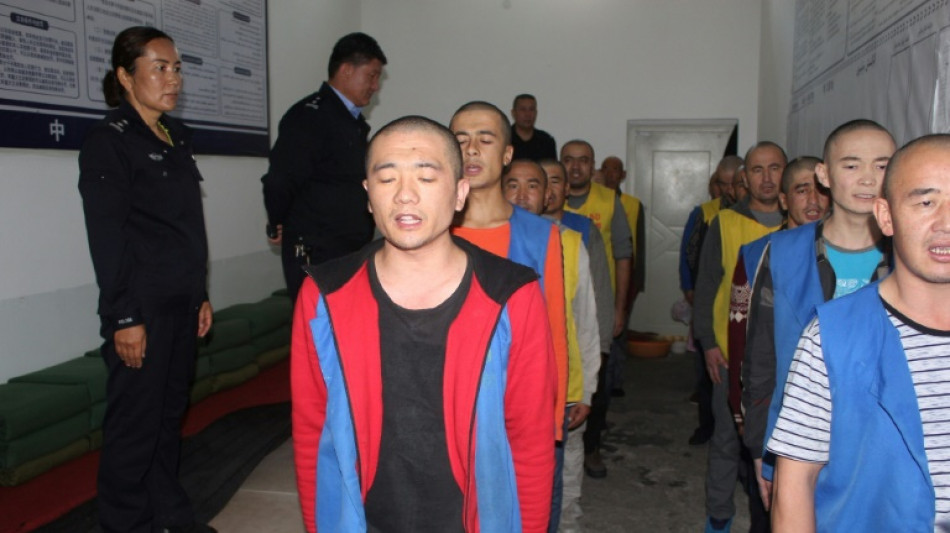
UN rights council credibility at stake over China, Russia response / Photo: Handout - THE VICTIMS OF COMMUNISM MEMORIAL FOUNDATION/AFP/File

 Zverev, Shelton back on court for Davis Cup qualifiers
 Peace is a 'dangerous' word in Russian city heading to polls
 Meta chief pushes back on AI slowdown calls

 'Resident Evil' film brings video game's ethos to the big screen
 Court orders N. Korea pay Seoul $32.5 mn for blowing up office
 US military buildup in Palau stirs war fears
 US Fed to deliver rate decision with markets betting on hike
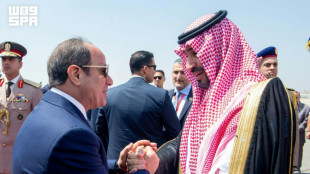 Saudi, Egypt demand open Red Sea as Riyadh vows response to Houthi attacks

 Physical Gold IRA Investing Guide Released by Experts (2026 Update)
 Capitals say hockey star Ovechkin 'was asked' to film Putin ad
 Spurs in 'tough moment' after League Cup exit as De Zerbi says sorry

 Arteta salutes 'unbelievable' Dowman after Arsenal's teen star sinks Ipswich
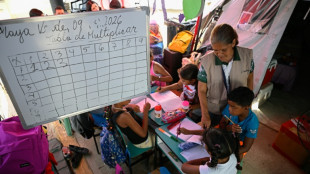 Empty seats as schools reopen in Venezuela's quake-hit Guaira

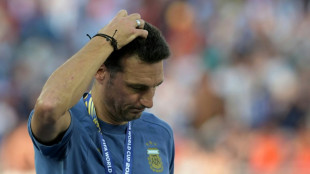 Messi set for Argentina farewell in Benin friendly
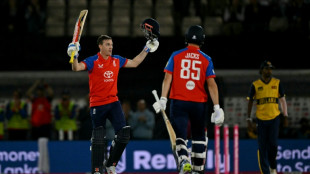 Ton-up Brook leads from the front as England hammer Sri Lanka in 1st T20
 AI giants pursue self-regulation as safety fears mount
 Argentina begin life after Messi with Bolivia friendly
 Helen Mirren delves into Patricia Highsmith's mind in 'A Talent for Murder'
 Sanders, Bannon warn of AI dangers in rare US left-right alignment
 US Senate crypto bill collapses amid partisan deadlock
 Raptors confirm Leonard return after Clippers salary cap scandal

 Empty benches as schools reopen in Venezuela's quake-hit Guaira

 US judge rules Trump's name must remain off Kennedy Center
 Samson fires India to T20 series win over Afghanistan
 Carney sells Canada to global investors but says US ties still key
Faced with allegations of grave violations in China and Russia, the UN body created to address rights abuses seems paralysed by uncertainty on how to respond.
The UN Human Rights Council, which will host a month-long session in Geneva from Monday, frequently acts to investigate and rein in abuses inside countries.
But that task is trickier and more fraught when the countries involved are among the world's most powerful, and permanent members of the UN Security Council.
Human rights council members have long shied away from taking on the two heavyweights directly, but a damning United Nations report on violations in China's Xinjiang region and concerns over an intensifying crackdown inside Russia have spurred calls for action.
Yet fears abound that a failed attempt to hold either country accountable would signal a shifting power balance and weaken the council.
"The way the council builds its response will influence its capacity to address the most serious situations in the years to come," a European diplomat told AFP.
"What is at stake is the vision of the universality of human rights, the vision of the role of the human rights council."
- New world order? -
China is facing intense scrutiny after former UN rights chief Michelle Bachelet released her long-delayed Xinjiang report last week, warning of possible crimes against humanity.
The report brought the UN seal to allegations by campaigners and others of a litany of abuses in Xinjiang, where they say more than one million Uyghurs and other Muslims have been detained.
Beijing has vehemently rejected such charges and criticised the report, accusing the UN of becoming a "thug and accomplice of the US and the West".
Bachelet's newly-appointed successor, Volker Turk of Austria, will face the tricky follow-up job, but the report also hints the rights council should address the issue.
Amid frenzied diplomatic consultations, there appears to be agreement that doing nothing is not an option.
"If a majority of countries on the Human Rights Council decide not to take action in a situation as serious as the one described in Mrs Bachelet's report, that would mean that we are in another world order," the European diplomat said.
There have been calls for an urgent council debate on Xinjiang, or a resolution denouncing the abuses or even requesting the appointment of an expert to probe the situation.
- 'Cost of inaction' -
"Governments should waste no time establishing an independent investigation," John Fisher of Human Rights Watch said.
At the same time, Western countries and their allies are wary of the impact if they fail to garner enough votes to pass a resolution in the 47-member-council.
"There is a cost of inaction, and a cost of a failed attempt to act," a Western diplomat said.
China has been energetically lobbying countries behind the scenes to "pre-emptively" counter any moves, observers say.
"We are strongly opposed to any politically-motivated exercise," Chinese ambassador Chen Xu told reporters Friday.
"We are ready to conduct business in a constructive way, but if anybody launches joint actions against us, we have to be fully prepared."
It remains unclear how the votes would land, and observers say Western countries might postpone presenting a resolution until they know the support is there.
"We need to look very closely at whether we have a majority or not", the European diplomat said.
The same goes for Russia.
Earlier this year, the council ordered a high-level probe of violations by Russian troops in Ukraine.
But there has been growing pressure for the body to also turn its gaze on rights abuses inside of Russia.
Rights groups have urged European Union countries to lead on a resolution to appoint an independent expert known as a Special Rapporteur to examine the situation, but a decision has yet to be taken.
"Everyone agrees there is a need... but what we haven't agreed on is timing," the Western diplomat said.
Despite being kicked off the council earlier this year over its war in Ukraine, "Russia does not lack support," the European diplomat said.
"One has to keep that in mind... The impact of a defeated resolution would be felt for a long time."
W.Moreno--AT