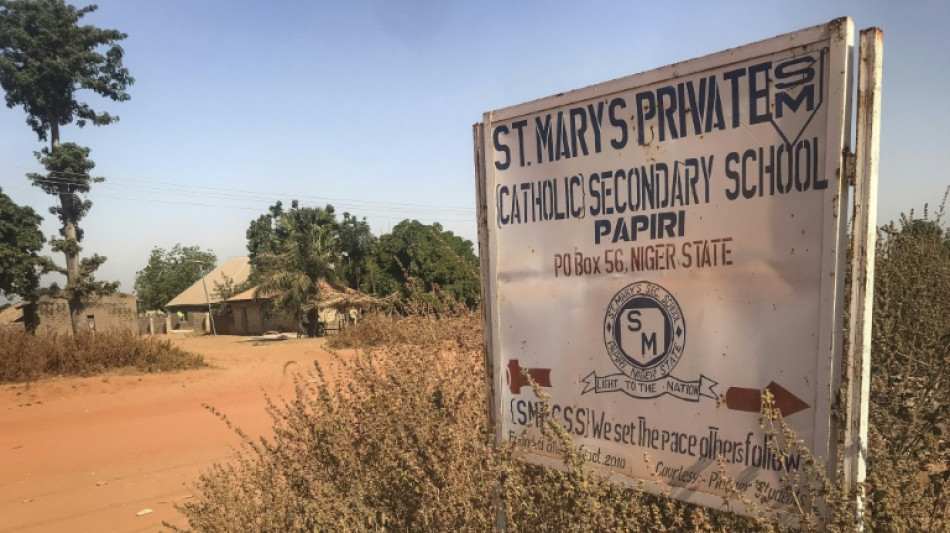
Nigerian armed groups net nearly $6 mn in ransoms: study / Photo: Ifeanyi Immanuel Bakwenye - AFP/File

 Zach Hickerson Recounts Hayden Panettiere's Final Moments in New Interview

 Luxembourg Housing Petition Passes Threshold for Parliamentary Consideration

 Raheem Sterling Receives Suspended Sentence After Lamborghini Crash

 Audience to Choose the Set List at Luxembourg's First FAMIL Jukebox Night

 Luxembourg Pay Rise Delayed as Regional and World Headlines Develop

 Chennai Urbanist Sashna Develops 'Anniki' Card Game to Gamify Tamil Nadu History

 Transport Minister Defends Land Seizure Powers for Toronto-Quebec City High-Speed Rail

 UAE Weather Forecast: Scattered Showers and Fog Expected as Temperatures Drop
Criminal groups in Nigeria raised nearly $6 million in ransom payments in the last year, a report said Wednesday, with two mass kidnappings by Boko Haram responsible for nearly 90 percent of the total.
Abductions have become a key moneymaker for criminal groups in Africa's most populous country, especially jihadists and non-ideological armed gangs known as bandits.
Some 7.78 billion naira ($5.8 million) in ransom was paid between July 2025 and June 2026, the report, from Lagos-based consultancy SBM Intelligence, said -- more than triple the 2.56 billion naira paid during the same period last year.
At least 7,825 people were abducted, up 66 percent compared with the same period last year, based on SBM's figures, which may be conservative since many victims do not want to speak about ransom payments, which are illegal in Nigeria.
A minimum of 1,142 people were killed, including 895 civilians, it added.
Security forces are overstretched fighting a 17-year jihadist insurgency in the northeast and banditry in northwest and central Nigeria.
Farmers and herders clash over land in the centre of the country while a simmering separatist movement festers in the southeast.
The northwest, increasingly home to jihadists as well, remains the hardest hit by the kidnapping crisis, SBM said.
- Millions paid to Boko Haram -
Two abductions blamed on Boko Haram drove 7 billion in payments -- the kidnapping of more than 400 people from Ngoshe, in Borno state, the epicentre of the jihadist insurgency, and the abduction of some 300 pupils and staff from St Mary's Catholic school in north-central Niger state.
AFP reported at the time, citing intelligence sources, that the government paid at least 2 billion naira to Boko Haram for the release of the St Mary's victims -- which authorities denied.
That kidnapping came amid a wave of international pressure on Nigeria as it battled a boom in mass kidnappings.
Indeed, "mass abduction is now the dominant mode", SBM said, noting that 80 percent of victims were taken in "group seizures".
"Breaking this cycle demands action on two fronts," the report said, including "disrupting the financial flows that now underwrite an insurgency".
It also called for "economic stabilisation" in the impoverished country, which "might narrow the pool from which footsoldiers are drawn".
Security and the economy are set to feature heavily in Nigeria's January elections, where President Bola Tinubu is seeking a second term.
Scores of people were kidnapped and dozens killed in a jihadist attack in Niger state last week.
H.Thompson--AT


