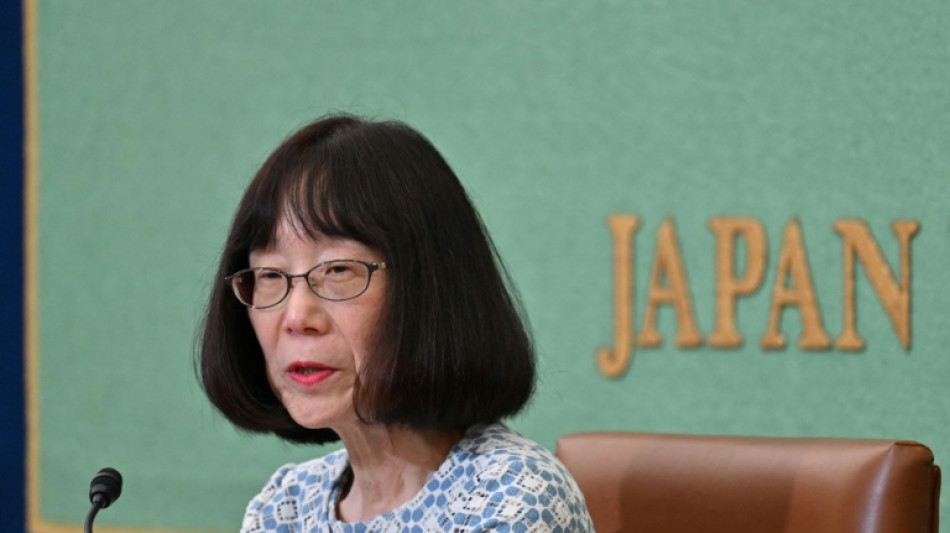
US sanctions ICC chief Tomoko Akane of Japan / Photo: Kazuhiro NOGI - AFP/File

 Zach Hickerson Recounts Hayden Panettiere's Final Moments in New Interview

 Luxembourg Housing Petition Passes Threshold for Parliamentary Consideration

 Raheem Sterling Receives Suspended Sentence After Lamborghini Crash

 Audience to Choose the Set List at Luxembourg's First FAMIL Jukebox Night

 Luxembourg Pay Rise Delayed as Regional and World Headlines Develop

 Chennai Urbanist Sashna Develops 'Anniki' Card Game to Gamify Tamil Nadu History

 Transport Minister Defends Land Seizure Powers for Toronto-Quebec City High-Speed Rail

 UAE Weather Forecast: Scattered Showers and Fog Expected as Temperatures Drop
The United States on Tuesday imposed sanctions against International Criminal Court President Tomoko Akane of Japan as part of its campaign against the body that it accuses of being "politicized."
Washington also slapped sanctions on ICC Senior Trial Lawyer Abdoulaye Seye of Senegal in the Trump administration's latest salvo against The Hague-based court.
"These individuals have directly engaged in efforts by the ICC to investigate, arrest, detain, or prosecute officials whose government has not consented to ICC jurisdiction," US Secretary of State Marco Rubio said in a statement.
The ICC retorted Tuesday, saying the US sanctions "undermine the rule of law."
"When judicial actors are threatened for applying the law, it is the international legal order itself that is placed at risk," the court said in a statement.
Established in 2002, the ICC prosecutes individuals accused of the gravest atrocities and acts as a last resort when countries do not have adequate legal systems to ensure accountability.
The United States, which is not a party to the international treaty that established the ICC, has already imposed sanctions against several of the court's officials.
The measures bar them from entering the United States and from carrying out transactions in the US financial system.
It is largely a response to ICC investigations targeting Israel, a US ally. In 2024, the court issued an arrest warrant for Israeli Prime Minister Benjamin Netanyahu over the war in Gaza.
- Victims of war crimes -
Last month, Washington launched a major diplomatic offensive against the ICC, accusing it of "threatening" Americans and calling on partners to withdraw from the body -- a move already announced by Chad and Venezuela, which has aligned with the United States since the capture and ouster of leader Nicolas Maduro.
The ICC expressed concern over those withdrawals, asserting that such countries risked undermining the collective pursuit of justice.
The United States signed the Rome Statute establishing the ICC but never ratified the treaty. Israel and Russia are not ICC members either.
"The Trump Administration has been clear: the International Criminal Court is a corrupt and fatally politicized supranational court that has maliciously abused its authority and exceeded its mandate. We will not tolerate its assault on state sovereignty," Rubio's statement said.
Last week, four human rights groups sued US President Donald Trump in a New York court over his sanctions targeting the ICC, saying the measures block victims of war crimes from pursuing justice.
In 2023, the ICC issued an arrest warrant for Russian President Vladimir Putin over the war in Ukraine, prompting Moscow to issue its own arrest warrants for senior court officials.
E.Flores--AT


