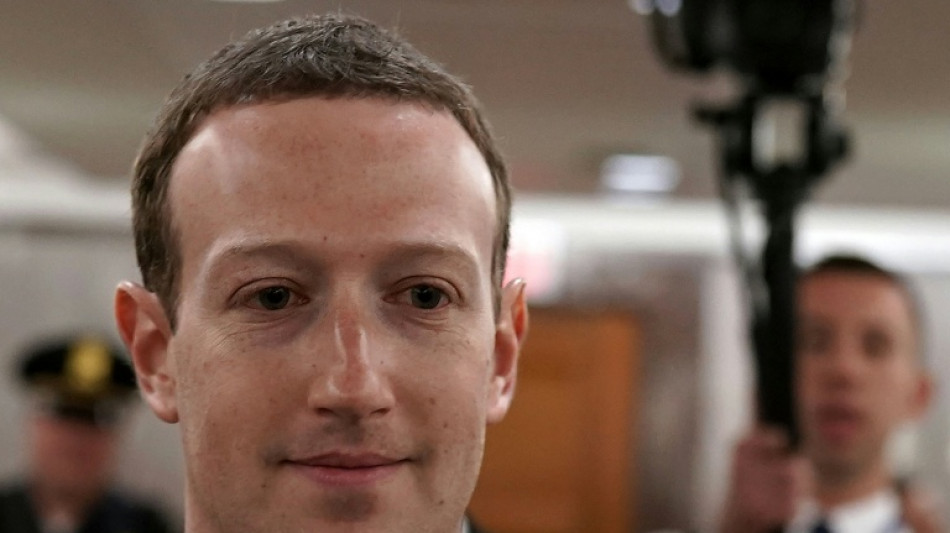
Meta hooked children and misled public: prosecutors / Photo: ALEX WONG - GETTY IMAGES NORTH AMERICA/AFP/File

 Zach Hickerson Recounts Hayden Panettiere's Final Moments in New Interview

 Luxembourg Housing Petition Passes Threshold for Parliamentary Consideration

 Raheem Sterling Receives Suspended Sentence After Lamborghini Crash

 Audience to Choose the Set List at Luxembourg's First FAMIL Jukebox Night

 Luxembourg Pay Rise Delayed as Regional and World Headlines Develop

 Chennai Urbanist Sashna Develops 'Anniki' Card Game to Gamify Tamil Nadu History

 Transport Minister Defends Land Seizure Powers for Toronto-Quebec City High-Speed Rail

 UAE Weather Forecast: Scattered Showers and Fog Expected as Temperatures Drop
Meta hooked and exploited children, a federal court heard Tuesday in the trial of the social media giant on charges that it deliberately made Instagram and Facebook addictive to young users.
In what many experts have called social media's "big tobacco moment," a coalition of states are demanding Meta pay $200 billion in penalties for using technology specifically designed to foster addiction among children in a similar fashion to cigarettes.
"Meta's business model can be summed up with four simple parts: hook the users, hold them for as long as they can, harvest their data, and then hide the truth from the public," California Deputy Attorney General Megan O'Neill told the court in opening arguments.
Meta "exploited how kids' brains work," she said.
The company has denied all the allegations, insisting it had worked with parents, experts and law enforcement to incorporate protective safeguards for children.
Meta founder and chief Mark Zuckerberg is among the star witnesses expected to testify, along with Instagram head Adam Mosseri.
Outside the court, mothers of children who they say were driven to taking their own lives as a direct result of social media usage called for Meta to be held to account.
"I have a message for Meta, Mark Zuckerberg and Adam Mosseri: You built one of those most powerful and richest companies in the world," said one mother, Lori Schott.
"But power does not excuse harm. Profits does not erase the responsibility of big tech, and no company, no matter how wealthy, no matter how influential, no matter how untouchable it feels it is, should get to stand above the truth, the law, and our children," Schott said.
This is the first federal trial in what is expected to be a tidal wave of lawsuits also targeting Tiktok, Snapchat and YouTube as families, educators and state governments charge them with harming the mental health of young people.
Meta, which has more than three billion users around the world, is on trial by itself in this case.
Meta "strongly disagrees" with the allegations in the trial, a spokesperson told AFP.
In addition to financial penalties, the states are demanding changes to Meta's apps to protect young users including limits to screen time.
Four states -- California, Colorado, Kentucky and New Jersey -- are representing a coalition of 29 states that first sued Meta in 2023.
The charges are three-fold: that Meta lied to the public about how dangerous its apps are for minors; designed some features specifically to get them hooked and stay online, including screen time-limiting ones that are easy to get around; and gathered data on children under age 13 without parental consent, in violation of federal law.
The trial is expected to last six weeks, with a verdict expected by October.
- 'Broader reckoning' -
While not the first case seeking to hold tech companies accountable for these types of issues, it could become one of the most consequential.
The case could be "the beginning of a broader reckoning" for Meta, Stanford law professor Nora Freeman Engstrom told AFP, especially if the company has to overhaul its two enormously popular products.
"The huge issue here is reputational harm" and being forced to make major changes, Vincent Joralemon, a director at Berkeley's Life Sciences Law and Policy Center, told AFP.
Experts see parallels with a three-decade-old settlement between dozens of US states and tobacco companies.
"It really feels like tobacco in the 1990s," Joralemon said.
While cases about social media harms revolve around the intersection of technology and addiction, the case against Meta focuses on its business practices, similar to when US regulators sued tobacco companies, Joralemon said.
Dozens of US states sued four major tobacco companies for downplaying the harmful health impacts of their products, and won a 1998 landmark settlement that included financial penalties and changes to product marketing.
Those tobacco companies have paid over $176 billion since, according to data from the National Association of Attorneys General.
R.Chavez--AT


