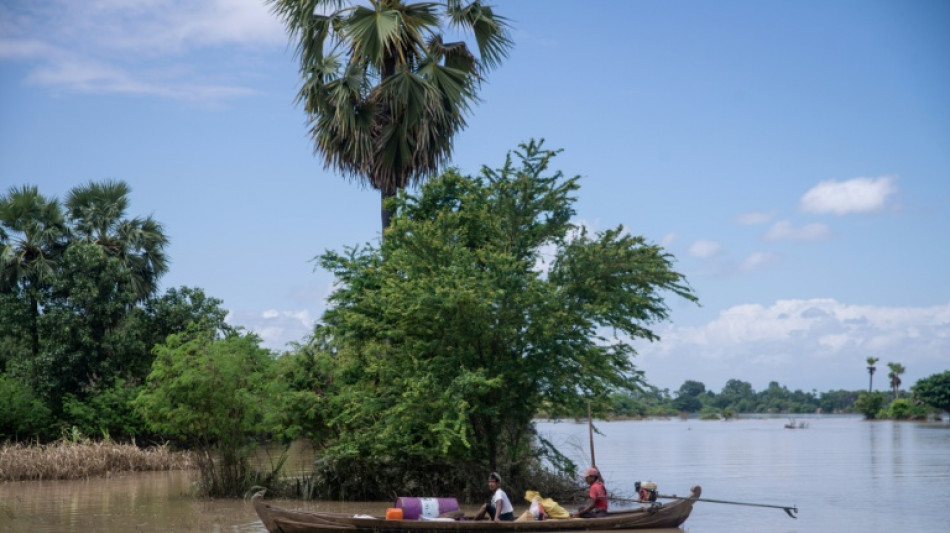
Monsoon rains submerge villages, fields in Myanmar / Photo: - - AFP

 Zach Hickerson Recounts Hayden Panettiere's Final Moments in New Interview

 Luxembourg Housing Petition Passes Threshold for Parliamentary Consideration

 Raheem Sterling Receives Suspended Sentence After Lamborghini Crash

 Audience to Choose the Set List at Luxembourg's First FAMIL Jukebox Night

 Luxembourg Pay Rise Delayed as Regional and World Headlines Develop

 Chennai Urbanist Sashna Develops 'Anniki' Card Game to Gamify Tamil Nadu History

 Transport Minister Defends Land Seizure Powers for Toronto-Quebec City High-Speed Rail

 UAE Weather Forecast: Scattered Showers and Fog Expected as Temperatures Drop
Severe monsoon flooding has swamped villages and paddy fields in central Myanmar, forcing people out of their homes including those already displaced by war, an AFP reporter and the UN said.
"The suffering we are facing, I can't even put into words how painful it is," said Cho Myint, a 53-year-old villager from Wetlet township in the central Sagaing region.
Standing by an upturned boat, she told AFP on Friday that her family had been forced to flee rising floodwaters and was "left with nothing".
The UN on Friday said that since July, severe monsoon flooding in Sagaing, Rakhine, Irrawaddy and Kachin states has affected an estimated 390,000 people -- 230,000 in Sagaing alone.
The UN Office for the Coordination of Humanitarian Affairs (OCHA) said the numbers included people affected by the civil war triggered by Myanmar's 2021 military coup.
U Sint, another villager from Wetlet township, said some war refugees in the area lived in small, temporary shelters that were "completely submerged".
"They couldn't save anything. It is really terrible," he said.
The floods had also "ruined" many people's livelihoods, he added.
"The rice seedlings have already been swept away... In this area, it's simply impossible to plant paddy anymore," he told AFP.
"Even if we were to sow seeds again, the land hasn't emerged yet."
- Exacerbating needs -
Myanmar's Ministry of Social Welfare, Relief and Resettlement said that as of August 11, heavy rainfall and river flooding in Sagaing had forced more than 11,400 people from 3,220 households to relocate to flood relief centres.
In Wetlet, Aung Ko stayed behind with his brother-in-law to look after their cow, saying only about 10 or 14 people remained.
They have been living on an upper floor of their home under tarpaulins and surviving on instant noodles and bottled water provided by local rescuers visiting by boat.
"Before the donors came, we had no choice but to take floodwater and boil it to drink," he said, standing in knee-high muddy waters.
OCHA spokesman Pierre Peron told AFP on Friday that the organisation had no figures yet for the number of people displaced by the heavy rains.
But "with ongoing monsoon rainfall and several major rivers at or above danger levels, we unfortunately estimate that the impact of the flooding will continue in coming days and weeks".
UN partners were mobilising to help the most vulnerable, he said, yet the "flood damage to homes, shelters, infrastructure and farmland has exacerbated humanitarian needs, particularly for food, health services, safe water and livelihood support".
While seasonal monsoon brings rainfall that farmers depend on, climate change is making the phenomenon more erratic, unpredictable and deadly across the region.
P.Smith--AT


