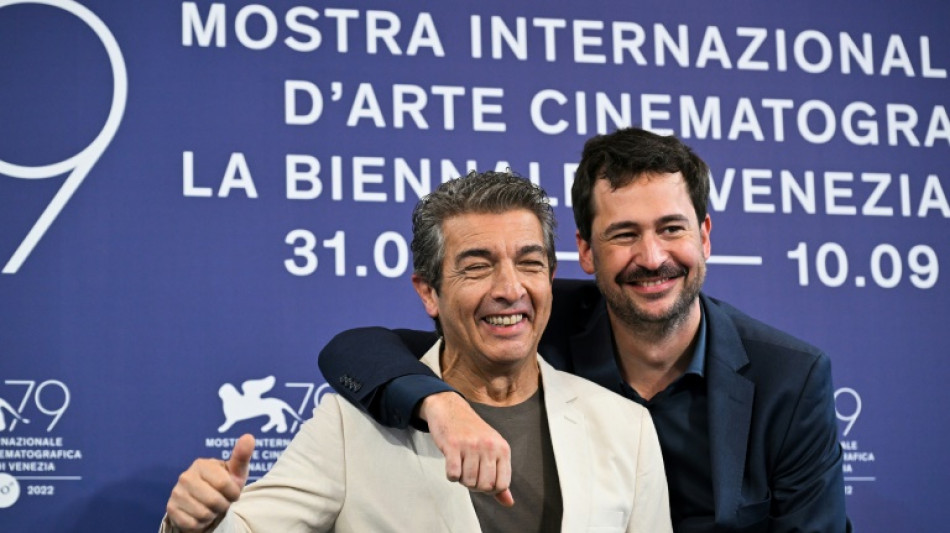
Argentina's 'Dirty War' trial on screen at Venice / Photo: Tiziana FABI - AFP

 Zach Hickerson Recounts Hayden Panettiere's Final Moments in New Interview

 Luxembourg Housing Petition Passes Threshold for Parliamentary Consideration

 Raheem Sterling Receives Suspended Sentence After Lamborghini Crash

 Audience to Choose the Set List at Luxembourg's First FAMIL Jukebox Night

 Luxembourg Pay Rise Delayed as Regional and World Headlines Develop

 Chennai Urbanist Sashna Develops 'Anniki' Card Game to Gamify Tamil Nadu History

 Transport Minister Defends Land Seizure Powers for Toronto-Quebec City High-Speed Rail

 UAE Weather Forecast: Scattered Showers and Fog Expected as Temperatures Drop
Argentine director Santiago Mitre still has vivid memories of the 1985 trial that put the country's repressive military junta on the stand for the disappearances of tens of thousands of citizens.
That historic episode -- and the success of Prosecutor Julio Strassera in winning guilty verdicts for many of those responsible -- is now the subject of Mitre's latest film that premiered at the Venice Film Festival Saturday, "Argentina, 1985".
"I still remember the day Strassera read his indictment: the commotion in the courtroom, the emotion of my parents, the streets finally able to celebrate something that wasn't a soccer game, the idea of justice as an act of healing," said Mitre.
An estimated 30,000 people disappeared during the 1976-1983 military dictatorship, whose "Dirty War" against opponents unleashed a wave of kidnappings, torture, rapes and murder.
The film traces the prosecutors as they take on the uphill challenge of putting the military ringleaders on trial, relying on an energetic team of idealistic novices while facing intimidation and threats.
"This story touched me deeply and gave me the desire to make a film about justice... based on facts that really happened," said Mitre.
The film, in which moments of droll humour interrupt its more serious subject matter, is at its most moving when witnesses take the stand, one by one, to testify to the horrors they suffered in secret torture centres across Argentina.
Among the most atrocious, one woman testifies how she was forced to give birth handcuffed and blindfolded in the car of her torturers, her baby tumbling to the car's floor after delivery.
Some 400 babies were born in captivity and illegally handed over to others, according to the rights organisation Grandmothers of Plaza de Mayo.
Since the resumption of the dictatorship's trials in the mid-2000s -- after more than a decade of amnesty laws and other controversial measures -- some 1,060 people have been convicted of crimes against humanity.
Most recently in July, the Argentine judiciary sentenced 10 former military and police officers to life imprisonment for homicide, kidnapping, torture and rape.
P.A.Mendoza--AT


