
MMJ International: The Yale Law Journal Warned the Separation of Drug Scheduling Powers Was Collapsing-Now the D.C. Circuit Must Decide Whether It Did

 West must embrace 'national power' or face decline: Rubio

 Shell refining margins reach record highs as wars hit supply

 Former Spain, Barca winger Pedro retires from football

 Arteta signs new Arsenal deal until 2030

 Stocks decline as oil climbs on Mideast flareup

 Gauff says online abuse was 'draining' after China Open exit

 As sector struggles, Porsche puts luxury ahead of volume

 'It's personal': Fiji minister pushes better climate finance at pre-COP

 Russia glosses over dark Soviet past in reinvented museum

 UK tax body opened probe into Man City in 2018: FT

 Yemen's Houthis claim new attacks on Saudi airports as conflict deepens

 Germany factory production at highest level for 18 months

 Thailand floods death toll rises to 60 since mid-September

 US pushes Russia for information on plague reports

 Myanmar leader lands in Malaysia for migrant return talks

 Indian central bank hikes rates for first time since 2023

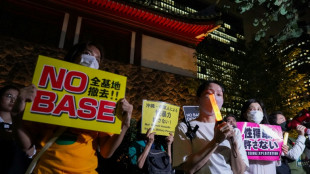 US military on Okinawa face curfew, alcohol ban after murder case

 Fierce lobbying in EU over 'forever chemicals'

 Dodgers beat Braves and Padres avoid sweep in MLB playoffs

 Mourning, war and elections as Israel marks October 7

 Messi says Argentina retirement is 'saddest day of my career'

 Oil rises and stocks fall as Hormuz worries flare

 Pacific presses world for help 'surviving' climate change at pre-COP summit

 Verstappen revival to be put to the test in steamy Singapore

 US woman who survived botched execution is conscious, speaking: lawyers

WASHINGTON, D.C. / ACCESS Newswire / July 20, 2026 / In March 2025 - more than a year before the Attorney General rescheduled marijuana by executive order - the Yale Law Journal Forum published an essay that reads today like a prophecy. In "Separation of Drug Scheduling Powers," Professor Mason Marks warned that the careful architecture Congress built into the Controlled Substances Act of 1970 "has collapsed, and law enforcement officials have assumed powers reserved for public health experts," producing "unscientific scheduling outcomes that contradict the CSA text, purpose, and legislative history."

Thirteen months later, the collapse arrived in its purest form. On April 28, 2026, the Attorney General - the nation's chief law enforcement officer - transferred state-licensed marijuana to Schedule III by unilateral order. No hearing. No cross-examination. No formal rulemaking. The determination that dispensary marijuana is federal "medicine" was made by the one official Congress specifically walled off from medical judgments.
That wall was no accident. As the Yale essay documents from the legislative record, Congress in 1970 rejected drafts giving the Attorney General final scheduling authority precisely because, as Representative Springer put it, "medical and scientific judgments necessary to drug control are left where they properly should lie" - with the federal health agencies. The 1974 Congressional Record is blunter still: "All decisions of a medical nature are to be made by the Secretary." The Supreme Court confirmed the design in Gonzales v. Oregon, holding that the CSA's structure "conveys unwillingness to cede medical judgments to an executive official who lacks medical expertise." And the D.C. Circuit - the court now reviewing the order - held in NORML v. DEA in 1977 that Section 811(d) is not a blank check. It exists to keep the United States in compliance with the Single Convention, which places cannabis under the treaty's strictest controls. It has never authorized the Attorney General to rewrite the schedules by fiat, and it does not repeal the formal, on-the-record rulemaking Congress commanded. For fifty years, every marijuana scheduling action honored that requirement. This order is the first in the statute's history to claim exemption from it.
The government's answer is that the science was already done: in August 2023, the Department of Health and Human Services recommended Schedule III. But that recommendation deserves scrutiny it has never received - and notably, even the Yale essay, written by a scholar sympathetic to rescheduling, found it wanting. Marks observed that HHS "narrowly interpreted the CSA's scheduling factors" and that, unlike its rigorous kratom analysis, its marijuana recommendation "overlooked the broader public health implications of scheduling, including its potential impacts on research and medical practice."
The deeper problem is the standard it abandoned. For three decades, under Alliance for Cannabis Therapeutics v. DEA, "currently accepted medical use" required adequate and well-controlled studies proving efficacy - the standard every genuine medicine in America has met. The 2023 recommendation replaced that requirement with a two-part test satisfied by the existence of state programs plus "some credible scientific support" for a few conditions. And here the government has already confessed more than it intends. In its December 13, 2024 witness filing before DEA's Chief Administrative Law Judge, the Department of Justice described HHS's standard as "the novel two factor test" - novel, their word - and asked the tribunal to subpoena four senior FDA officials, the recommendation's own institutional authors, to defend the 252-page analysis under oath at the January 2025 hearing.
That examination never happened. Eight days before the hearing was to open, it was halted; it never resumed; and on April 28, 2026 - the same day the Attorney General issued his order - the docket was cancelled outright, discarding hundreds of pages of submissions. Then, this summer, the government convened a second, expedited hearing on the broader rescheduling question - whose scope order expressly excluded the very products the April order had already moved. Schedule first; hold the hearing later; write the rules so the hearing cannot touch what was already done. The government lined up the report's authors for sworn examination, then rescheduled without ever hearing from them. The 2023 recommendation has never been cross-examined. Not once, in either proceeding.
One more piece of the Yale analysis matters now. For decades, courts deferred to DEA and DOJ interpretations of the CSA under Chevron. As the essay notes, Loper Bright ended that. When the D.C. Circuit reads Section 811(d), it owes the government's interpretation nothing. It will read the statute fresh - against its own binding precedent, the Supreme Court's account of the CSA's design, and a legislative record that says in plain words who decides medical questions in America.
Let me be precise about what the scholarship does and does not say. Professor Marks favors drug policy reform; he does not speak for my company, and he may well welcome marijuana's ultimate rescheduling. That is exactly why his essay matters. When a scholar who wants the destination condemns the vehicle - when the case for HHS's scientific primacy is made most forcefully by those sympathetic to reform - the conclusion is not partisan. Rescheduling done lawfully requires the health agencies to lead, the science to be tested on the record, and the Attorney General to stay in his lane. The April order fails all three.
MMJ International Holdings has spent eight years and more than ten million dollars pursuing FDA approval of a cannabinoid therapeutic for Huntington's disease and multiple sclerosis - through clinical programs, DEA-inspected laboratories, and the manufacturing controls real medicine requires. We are not against cannabis medicine. We are cannabis medicine, done the way federal law demands. What the Yale Law Journal called the collapse of the separation of scheduling powers is not an abstraction to us. It is the government handing the word "medicine" to products that never earned it, on the say-so of an official the law forbids from saying so.
The stay motion is fully briefed before the D.C. Circuit. The statute, the Supreme Court, the circuit's own precedent, and now the legal academy all point the same direction. The court should follow them.
MMJ International Holdings, Inc., a pharmaceutical company developing FDA-regulated cannabinoid therapeutics. MMJ BioPharma Cultivation and MMJ BioPharma Labs are petitioners in SAM Inc. v. Department of Justice, Nos. 26-1106, 26-1130, 26-1136 (D.C. Cir.). The essay discussed is Mason Marks, "Separation of Drug Scheduling Powers," Yale Law Journal Forum (Mar. 28, 2025). Quoted government language from the Government's Complete List of Witnesses and Documents, DEA Docket No. 1362, Hearing Docket No. 24-44 (Dec. 13, 2024)
CONTACT:
Madison Hisey
[email protected]
203-231-8583
SOURCE: MMJ International Holdings
View the original press release on ACCESS Newswire
H.Romero--AT