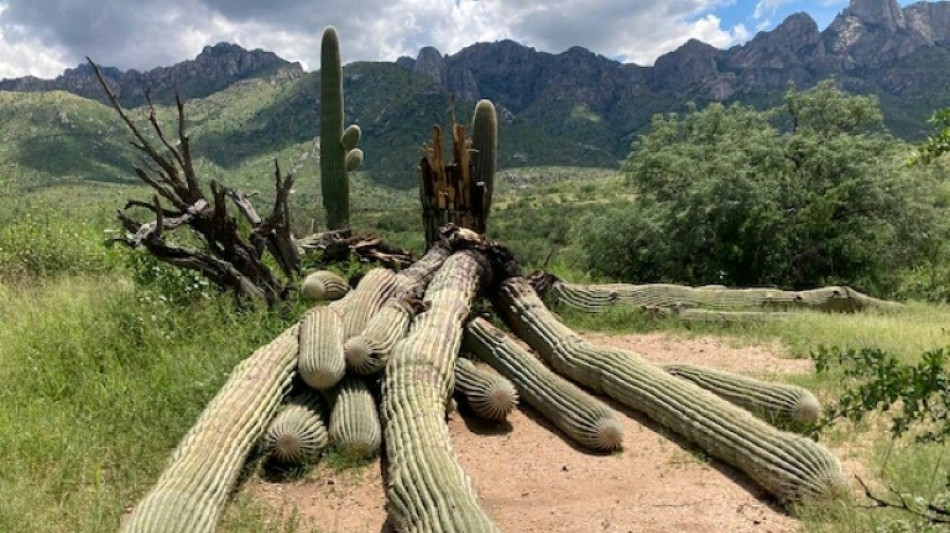
Giant 200-year-old cactus toppled by heavy rain in US / Photo: Handout - Arizona State Parks and Trails/AFP

 Zach Hickerson Recounts Hayden Panettiere's Final Moments in New Interview

 Luxembourg Housing Petition Passes Threshold for Parliamentary Consideration

 Raheem Sterling Receives Suspended Sentence After Lamborghini Crash

 Audience to Choose the Set List at Luxembourg's First FAMIL Jukebox Night

 Luxembourg Pay Rise Delayed as Regional and World Headlines Develop

 Chennai Urbanist Sashna Develops 'Anniki' Card Game to Gamify Tamil Nadu History

 Transport Minister Defends Land Seizure Powers for Toronto-Quebec City High-Speed Rail

 UAE Weather Forecast: Scattered Showers and Fog Expected as Temperatures Drop
A giant Saguaro cactus that had lived for some 200 years was toppled by heavy rain in the southwestern US state of Arizona.
"Powerful seasonal rains can quickly make an impact on the desert landscape. The loss of this huge, iconic ~200 year old Saguaro on the Romero Ruins trail overlooking the Sutherland wash at Catalina State Park in Tucson is one change regular park visitors can't miss," Arizona State Parks said on Facebook.
A photo accompanying the post showed the cactus's giant arms splayed on the ground, its trunk shattered.
The Saguaro cactus can reach more than 10 meters (32 feet) in height and weight more than two tons when full of water. The plant, which grows in the United States and Mexico, has become a symbol of the American West and particularly of the desert landscape of Arizona.
"Thankfully this giant has fallen off the trail and will stay where it landed, providing habitat and food for many creatures as it decomposes," Arizona State Parks said.
G.P.Martin--AT


