Stuffed toys and surfboards: Japan used goods market booms overseas / Photo: Lillian SUWANRUMPHA - AFP

 Pope visits San Marino, before addressing Italian political gathering
 Trump tariffs heap up as Canada tries to curb US reliance

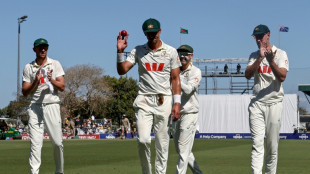 Australia lose three wickets after skittling Bangladesh for 64
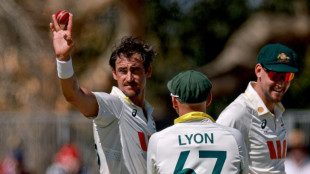 Bangladesh all out for 64 in 2nd Test after Starc masterclass

 Odyssey effect: stars sell Greece to a new wave of US tourists

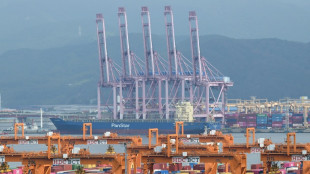 South Korea to send first container ship through Arctic route
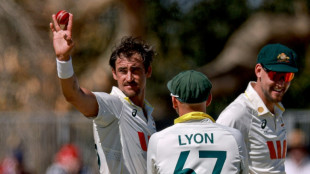 Starc takes 5-11 to leave Bangladesh reeling in 2nd Test

 Injured Rune withdraws from US Open
 Nakashima knocks out Fritz to reach Cincinnati semi-finals
 Ukraine says 'cynical' Russian strike on shopping centre killed 16

 TikTok to pay $400 mn settlement in US children's privacy case

 MLS fines Messi for striking an opponent

 Gouiri double fires Marseille past Strasbourg in Ligue 1 opener

 Mavericks buy out Thompson, now reportedly bound for Heat

 England v Pakistan first Test: Three talking points

 US, Canada push to seal trade deal as deadline nears

 One dead, three wounded after sword attack at Swedish high school
 Ukraine says 'cynical' Russian strike on shopping centre killed 15

 US Supreme Court allows White House ballroom construction for now

 Root hails emerging fast bowlers as England thrash Pakistan

 Brazil's Lula urges tariffs resolution in call with Trump

 Ukraine says 'cynical' Russian strike on shopping centre killed 14

 Heatwave-hit Europe logs over 30,000 excess summer deaths: first figures

 Give LIV Golf 'one more shot,' says DeChambeau
 Duplantis hits the high notes for athletics anthem

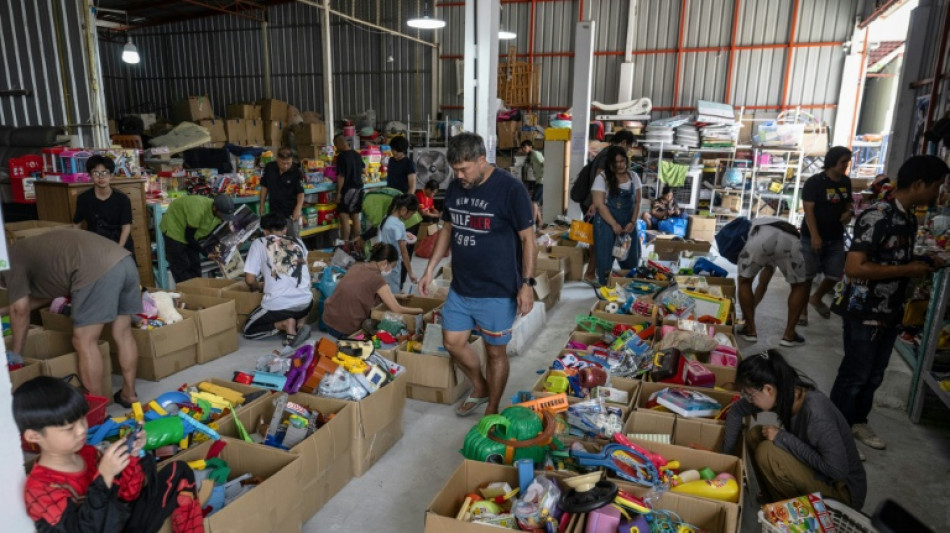
Under a scorching sun in a Bangkok suburb, a whistle blows and shouts fill the air as dozens of shoppers rush into a warehouse bearing the sign "Japanese Second-Hand Store".
From bags and bicycles to surfboards and suitcases, the Japanese second-hand market is booming, with quality-conscious buyers in other Asian countries increasingly tapping into the circular economy trend.
"What is considered garbage for them can still be useful in Thailand," 36-year-old Lookpoo Sathitpanyapon, who runs a Facebook store selling toy keychains, told AFP.
"That bag! That bag!" one shopper shouts while racing through the warehouse, filled with everything from colourful toys -- including popular Gundam action figures -- to ceramic bowls, beaded necklaces and even used umbrellas.
The idea of the so-called circular economy, which involves recycling and reusing existing products, has become increasingly mainstream in recent years, according to Amsterdam-based think tank Circle Economy Foundation, describing it as a "megatrend" in a 2024 report.
In Japan, the thriving second-hand goods market has doubled in value since 2010, according to market research agency Kadence International, and multiple Japanese re-use companies are expanding across Asia.
Treasure Factory, a Tokyo-based second-hand store operator, now has six stores in Thailand and three in Taiwan.
Used-goods industry leader Bookoff partnered in April with FamilyMart to collect items in its convenience stores across Japan and export them to one of Bookoff's 26 shops in Malaysia or Kazakhstan.
Smaller ventures are also thriving.
At an auction near Tokyo, Thai trader Kangyapat Yoosanong bids for a wagonful of plushies -- crucial items in her lucrative business selling Japanese used goods in her home country.
"Everything (used in) Japan is popular" abroad, said the 35-year-old, who shelled out 340,000 yen, around $2,100, for 100 kilograms (220 pounds) of stuffed toys.
The plushies, along with the rest of her haul of bags and toys, will soon end up in the Bangkok warehouse.
- 'Winner's game' -
By the day's end, most of the stock is gone at the weekly auction in Saitama, north of Tokyo, according to the sale's organising company Hamaya, with foreigners representing roughly a third of bidders.
"It is difficult to sell second-hand goods in Japan" if they're more than seven years old, Hamaya president Ippei Kobayashi told AFP. "But they are still popular in foreign markets."
At the warehouse in Bangkok's Nonthaburi suburb, the sound of people rummaging through products and plastic crates clattering against shopping carts echoes through the building.
Some items appear brand new, with their original plastic wrapping still intact.
"It's a winner's game," said Wanna Promthep, 70, who queued ahead of the opening with her daughter and son-in-law.
"Those who can spot good quality will get the best products," she said, standing guard over a large pile of handbags.
But it's not just second-hand Japanese teddy bears and clothes that are snapped up for their high quality abroad, with 1.7 million used vehicles exported around the world last year, ending up everywhere from the Middle East to Africa and Europe.
- Reducing waste -
Despite the trend, global circularity is still in decline, Circle Economy Foundation said in its 2024 report.
The world economy had consumed nearly as many materials in the previous six years as in the entirety of the 20th century, it said.
In Japan, around 70 percent of some 820,000 tonnes of new clothes bought by consumers each year are eventually incinerated, according to an environment ministry study.
To reduce waste, analysts and industry leaders see potential in the flow of used items to other countries.
Masashi Matsuyama of Itochu Corp, a major trading house that owns the FamilyMart chain working with Bookoff, said "increased awareness of... ethical consumption" combined with growing inflation was pushing people towards "reasonably priced" recycled products.
The two companies hope that their pilot project in Tokyo, which allows people to drop off unwanted items at boxes inside FamilyMart stores, could help convince people in Japan to recycle by reducing the perceived hassle.
Researcher Yutaka Oguchi of the NLI Research Institute said that the initiative was "extremely important".
"To get a majority of people participating... you have to lower hurdles."
A.Anderson--AT