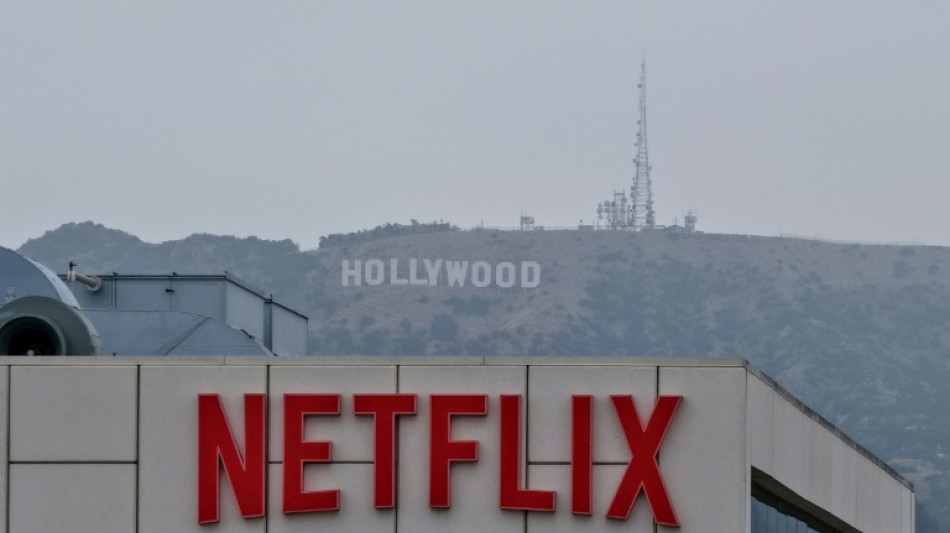
Netflix criticises German plan to make streamers invest more locally / Photo: JUSTIN SULLIVAN - GETTY IMAGES NORTH AMERICA/AFP

 Gauteng Health Department Warns of Rising Antibiotic Resistance Threat

 Bishop Museum Races to Save Rare Megamouth Shark Specimen

 InterContinental Hotels Group PLC Announces Transaction in Own Shares - November 26

 Raheem Sterling Receives Suspended Sentence After Lamborghini Crash

 Luxembourg Pay Rise Delayed as Regional and World Headlines Develop

 Audience to Choose the Set List at Luxembourg's First FAMIL Jukebox Night

 Twickenham Grounds Team Prepares Pitch for Six Matches in Three Days

 Black Friday Discounts Cut Prices on Two Top-Rated Wiper Blades

 TCC Network Linked to 200% Surge in Global School Attacks

Netflix and other streaming services on Thursday criticised a German plan requiring platforms to reinvest a share of locally generated revenue as part of efforts to support domestic film production.
Chancellor Friedrich Merz's cabinet approved a draft law Wednesday that would compel streamers to invest at least eight percent of earnings generated in Germany into the domestic and wider European film and TV sectors, or face financial penalties.
The law, which would apply to giants such as Disney+ and Amazon Prime Video as well as domestic services, still needs to be passed by parliament, and Berlin hopes it will primarily give a boost to the faltering German film industry.
The government also announced it was nearly doubling public financing for local productions to 250 million euros ($290 million).
But Netflix warned that the policy could backfire and hit growth in the German film industry.
"If regulation ultimately makes it harder to invest in ambitious projects and, as a result, fewer titles are produced overall, that benefits neither audiences nor the production location," Wolf Osthaus, Netflix's senior global affairs director in Germany, said in comments sent to AFP.
The criticism was first reported in The Financial Times.
He also criticised provisions in the law for the gradual return or sharing of rights with producers, rather than allowing streaming platforms to hold them indefinitely.
"The risk is that large, ambitious projects will no longer be economically viable, because such big budgets often cannot be put together through co-financing," Osthaus said.
Vaunet, an umbrella organisation representing streamers including Disney+, Paramount+ and RTL+, told AFP the planned law was "an unnecessary and disproportionate interference with media freedom".
"The actual goal of strengthening Germany as a production hub with diverse content cannot be achieved through legal compulsion," said the group's managing director Daniela Beaujean, urging an overhaul of the plans.
A streamer that breaks the rules faces a financial penalty of 75 percent of the amount they failed to reinvest.
Platforms would also be required to produce a minimum share of German-language and European content, though they will be exempt if they reinvest at least 12 percent of income earned in Germany.
Other European countries, including France, Denmark and Sweden, also require streamers to reinvest part of locally earned revenues into local production, though the rates and rules vary.
H.Thompson--AT
