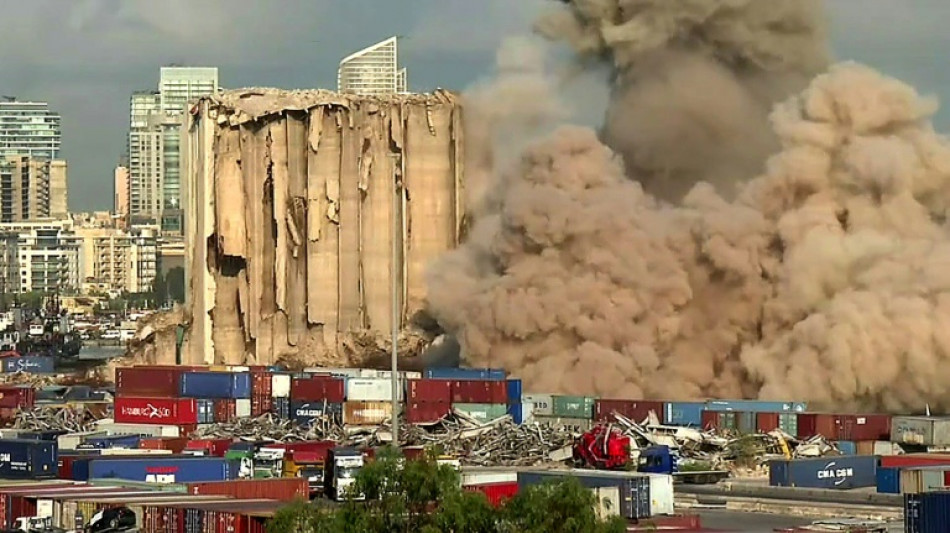
New silo collapse in blast-ravaged Beirut port: AFP / Photo: Dylan COLLINS - AFP

 Zach Hickerson Recounts Hayden Panettiere's Final Moments in New Interview

 Luxembourg Housing Petition Passes Threshold for Parliamentary Consideration

 Raheem Sterling Receives Suspended Sentence After Lamborghini Crash

 Audience to Choose the Set List at Luxembourg's First FAMIL Jukebox Night

 Luxembourg Pay Rise Delayed as Regional and World Headlines Develop

 Chennai Urbanist Sashna Develops 'Anniki' Card Game to Gamify Tamil Nadu History

 Transport Minister Defends Land Seizure Powers for Toronto-Quebec City High-Speed Rail

 UAE Weather Forecast: Scattered Showers and Fog Expected as Temperatures Drop
Eight more grain silos at Beirut port toppled Tuesday, succumbing to damage from a devastating 2020 explosion in the third such collapse in a month, AFP correspondents reported.
A cloud of dust rose over the port after the collapse, which brought down the last of the northern block of silos that was more heavily damaged in the blast and where a fire had been burning since July.
The remaining southern block is more stable and not at imminent risk of collapse, said French civil engineer Emmanuel Durand, who has installed sensors on the silos.
The silos absorbed much of the impact of the massive explosion of haphazardly stored ammonium nitrate fertiliser that killed more than 200 people on August 4, 2020.
Other silos already collapsed on July 31 and August 4.
A fire has been burning in the silos for more than a month as remaining grain stocks ferment in the summer heat.
In April, the government ordered the silos' demolition but the operation was put on hold, partly because of objections from relatives of blast victims who want them preserved as a memorial.
Public Works Minister Ali Hamieh announced last week that the government had agreed to reserve 25,000 square metres (270,000 square feet) of the port to build new grain silos.
This is larger than the current complex which occupies a space of 21,000 square metres (226,000 square feet).
Hamieh said funding would come from international donors as well as the government, which has been bankrupted by a crushing financial crisis.
E.Rodriguez--AT


