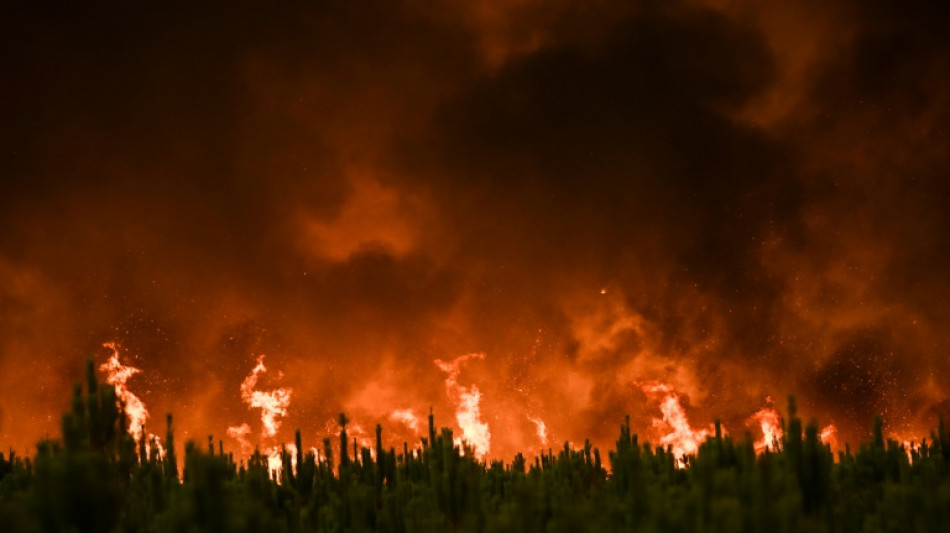
Climate change driving unprecedented forest fire loss / Photo: Philippe LOPEZ - AFP/File

 US envoy on West Bank visit says Israel has responsibility for Palestinians

 Ethiopian Miss World contestant spotlights pain of sister's murder

 'Leader' Raphinha rising to Barca striker challenge

 Oasis fans gather in Venice for band reunion film

 Two Nepal rescues revive hopes 10 days after flood

 Pogacar to miss worlds after season-ending Vuelta crash

 Greenwood, Guendouzi handed bans after Fenerbahce-Lyon brawl

 In Iceland, the mystery of the poet, the tomb and the Danish grocer

 Ratko Mladic: Bosnian Serb commander to convicted war criminal

 Bolivian army base blasts kill two, wound dozens
 Alcaraz, Sabalenka into US Open last 16 as Williams sisters lose on return

 Williams sisters fall in thrilling return to US Open doubles
 Bangladesh measles toll nears grim 1,000-child mark

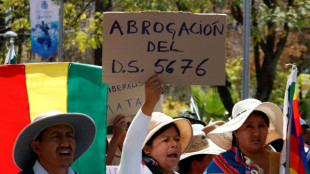 Bolivia farmers return to streets over diesel price hikes
 Tetris distances itself from controversial White House 'arcade' games
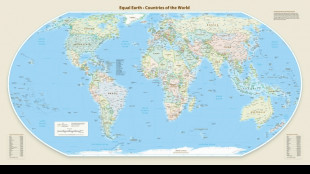 Africa bigger, US smaller - UN adopts new map

 Bad weather will not affect All Blacks, says captain Savea

 Mbappe misses penalty as Parrott lifts Betis past Real Madrid

 PSG still winless in Ligue 1 as Monaco go top

 Defending champion Alcaraz reaches last 16 at US Open

 Lyles ends season before Budapest due to injury flare ups

 US Republicans announce probe into environment groups

 Sabalenka survives despite 'tricky' weed smell at US Open

 S&P Revises Outlook on Freedom Holding Corp. and Core Subsidiaries to Positive

 Job growth but record-high diesel prices -- Trump's midterms mixed bag

Forest fires supercharged by climate change are burning twice as much global tree cover as 20 years ago, according to a data Wednesday showing the equivalent of 16 football pitches are now lost every minute.
The research showed in unprecedented detail how wildfires have progressed over the past two decades, with the blazes claiming an estimated three more million hectares each year -- an area the size of Belgium -- compared with 2001.
The study showed that the majority of tree cover loss is occurring in the boreal forests that blanket much of Russia, Canada and Alaska, which are among the largest storers of carbon on Earth.
Researchers from the University of Maryland used satellite imagery to map areas of tree cover lost, including that burned by what are known as stand-replacing forest fires.
These are fires that kill all or most of the forest's canopy and which cause long-term changes to forest structure and soil chemistry.
The data showed 2021 to be one of the worst years for forest fires since the turn of the century, causing 9.3 million hectares of tree cover loss globally.
That was more than a third of all the forest lost last year, according to the data, compiled by Global Forest Watch and the World Resources Institute research group.
"Forest fires are getting worse worldwide," James McCarthy, research analyst at Global Forest Watch, told AFP.
The European Union's satellite monitoring service said last week that western Europe had experienced record fire activity so far in 2022, with tens of thousands of hectares of forest lost in France, Spain and Portugal.
The researchers said that climate change was likely a "major driver" in increased fire activity, with extreme heat waves that render forests tinder dry already five times more likely today than a century and a half ago.
These drier conditions lead to higher emissions from fires, further exacerbating climate change as part of a "fire-climate feedback loop", they said.
- 'Best defence' -
The vast majority -- some 70 percent -- of fire-related tree cover loss over the last two decades occurred in boreal regions, likely because high-latitude regions are warming at a faster rate than the rest of the planet.
Last year, Russia lost 5.4 million hectares of tree cover due to fires, the highest on record at an increase of 31 percent over 2020.
"This record-breaking loss was due in part to prolonged heatwaves that would have been practically impossible without human-induced climate change," said the study.
The team warned that increased changes to climate and fire activity could eventually turn boreal forests from a carbon sink into a source for carbon emissions.
"In these boreal regions carbon has accumulated in the soil over hundreds of years and has been protected by a moist layer on top," said McCarthy.
"These more frequent and serious fires are burning off this top layer and it's exposing that carbon in the soil."
This century, fire-related tree cover loss in the tropics has increased round five percent -- some 36,000 hectares -- a year, the study showed.
Fire is not the principal cause of forest loss in these regions, with deforestation and forest degradation the main drivers.
But the researchers said that forest loss from deforestation was making it more likely that forests would be lost to fire, as the practice leads to higher regional temperatures and drier vegetation.
They called on governments to improve forest resilience by ending deforestation and limiting local forest management practices that include controlled burning, which can easily burn out of control particularly during dry spells.
"Forests are one of the best defences we have against climate change," said McCarthy.
Th.Gonzalez--AT