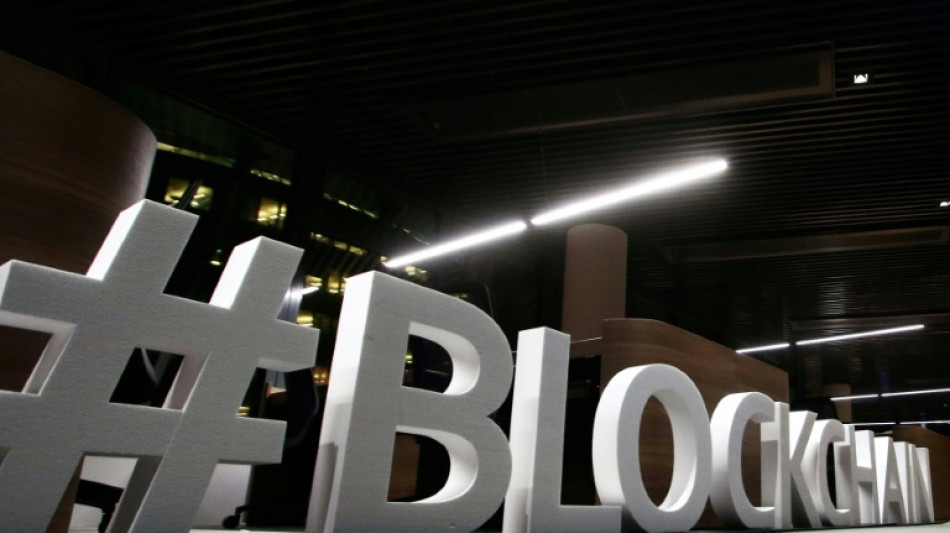
Has blockchain found a use beyond crypto trading? / Photo: Petras Malukas - AFP/File

 Nepal tunnel rescue revives hopes 10 days after flood
 Indonesia rescues second orangutan mother and baby from wildfire
 Box office magnet Robert Pattinson appears in paedophile thriller
 How haze from Indonesian fires impacts Southeast Asia

 Trump sends envoys to Moscow, Kyiv with new plan to 'end war'

 'Mini-dictatorship': Students slam Argentina-run residence in Paris

 The disgraced banker stirring the pot in Brazil's Supreme Court
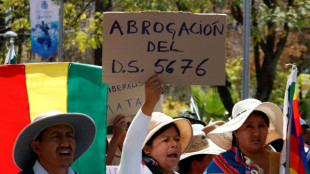
 Panama Canal begins reducing crossings due to El Nino
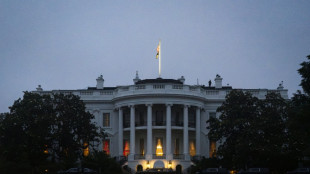
 Trump again seeks to remove protections for wolves

 'Getting there' - Alcaraz into US Open last 16 along with Sabalenka

 Isak ready to show world his quality, says Van Dijk

 Stuttgart cruise past Cologne to bounce back from Bayern thumping

 'Smart, aggressive' Alcaraz into US Open last 16

 Isak fires Liverpool to first win under Iraola at Ipswich
 Stocks slip as robust US jobs data stokes rate hike odds
 Mistrial declared in case of US woman who killed her three children

 Seville, Alfred win at Diamond League finals, Duplantis hit with injury

 Moody’s Assigns First-Time Insurance Financial Strength Ratings to Freedom Insurance and Freedom Life
 Trump says envoys taking plan to 'end the war' to Moscow, Kyiv
 US Football Hall of Fame revamps selection process

 Judge declares mistrial in case of US woman who killed her children

 Edgar Davids art thief misses sentencing after being 'knocked out by luggage'

 Pegula rallies to reach US Open fourth round
 Defending champ Sabalenka leads way into US Open fourth round
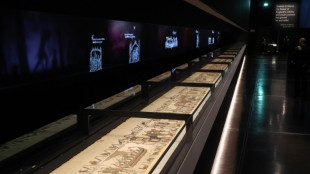 Bayeux Tapestry 'virtually unchanged', UK museum says, after France spots broken threads
The bitcoin boom spawned new billionaires and videos of beach parties and Lamborghinis. The crypto crash brought devastation for small investors and bankruptcy for many companies.
Blockchain technology underpins crypto and has been hailed as a world-changing innovation, but does it have any use beyond creating speculative financial instruments?
AFP asked crypto critic Stephen Diehl, author of recently published "Popping the Crypto Bubble", to run the rule over some of the most popular claims made for blockchain technology.
- More secure voting? -
As tension and confusion engulfed the United States after the 2020 election, Changpeng Zhao, billionaire founder of crypto firm Binance, had a suggestion.
A "blockchain-based mobile voting app", he tweeted, would mean "we won't have to wait for results, or have any questions on its validity".
Fellow crypto billionaire Vitalik Buterin replied that there were "significant challenges" but he thought it was "directionally 100 percent correct".
So far, experiments have been very small scale.
For Diehl, blockchain was more likely to introduce problems than solve them.
"From the American perspective, every single district runs its own voting programme," said.
"This is seen as a feature because to corrupt any one election you would have to corrupt many, many civil servants.
"Centralising the voting system in one digital place would be pretty risky -– then all you have to do is corrupt the blockchain and you could corrupt democracy."
- Automated house buying? -
Blockchain at heart is a ledger, a way of storing transactions that is -- according to fans -- secure, transparent and permanent.
Those qualities have led countless enthusiasts to propose that the technology could in effect replace paper contracts for things like house buying.
Diehl said it was "absurd" that the blockchain was "going back to things that were solved a millennium ago to justify its own existence".
"This is the system we've had since the Middle Ages -– you have a government registry of land, a title and deed that get transferred when the ownership changes," he said.
"The blockchain isn't solving anything here."
- Payments without banks? -
The blockchain emerged from a 2008 white paper on bitcoin, which was conceived as an alternative to fiat currency.
The opening line reads: "A purely peer-to-peer version of electronic cash would allow online payments to be sent directly from one party to another without going through a financial institution."
Bitcoin was the first cryptocurrency. There are now more than 10,000 others sitting on many different blockchains.
Big firms have been desperate to find ways to accept payments in crypto.
Diehl pointed out that cryptoassets are speculative instruments not suitable for payments.
"When was the last time you paid for your coffee with Apple stocks," he asked.
"It just doesn't happen. You want something that's going to be stable so the price of your coffee is the price of your coffee next week."
- Supply chain tracking? -
Want to know where your mango came from? Some supermarkets believe the best way for you to find out is to access a blockchain-based system capable of tracking the fruit from the tropics of Central America to your cornerstore.
Walmart and Carrefour are among the firms trumpeting blockchain systems.
Carrefour told AFP earlier this year that shoppers would be able to scan a QR code and discover the provenance of an array of products.
The shops hope the blockchain will provide security, certainty and transparency.
Diehl pointed out that digital supply chain management has been around for years and is perfectly adequate without blockchain.
"Blockchain is not adding any incorruptability to the system," he said, pointing out that people in the supply chain could tell lies on the blockchain as easily as on any other platform.
"If I have a carton of apples and report that I put 100 percent of them on the truck, but then I skim off 50 percent for myself, the blockchain is not going to prevent that."
M.O.Allen--AT