Ukraine nuclear plant standoff stirs Chernobyl memories / Photo: BULENT KILIC - AFP

 In Iceland, the mystery of the poet, the tomb and the Danish grocer

 Ratko Mladic: Bosnian Serb commander to convicted war criminal

 Bolivian army base blasts kill two, wound dozens
 Alcaraz, Sabalenka into US Open last 16 as Williams sisters lose on return

 Williams sisters fall in thrilling return to US Open doubles
 Bangladesh measles toll nears grim 1,000-child mark

 Bolivia farmers return to streets over diesel price hikes

 Tetris distances itself from controversial White House 'arcade' games

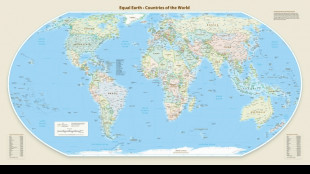 Africa bigger, US smaller - UN adopts new map

 Bad weather will not affect All Blacks, says captain Savea

 Mbappe misses penalty as Parrott lifts Betis past Real Madrid

 PSG still winless in Ligue 1 as Monaco go top

 Defending champion Alcaraz reaches last 16 at US Open

 Lyles ends season before Budapest due to injury flare ups

 US Republicans announce probe into environment groups
 Sabalenka survives despite 'tricky' weed smell at US Open

 S&P Revises Outlook on Freedom Holding Corp. and Core Subsidiaries to Positive

 Job growth but record-high diesel prices -- Trump's midterms mixed bag

 Women's NBA comissioner Engelbert to retire at season's end

 Luis Enrique extends contract as PSG coach until 2030
 Duplantis pulls out of Diamond League finals

 Defending champ Sabalenka, Pegula lead way into US Open fourth round

 UK hard-right party rallies behind leader after new donation scandal
 Nigeria's Dangote refinery looks to raise $1.6 bn in IPO
 Portugal extends talks to privatise national carrier TAP
Anastasiya Rudenko clutches the gleaming gold medal her late husband Viktor was awarded for working in the Chernobyl nuclear disaster zone.
He died in 2014 from bladder cancer -- perhaps a result of radiation, she thinks. Now she mourns his loss in the Ukrainian village of Vyschetarasivka, across the river from the Zaporizhzhia atomic power plant.
Kiev and Moscow accuse each other of shelling near the facility. Rockets have struck a radioactive waste storage area and monitors warn of a "grave" crisis with potential for catastrophic fallout.
Across a 14-kilometre (nine-mile) stretch of the Dnipro River, the station's hulking silhouette is clearly visible from the village where Rudenko handles paperwork proving her partner's fateful role in history's greatest nuclear calamity.
"We could have the same fate as the people of Chernobyl," the 63-year-old told AFP.
"There's nothing good in what's going on, and we don't know how it will end."
- In 'the zone' -
Ukraine remains deeply scarred by the 1986 Chernobyl nuclear catastrophe, when a Soviet-era reactor exploded and streamed radiation into the atmosphere in the country's north.
Russia captured the site when it began its large-scale invasion of Ukraine in late February, stirring safety fears, but it was abandoned within weeks when Moscow failed to take Kyiv.
The Zaporizhzhia nuclear power plant in southern Ukraine was also occupied in the early days of the war but it has remained in Russian hands ever since.
Ukraine says enemy troops are launching attacks from the facility -- Europe's largest -- and its own military cannot return fire.
The escalating situation brings dark echoes from the past for those with close links to Chernobyl.
Anastasiya's husband Viktor worked as one of the 600,000 "liquidators", tasked with painstakingly decontaminating the "Chernobyl exclusion zone," where high radiation levels forced civilian evacuations.
The official death toll of Chernobyl remains just 31, however that figure is hotly contested with some estimating that thousands of liquidators may have suffered fatal doses of the invisible rays.
Viktor drove a truck in "the zone" for a total of 18 days. A gold service ribbon awarded by the Ukraine Chernobyl Union shows atoms swirling around the "bell of Chernobyl", a symbol which has become a ringing reminder of the event.
A brittle document from Ukraine's defence ministry archives certifies Viktor's work and the dose of radiation he absorbed -- 24.80 roentgen.
"When I see my husband's papers, I feel pain," explained Anastasiya. "Many people died or were permanently injured."
"When the Zaporizhzhia plant is being shelled we can see it quite well," she added. "People are rumouring that there is something leaking, but they avoid publicly admitting it."
- Living liquidators -
Vasyl Davydov says there are three "liquidators" still living in the village of Vyschetarasivka, a bucolic collection of garden-fringed bungalows with a hazy view of the Zaporizhzhia plant's six reactors and twin cooling towers.
He is one of them. He spent three and a half months working on Chernobyl decontamination, with 102 trips to "the zone" operating a crackling dosimeter to measure levels of radiation and razing tainted homes to the ground.
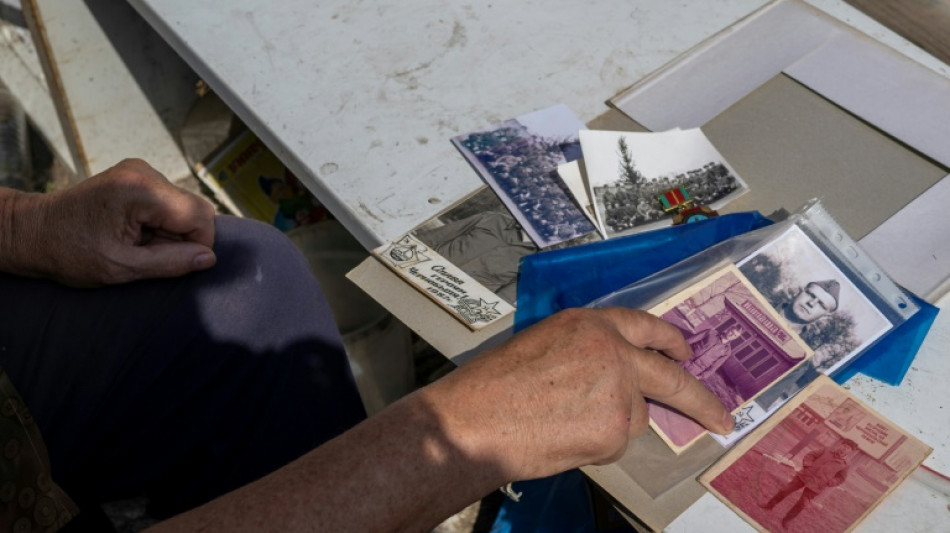
In his garden the 65-year-old unpacks his own service medals onto a refrigerator lying on its side, used as a makeshift table. One depicts the figure of Atlas holding the world, the image of a globe supplanted by the Chernobyl plant.
There are pictures too. Of Davydov as a handsome uniformed serviceman, posing with comrades and in front of a patriotic sign declaring: "Soldier! We will revive life on the grounds of Chernobyl."
"I was there. I saw it all, and I saw the scale," he said.
Just days after Russian troops took the plant iodine tablets, to block a certain kind of radiation, were handed out in the village in case of emergency, according to Davydov.
But his time working in "the zone" seems to have inured him to a fear of living opposite the Zaporizhzhia plant, even in a moment of crisis.
"If you believe everything, then you can go crazy," he said. "So you filter everything through your experience."
"What will my fear do?" he asked. "How can it help me?"
M.King--AT