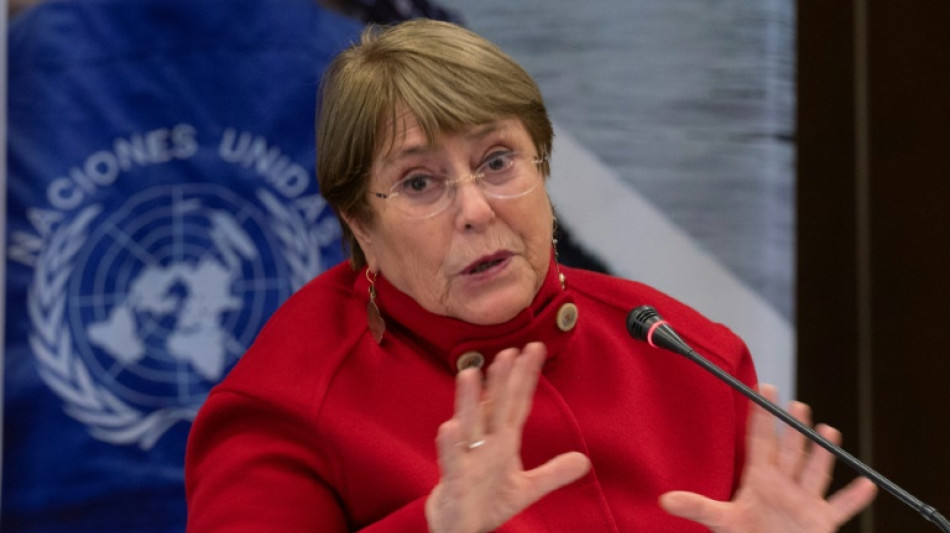
UN rights chief to visit Rohingya camps in Bangladesh / Photo: Cris BOURONCLE - AFP/File

 Zach Hickerson Recounts Hayden Panettiere's Final Moments in New Interview

 Luxembourg Housing Petition Passes Threshold for Parliamentary Consideration

 Raheem Sterling Receives Suspended Sentence After Lamborghini Crash

 Audience to Choose the Set List at Luxembourg's First FAMIL Jukebox Night

 Luxembourg Pay Rise Delayed as Regional and World Headlines Develop

 Chennai Urbanist Sashna Develops 'Anniki' Card Game to Gamify Tamil Nadu History

 Transport Minister Defends Land Seizure Powers for Toronto-Quebec City High-Speed Rail

 UAE Weather Forecast: Scattered Showers and Fog Expected as Temperatures Drop
Michelle Bachelet is to make the first visit by a UN rights chief to Bangladesh next week, including to the sprawling refugee camps home to nearly a million Rohingyas.
Bachelet's office announced Friday that the trip from Sunday to Wednesday was at the Dhaka government's invitation.
It will be one of the former Chilean president's final acts as the United Nations high commissioner for human rights before her four-year term expires at the end of the month.
During her visit to the capital Dhaka, the UN rights chief is scheduled to meet with Prime Minister Sheikh Hasina and other ministers.
"The high commissioner will also travel to Cox's Bazar where she will be able to visit camps housing Rohingya refugees from Myanmar and meet with refugees, officials and non-governmental organisations," her office said in a statement.
The visit comes ahead of the fifth anniversary this month of the Rohingya exodus into the southeastern tip of neighbouring Bangladesh.
The camps house nearly one million Rohingya refugees that fled a military offensive in Myanmar.
Hundreds of thousands of Rohingya left Rakhine State in August 2017 after the crackdown, which the UN is investigating over genocide charges.
Bangladeshi authorities have become increasingly impatient about hosting the refugees while criticising the rest of the world for not providing more assistance.
Bangladesh bans the 920,000 mostly Muslim Rohingya refugees from leaving camps surrounded by barbed wire.
The Rohingya are loathed by many in Buddhist-majority Myanmar, who see them as illegal immigrants and refer to them as "Bengali".
They have refused to go back until assured of security and equal rights -- which Myanmar has refused to promise -- so remain stuck in bamboo-and-tarp shacks with no work, poor sanitation and little education.
- 'Serious abuses' -
Bachelet "should publicly call for an immediate end to serious abuses including extrajudicial killings, torture, and enforced disappearances", nine human rights organisations including Human Rights Watch said in a statement.
"This is a key opportunity for the high commissioner to call for a halt to the Bangladesh government's further descent into authoritarianism by ceasing the harassment and reprisals against critics.
"Bachelet should press the government to ensure full accountability for the serious human rights abuses that persist in the country."
She is due to meet with the National Human Rights Commission in Bangladesh.
The UN's highest court ruled last month that a landmark case accusing military-ruled Myanmar of genocide against the Rohingya can go ahead.
The International Court of Justice in The Hague threw out all of Myanmar's objections to the case.
It could, however, take years for full hearings and a final judgement in the case.
The International Criminal Court has also launched an investigation.
US Secretary of State Antony Blinken declared in March that the Myanmar military's violence against the Rohingya amounted to genocide.
W.Nelson--AT


