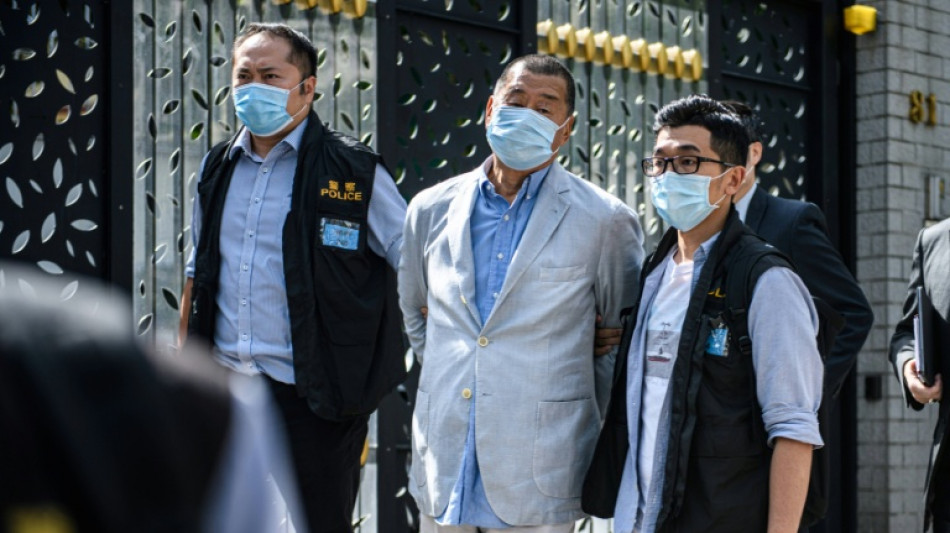
Hong Kong journalists face 'precarious' future after Jimmy Lai jailed / Photo: VERNON YUEN - AFP/File

 S.Africa sounds alarm as infant vaccinations plummet
 Toulouse have salary cap fine reduced on appeal
 Tech stocks lifted by Nvidia but caution dominates ahead of Fed speech

 'Smart cricketer' Dinusha helps Sri Lanka draw second India Test

 Zambia opposition leader surrenders to police: state media

 Alleged 9/11 mastermind to go on trial in June 2028
 Abbas's treble strike rocks England in second Test

 'Butcher of Bosnia' Ratko Mladic dead: Serbian state media

 New Zealand make three changes for second South Africa Test

 Stocktwits Expands CME Group Alliance with the Integration of Single Stock Futures Data

 'Mature' Colapinto extends contact with Alpine through 2027

 Atletico rule out any talks with Barcelona over Alvarez
 Tech stocks lifted by Nvidia as broader markets struggle
 Delap joins Nottingham Forest in club-record deal

 ICC President Akane Warns U.S. Sanctions Threaten Court's Future
 Delays in Cancer Radiotherapy and Surgery Target Times

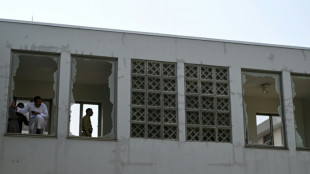 Acrid stench, charred walls reveal devastation of Pakistan infant ward fire
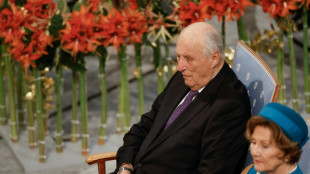 Norway holds its breath as King Harald's health deteriorates
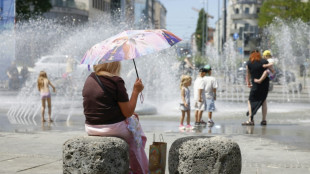 Germany reports record 15,800 heat-related deaths this summer

 YouTuber Chris Sails Arrested for Allegedly Falsifying Emergency Report
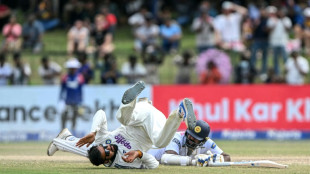 Dinusha defiant as Sri Lanka lead by 170 in India Test
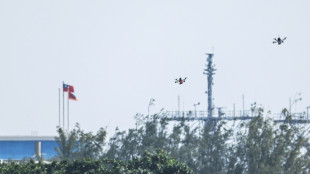 Taiwan lawmakers approve $7.6 bn drone budget as China threat grows
 TechCentral.ie Daily Briefing: Agentic AI Firm Doubles Headcount to 60

 KiiChain Integrates TRON to Expand 24/7 On-Chain FX and Stablecoin Payments

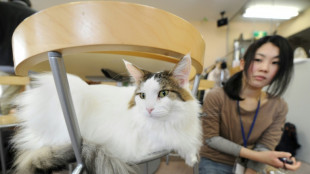 Japan to survey animal cafes over hygiene, welfare concerns

For Hong Kong journalists, this week's sentencing of pro-democracy newspaper boss Jimmy Lai cements a climate of fear and self-censorship in the years since Beijing imposed a sweeping national security law.
"There will not be another Apple Daily, nobody dares to copy what it did," journalist and former press union chief Ronson Chan said of Lai's defunct tabloid, which exposed government scandals and ran scathing political commentary.
On Monday, a court handed the 78-year-old tycoon a 20-year prison term and issued sentences against six other former Apple Daily executives, all convicted under the national security law imposed in 2020 after huge pro-democracy protests.
Lai's punishment has been condemned by countries such as the United States and Britain, and rights groups have called it a de facto death sentence and a reflection of Hong Kong's dwindling press freedoms.
Journalists in the Chinese finance hub told AFP they were already operating within political "red lines" since the demise of outlets like Apple Daily.
Just a day after Lai's sentencing, China published a white paper that described safeguarding national security as a "long-term and enduring task" for Hong Kong -- seen by some as a sign of Beijing doubling down.
Selina Cheng, chairperson of the Hong Kong Journalists Association, told AFP that media bosses "increasingly see themselves as an extension of the government propaganda arm" and fear embarrassing those in power.
"The biggest impact is really the pervasiveness of self-censorship and the sense that if you write the wrong thing... that might land you in jail," Cheng said.
- 'Hard to accept' -
While much international attention centred on Lai, some local journalists said they were also shocked by the fates of the six former executives sentenced as co-conspirators.
They received jail terms ranging from six years and nine months to 10 years.
Their arrests as well as asset freezes and newsroom raids were the final nails in the coffin for Apple Daily, which closed its doors in June 2021.
When Chan, the former press union chief, heard that the Fung Wai-kong, the managing director of the publication's English edition, "got 10 years, my jaw dropped", he said.
"It was hard to accept."
Chan, who knew the defendants professionally, said some of them got their start as beat reporters and developed strong reputations.
"They made contributions to society and to the industry, but that didn't count," he said.
In late 2021, prominent online outlet Stand News also shut down, and its former editor-in-chief Chung Pui-kuen eventually received a 21-month jail sentence for sedition.
The maximum penalty for sedition, which began as a colonial-era offence, was increased by a 2024 law from three to seven years in prison.
In both Apple Daily and Stand News trials, prosecutors cited articles -- including opinion pieces -- as evidence of journalists bringing others "into hatred, contempt or disaffection" of the authorities.
"These two cases cited articles that, before the national security law, would be considered ordinary," said a veteran journalist, who requested anonymity to speak freely onthe sensitive subject.
"Even today, I think the media and even legal professionals still cannot say clearly how these articles crossed the line," the journalist added.
- 'Coercion' -
That uncertainty was reflected in Hong Kong media's recent coverage of the purge at the top of China's People Liberation Army, according to Chan.
"There was no analysis, follow-up, background" normally warranted for such as story, he said.
Multiple interviewees told AFP that, compared to the early years of the national security law, Hong Kong authorities have made fewer high-profile moves against journalists in recent months.
The city's press still retains a much larger degree of freedom compared to their counterparts in mainland China.
Some small-scale, independent news sites founded in the past five years have built audiences via a crowdfunding model, though they still face political and financial pressures.
Cheng, the press association chief, said these outlets are in a "precarious" spot, with some of them struggling with day-to-day issues such as accessing government events.
In December, China's national security arm in Hong Kong summoned foreign media representatives to a meeting, where an official condemned "distorted" news reporting of a deadly housing estate fire.
It was the first known meeting of its kind in Hong Kong.
"There are no signs for us to be optimistic that the era of national security law crackdown will (be reversed)," Cheng said.
"It won't be surprising to me if more small media close because of coercion or because of threats."
B.Torres--AT