-
 In war-split Myanmar 'spirit consorts' commune across divide
-
Number of missing in Nepal, China floods soars past 2,400
-
 Leaders of Russia, China, Iran to attend summit in Kyrgyzstan
-
Trump announces deal for huge US stake in Venezuelan oil reserves
-
 Hovland and Gerard share lead at Tour Championship
-
Kane confirms talks on Bayern extension

-
 Maresca salutes 'unbelievable' Cherki after Man City star sinks Palace
-
Trump govt. mulls deal to give away part of Yosemite park
-
 Marquinhos rescues last-gasp draw for PSG at Lille in Ligue 1
-
Indian release of Sonia Gandhi memoir uncertain after publisher clarification

-
 ICE detains British far-right activist Milo Yiannopoulos in Louisiana
-
Cities show cleaner transport policies can reduce severe air pollution

-
 Milo Yiannopoulos held by ICE after missing immigration hearing
-
Four patients harmed in Nashville hospital medication mix-up

-
 Six Flags closes X2 rollercoaster after reports of severe brain injuries
-
Essex council hires private guards as Wethersfield asylum centre expands
-
 Jury ends second day without verdict in Lindsay Clancy murder trial
-
Haakon VIII becomes Norway's king after Harald V dies at 89

-
 Artist says criticised Ronnie O'Sullivan mural is unfinished
-
Six injured after sign falls at Christian festival in West Sussex

-
 UAE grants Starlink 10-year satellite broadband licence
-
Dubai airport expands scanners that keep laptops and liquids in bags

-
 US says Hormuz mines cleared as diplomacy and military deployments continue
-
Kuwait and Pakistan sign military cooperation agreement

-
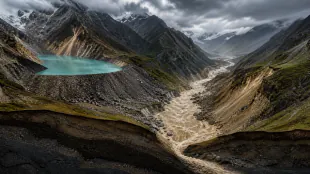 Nepal-Tibet flood toll reaches 584 as more than 2,400 remain missing
-
Ramos strikes as AC Milan beat Venezia

-
 Cherki makes his point to Maresca as Man City sparkle in Palace rout
-
Odisha faces very heavy rain as Sri Ganganagar reaches 41.4C
-
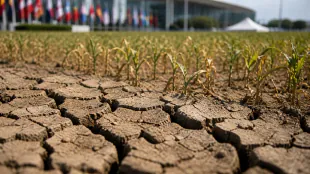 COP17 soil assessment links worsening land degradation to food and nutrition risks
-
Scammers in China exploit Microsoft Teams and other workplace apps to target victims

-
 Medical AI paper predicts autonomous systems could outperform doctors in core clinical tasks by 2030
-
GSA employees report mice, ceiling damage and cloudy water after Washington office move

-
 REI Labor Day sale runs through September 7 with outdoor gear discounts
-
Cara and former scraper develop open-source tool to alert artists when work appears in AI datasets

-
 Meta tests robots for cabling, server resets and maintenance inside data centers
-
Google expands easier file sharing between Android phones and Apple devices

-
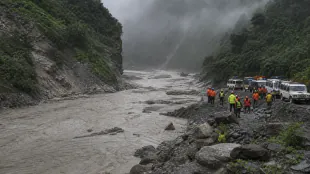 Nepal-Tibet flood rescue resumes after overflowing debris lake forces temporary withdrawal
-
UK chefs turn to induction cooking to reduce kitchen heat, energy use and pollution

-
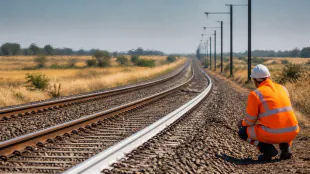 Extreme heat exposes vulnerabilities across Britain's rail network
-
Restored Cheshire wetland becomes key UK breeding site for black-necked grebes

-
 Dollar rallies after Fed chief lifts rate expectations
-
Bayern steamroll Stuttgart in Bundesliga opener

-
 Slumping Sabalenka 'confident' ahead of US Open three-peat bid
-
England pace quartet might keep Archer going until he is 40

-
 Aston Villa seal swoop for Chelsea striker Jackson
-
Driven by distraction? Trump steps up stunts as US midterms loom

-
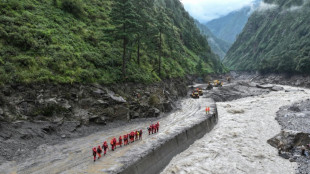 Number of missing in deadly Nepal, China floods jumps past 2,400
-
Springboks a wounded beast, warns All Blacks captain Savea

-
 Birmingham City Seek First Championship Win Against Wrexham
-
Trump announces new US 'Space Academy'

Major Japan quake injures 30, damages roads
A big quake off Japan injured at least 30 people, authorities said Tuesday, damaging roads and knocking out power for thousands in freezing temperatures.
The Japan Meteorological Agency said the magnitude 7.5 quake at 11:15 pm on Monday (1415 GMT) -- downgraded from its first reading of 7.6 -- raised the chances of similar or larger tremors in the coming days.
Prime Minister Sanae Takaichi said 30 people were injured in the quake off the coast of the northern Aomori region, which triggered tsunami waves up to 70 centimetres (28 inches).
Daiki Shimohata, 33, a civil servant in Hashikami on Honshu island, told AFP that he and his family rushed outside their home.
"The tremor was something that we've never experienced. It lasted maybe for about 20 seconds," Shimohata said by phone.
"We were holding our children -- a two-year-old girl and a one-year-old boy -- in our arms. The shaking reminded me of the disaster (in 2011)," he said.
One person was seriously hurt in the main northern island of Hokkaido, according to the Fire and Disaster Management Agency.
Footage showed people in a supermarket clinging to a table with items having fallen off shelves, as well as crevasses in roads and at least one car in a hole.
Elsewhere broken glass from windows was scattered on roads and pavements.
Initially there were reports of several fires but government spokesman Minoru Kihara said Tuesday that was one confirmed blaze at a house.
On the main northern island of Hokkaido, an AFP reporter said the ground shook violently for around 30 seconds as smartphone alarms alerted residents.
In the city of Hachinohe the quake reached upper six on Japan's seven-level Shindo scale of shakiness, the point at which it's impossible to move without crawling.
With temperatures around freezing point, around 2,700 homes were without power but by Tuesday morning electricity had been restored to most areas, according to utility providers.
At first the JMA warned of tsunamis up to three metres (10 feet), which could have caused major damage.
Around 28,000 people were initially advised after the quake to evacuate, emergency services said, and media reports said some makeshift shelters were full.
In the end the biggest waves recorded measured up to 70 centimetres and after several hours the tsunami warnings were lifted.
Shinkansen bullet-train service was suspended in some areas while engineers checked for any damage to the tracks.
No abnormalities were detected at the Higashidori or Onagawa nuclear power plants, operator Tohoku Electric Power said.
The JMA warned people to be cautious of further quakes of a similar intensity for about a week.
"Additionally, there is a possibility of even stronger earthquakes occurring, so please stay alert," it said.
Geologists Kyle Bradley and Judith A. Hubbard said that there was no way to tell whether a strong earthquake will be followed by a similarly strong, or even stronger, one.
"Instead, we must rely on historical statistics, which tell us that very few large earthquakes are soon followed by even larger events," they said in their Earthquake Insights newsletter.
"It does happen, just not very often."
- 'Megaquake' -
In 2011, a magnitude-9.0 quake triggered a tsunami that left 18,500 people dead or missing and caused a devastating meltdown at the Fukushima nuclear plant.
Japan sits on top of four major tectonic plates along the western edge of the Pacific "Ring of Fire" and is one of the world's most tectonically active countries.
The archipelago, home to around 125 million people, experiences around 1,500 jolts every year.
The vast majority are mild, although the damage they cause varies according to their location and depth below the Earth's surface.
Quakes are extremely hard to predict, but in January a government panel marginally increased the probability of a major jolt in the Nankai Trough off Japan in the next 30 years to 75-82 percent.
The government then released a new estimate in March saying that such a "megaquake" and subsequent tsunami could cause as many as 298,000 deaths and damages of up to $2 trillion.
Ch.Campbell--AT