VR headsets take war-scarred children to world away from Gaza / Photo: Eyad Baba - AFP

 In war-split Myanmar 'spirit consorts' commune across divide
 Leaders of Russia, China, Iran to attend summit in Kyrgyzstan

 Alpha1 AI Expands Support for Federal Agencies
 Kane confirms talks on Bayern extension

 Trump govt. mulls deal to give away part of Yosemite park

 Indian release of Sonia Gandhi memoir uncertain after publisher clarification

 Cities show cleaner transport policies can reduce severe air pollution

 Four patients harmed in Nashville hospital medication mix-up

 Essex council hires private guards as Wethersfield asylum centre expands
 Haakon VIII becomes Norway's king after Harald V dies at 89

 Six injured after sign falls at Christian festival in West Sussex
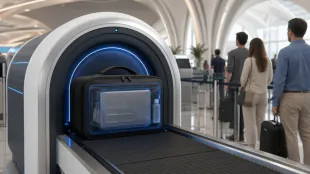 Dubai airport expands scanners that keep laptops and liquids in bags
 Kuwait and Pakistan sign military cooperation agreement

 Ramos strikes as AC Milan beat Venezia

 Odisha faces very heavy rain as Sri Ganganagar reaches 41.4C
 Scammers in China exploit Microsoft Teams and other workplace apps to target victims

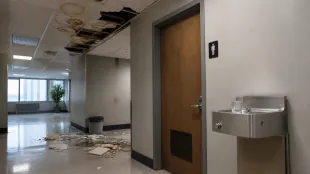 GSA employees report mice, ceiling damage and cloudy water after Washington office move

 Cara and former scraper develop open-source tool to alert artists when work appears in AI datasets

 Google expands easier file sharing between Android phones and Apple devices

 UK chefs turn to induction cooking to reduce kitchen heat, energy use and pollution

 Restored Cheshire wetland becomes key UK breeding site for black-necked grebes
 Bayern steamroll Stuttgart in Bundesliga opener

 England pace quartet might keep Archer going until he is 40

 Driven by distraction? Trump steps up stunts as US midterms loom
 Springboks a wounded beast, warns All Blacks captain Savea

Children scarred by the war in Gaza are undergoing a therapy programme using virtual reality headsets that transport the youngsters to a world far away from the destruction around them.
The VR therapy is aimed at improving the children's psychological wellbeing, with operators saying it can achieve results more quickly than traditional therapy sessions.
Inside a white tent pitched on a sandy patch of ground in Al-Zawayda, in central Gaza, excited chatter swelled as five boys roamed around a virtual world.
The youngsters, one in a wheelchair and the others on plastic seats, turned their heads, exploring the new surroundings inside their goggles: a land of green gardens, tranquil beaches and safe cities.
One boy reached out and clapped his hands together, as if swatting a fly. Another, smiling, with his hand held up in front of his face, reached out to touch the scenery.
One said a dog was running towards him, and beckoned to it, calling out: "Come! Come!"
"I see birds," the boy in the wheelchair told an operator, looking around.
One of the operators delicately put the blue TechMed Gaza headset on 15-year-old Salah Abu Rukab, who sustained a head injury during the war, asking if he could see the VR properly as he adjusted the buckles.
"We feel comfortable in it, we enjoy it, and through it we enter a garden, we enter spaces with animals and similar experiences," the teenager told AFP.
Asked by the operator what he saw, he replied: "It's all trees. Nothing but trees, grass and flowers."
- 'Positive results' -
Mental health supervisor Abdalla Abu Shamale explained there was more to the VR headsets than simply escape.
"Through programmers, we are able to design games with therapeutic, preventive and developmental goals that help prepare the child or enable them to cope and manage their life more effectively," he told AFP.
"This method has proven its effectiveness over a full year of working with many children, including war-amputee children, injured children and those exposed to extremely traumatic events."
A fragile ceasefire in the war between Israel and the Palestinian militant group Hamas has held since October 10.
The World Health Organization says conflict-related injuries carry a mental health toll, and survivors struggle with trauma, loss and daily survival, while psychosocial services remain scarce in Gaza.
Jonathan Crickx, spokesman for the UN children's agency UNICEF, told AFP that around one million children, or in other words, "all children in the Gaza Strip, are in need of mental health and psychosocial support after two years of horrendous war".
The VR sessions rely on programmes specifically designed for traumatised children, taking into account their physical and psychological condition, and help them rebuild positive perceptions of the world.
Abu Shamale said the children were "treated and accompanied through VR sessions, and when we integrated them into these techniques, they showed a very, very strong response and extremely positive results.
"The speed of treatment, recovery and reaching stability using VR techniques was faster than in regular sessions. In regular sessions without VR, we usually need about 10 to 12 sessions, while with VR we can achieve results in just five to seven sessions," he said.
O.Brown--AT