
Vanderbilt Report: How Vision Wave Turned Defense Constraints Into Competitive Advantage

 Iceland votes on whether to resume EU membership talks

 Rescuers claw through mud as Nepal, China flood missing toll nears 3,000

 CGBio’s Novosis Achieves Bone Union in All Seven Patients in Scaphoid Nonunion Study

 Kinshasa urban train back on track after years to beat gridlock

 Merino crossbreeding plan tests Himachal Pradesh wool ambitions

 Pringles launches thicker Dippers range for US snack market

 US and Venezuela announce 65-billion-barrel oil development agreement

 Assistance-dog dispute puts Great Bernera community groups under financial strain

 Sello Hatang remembers actor Sol Rachilo through a personal archive

 UN committee calls on South Africa to dismantle racist vigilante groups

 South African creators seek stronger businesses beyond brand partnerships

 Syria warns Israeli actions could push region toward wider war

 East Midlands Railway warns of bank holiday disruption at St Pancras

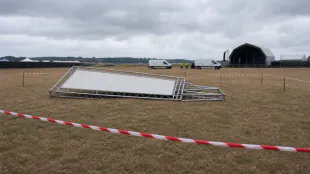 Six treated after sign falls at Big Church Festival in West Sussex

 Norway, in mourning, enters a new era under Haakon VIII

 Number of missing in Nepal, China floods soars to nearly 3,000

 Number of missing in Nepal, China floods soars past 2,400
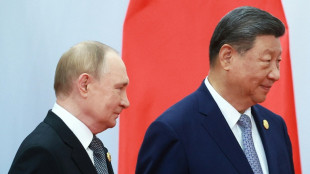
 Trump announces deal for huge US stake in Venezuelan oil reserves

 Hovland and Gerard share lead at Tour Championship
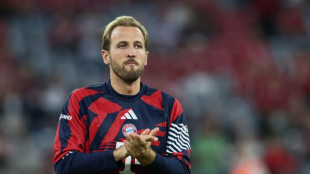
 Maresca salutes 'unbelievable' Cherki after Man City star sinks Palace

 Marquinhos rescues last-gasp draw for PSG at Lille in Ligue 1

 ICE detains British far-right activist Milo Yiannopoulos in Louisiana

 Milo Yiannopoulos held by ICE after missing immigration hearing

 Six Flags closes X2 rollercoaster after reports of severe brain injuries

 Jury ends second day without verdict in Lindsay Clancy murder trial

BRISTOL, TN / ACCESS Newswire / November 25, 2025 / VisionWave Holdings, Inc (Nasdaq:VWAV) is a public company trading on the NASDAQ building AI systems for defense platforms. What makes them noteworthy isn't the technology itself. It's where the technology actually works.
Most defense AI companies optimize for lab benchmarks. Vision Wave optimizes for contested environments where bandwidth disappears and power budgets matter more than model accuracy.
That difference shows up in their revenue model.
The SWaP Constraint Nobody Talks About
The defense industry faces a brutal constraint: Size, Weight, and Power (SWaP). Small drones operating in border zones can't carry data center GPUs. Naval platforms in contested RF environments can't rely on cloud connectivity.
The standard AI playbook says "buy bigger GPUs" or "ship it to the cloud." Neither works when your platform weighs 15 pounds and operates where jamming is constant.
"Current systems tend to be either heavy, centralized, and expensive, or lightweight and rule-based, which can fail in complex or time-critical scenarios," explained Danny Rittman, Vision Wave's CTO. "VisionWave was established to bridge this gap."
Vision Wave's Evolved Intelligence approach solves this differently. Instead of running every frame through a full model, their system uses lightweight RF and motion heuristics first. Only when uncertainty crosses a threshold does it spin up heavier perception modules, then drops back down.
Rittman walks through the technical architecture: "Our stack will first run very lightweight RF and motion heuristics; only when uncertainty and risk cross a threshold do we briefly spin up the heavier perception and planning modules, then drop back down." The contrast with conventional approaches is stark. "A traditional GPU-centric approach would simply push every frame through the full model all the time, burning power, saturating bandwidth, and forcing you to either reduce mission duration or cut capability."
A traditional GPU approach burns power continuously. Vision Wave's hierarchical system makes dynamic tradeoffs, extending mission time while maintaining decision quality at the edge.
The edge computing market for military applications is projected to grow from $2.66 billion in 2024 to $11.66 billion by 2034. That's a 15.91% CAGR driven precisely by these SWaP constraints.
Why the Full Stack Matters
Vision Wave co-designs their AI stack with their own RF, radar, and vision payloads. The scheduling logic, fusion layer, and autonomous behaviors are tightly coupled to real hardware and operational constraints.
This creates three layers of defensibility: proprietary patents and fusion methods, integration expertise inside defense programs, and mission data that continuously tunes the system.
A competitor can copy the architecture on paper. They still have to reproduce years of RF-AI co-design, platform certification, security reviews, and operational trust with end users betting lives on the system.
Rittman is blunt about the competitive dynamics: "A well-funded competitor can copy the slideware, but they still have to reproduce years of RF/AI co-design, platform certification, security and safety reviews, and trust with end users who are betting lives and assets on the system." He pauses. "That combination of tech, data, and program integration is what makes this very hard to replicate."
That's harder than it looks. Research shows GPU utilization in AI inference tasks typically hits only 30-40% efficiency. More than half the available operations go to waste.
Vision Wave's approach isn't about bigger models. It's about smarter resource allocation under real constraints.
The Capital Structure Advantage
Vision Wave operates as a public micro-cap with a flexible equity line and growing contract revenue. They've deliberately kept defense primes off their cap table to stay commercially neutral.
This structure lets them operate on defense timelines without venture capital pressure. They fund the business through paid pilots, integration work, and early licensing of their EI/Vision-RF stack.
Rittman's approach to defense procurement reflects hard-earned realism: "I never assume a pilot turns into production on the original timeline; that's just how defense works, so we plan the business around that reality." The operating principle is straightforward-keep burn aligned with signed work, not "slideware forecasts."
Defense procurement timelines average 11 years for major programs, with flat budgets and continuing resolutions creating constant instability.
Most VC-backed defense startups burn cash waiting for that one big program award. Vision Wave structures around the assumption that pilots slip and programs get delayed.
They maintain multiple geographies, multiple prime partnerships, and multiple use cases. If one program stalls, they redirect the same core technology to a different platform rather than starting from zero.
Revenue Today, Strategic Bets Tomorrow
Vision Wave generates current revenue from air and ground domains: small UAS, autonomous sensing, and fire-control applications. That's where SWaP constraints are sharpest and where they already have active programs.
Maritime is the strategic follow-on bet. Same core EI and Vision-RF stack, different platform configuration.
They're not building three separate product lines. They're treating Evolved Intelligence as a common engine that gets adapted per domain. Air and ground prove the technology and generate cash flow. Maritime scales once the core stack is battle-tested.
Rittman is deliberate about sequencing: "Air and ground are the revenue engines and proof points today, and maritime is a deliberate follow-on bet where we're already having early conversations but will only scale once the core stack is fully battle-tested in those first two domains."
The inflection point comes when 70-80% of what they deliver to new customers is standardized stack rather than custom builds. That's when Vision Wave transitions from engineering shop to scalable product company.
What Separates Deployment from Demos
The hardest objection Vision Wave faced wasn't technical. It was human: "I don't want a smart black box making decisions for my people and my assets."
They addressed this by letting operators design the test on their own terms. Their platform, their range, their playbook, their safety officers. Vision Wave ran tests alongside existing sensors, logged everything, and focused on two priorities: no surprises and clear fallback options.
When operators saw the system either enhance situational awareness or gracefully hand back control without unexpected actions, the conversation shifted. Rittman recalls the moment: "Their perspective shifted from 'prove that this isn't dangerous' to 'how quickly can we implement this across more platforms?'"
That's the difference between companies that demo well and companies that field systems. Vision Wave designed for constraints from day one: export controls as design parameters, compliance built into the architecture, IP protection through hardened binaries rather than source code.
On international expansion, Rittman's approach is methodical: "We treat export control as a design constraint, not an afterthought." The company splits its stack into a tightly held core that stays on U.S. soil and exportable configurations that can be dialed based on ITAR/EAR requirements. "We never ship source or proprietary information overseas-only hardened binaries and APIs."
Asked what will separate Vision Wave from other defense AI startups five years from now, Rittman's answer is direct: "We're building something people can actually field, not just something you can demo."
While many competitors will still be "chasing perfect datasets and glossy videos," he expects Vision Wave to have "a proven, multi-domain product that has survived field use, audits, and budget cycles."
In defense, that makes you very hard to dislodge.
READ MORE at the Vanderbilt Report
About Vanderbilt Report
Vanderbilt Report is a financial news and content platform. The information contained in this release is for informational purposes only and should not be considered an offer to buy or sell securities. All material is provided "as is" without any warranty of any kind.
Media Contact
Kristen Owens
3101 US-421 N, Bristol, TN
[email protected]
Forward-Looking Statements
This release may include "forward-looking statements" as defined under the Private Securities Litigation Reform Act of 1995. These statements are based on current expectations, estimates, and assumptions, and are subject to a variety of risks and uncertainties that could cause actual results to differ materially from those anticipated. Readers are cautioned not to place undue reliance on forward-looking statements, which speak only as of the date of this release.
Certain insights referenced herein are drawn from an interview with a senior executive at VisionWave, who provided perspective on the company's strategy, operations, and market outlook.
SOURCE: Vanderbilt Report
View the original press release on ACCESS Newswire
L.Adams--AT